Welcome to WordPress! This is a sample post. Edit or delete it to take the first step in your blogging journey. To add more content here, click the small plus icon at the top left corner. There, you will find an existing selection of WordPress blocks and patterns, something to suit your every need for content creation. And don’t forget to check out the List View: click the icon a few spots to the right of the plus icon and you’ll get a tidy, easy-to-view list of the blocks and patterns in your post.
-

-

Welcome to WordPress! This is a sample post. Edit or delete it to take the first step in your blogging journey. To add more content here, click the small plus icon at the top left corner. There, you will find an existing selection of WordPress blocks and patterns, something to suit your every need for content creation. And don’t forget to check out the List View: click the icon a few spots to the right of the plus icon and you’ll get a tidy, easy-to-view list of the blocks and patterns in your post.
-

Welcome to WordPress! This is a sample post. Edit or delete it to take the first step in your blogging journey. To add more content here, click the small plus icon at the top left corner. There, you will find an existing selection of WordPress blocks and patterns, something to suit your every need for content creation. And don’t forget to check out the List View: click the icon a few spots to the right of the plus icon and you’ll get a tidy, easy-to-view list of the blocks and patterns in your post.
-

Welcome to WordPress! This is a sample post. Edit or delete it to take the first step in your blogging journey. To add more content here, click the small plus icon at the top left corner. There, you will find an existing selection of WordPress blocks and patterns, something to suit your every need for content creation. And don’t forget to check out the List View: click the icon a few spots to the right of the plus icon and you’ll get a tidy, easy-to-view list of the blocks and patterns in your post.
-
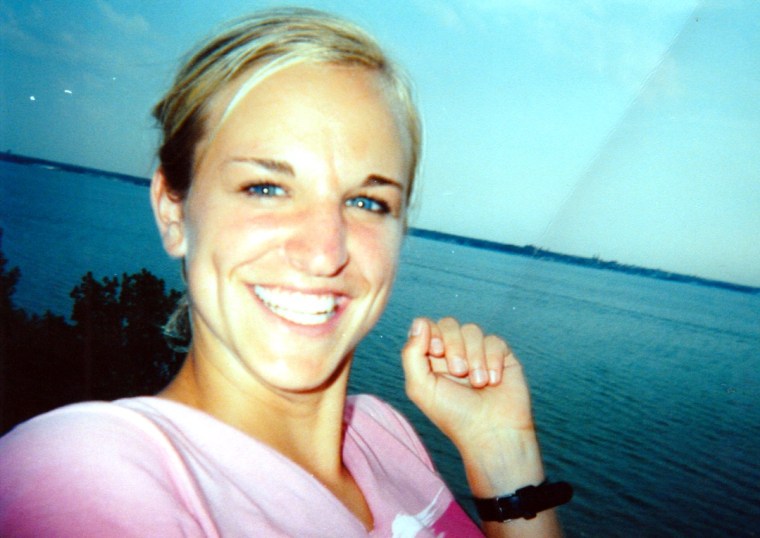
Now that I have told my family’s SCA7 stories, I will share with you my own story. My story makes a lot more sense if you read and become familiar with their stories. Though the backstories are very lengthy, our experiences are so interconnected that it gives important context and understanding. As I tell my story, many references will be made to their lives and stories, and I will assume that the previous posts have been read, eliminating the need to retell or clarify. This goes to show that no one’s life is just their own. We influence and affect each other so much!
This post is literally SCA7 through my eyes. It is my story of having SCA7 and how it affected me, including seeing and helping family members suffering from it. Before I ever personally showed or experienced any of the symptoms of this disease, it already affected my life dramatically! It changed the way I think and feel about life, death, our purpose as people, relationships, and the gospel of Jesus Christ.
When I was a child, I knew my mom had this disease, SCA7, but her symptoms were minimal. It was not really noticeable, except that she couldn’t drive. That was a real pain! While I could not see the effects easily in my mom, I could as a child clearly see it in my Grandpa Paul, Aunt Cathy, and Aunt Caroline. I also knew my Aunt Chris and Uncle Don had both died from it when they were just babies.
We often visited my grandparents growing up, and I remember Grandpa Paul and Aunt Cathy being in wheelchairs. My grandpa had permanently lost his voice due to the disease and used to whisper when he talked to me. I watched my grandma do so much to help care for him and Cathy. For example, I remember my grandma would make him shakes when eating solid foods became too difficult. She also had a chair lift installed to help Cathy go up and down the stairs at their house (where she lived). Cathy would get to the top of the stairs on the lift, and then she would scoot on her bum across the floor to get to her bedroom. I was eight years old when Aunt Cathy passed away. My mom spent a couple weeks helping my grandma when Cathy was near the very end; I recall my mom feeling very sad. At the time of Cathy’s funeral, it was actually fun for me because I was too young to understand the meaning and serious implications of death. For me as a child, this was an opportunity to see my cousins, especially Callie from Aunt Caroline’s family in Arizona. Two years later my Grandpa passed away; I was ten years old. Again, the funeral was fun for me because my family flew home to Utah from our year long sabbitical in Virginia. We saw all our extended family. I understood death a little better this time, and it was solemn to see my grandpa’s lifeless body in a casket.

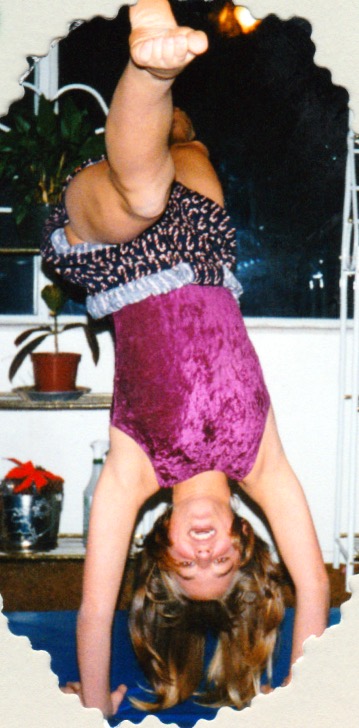
Around this time my mom’s poor balance became more noticeable, and she needed help from others to walk. During this same period, I really got into gymnastics and became fairly proficient (level 4). My mom loved gymnastics when she was younger, so she wanted to come watch me practice. Each day my team practiced for three hours. One day my mom came during the middle of one of our practices to watch me. A neighbor had dropped her off, and my mom stood at the front door waiting for me to come help her to a seat. The practice gym was compact, so to get from the front door to the spectator seats, you had to walk along the vault runway and then navigate under the bars. If you came after practice had started, it required the girls practicing vault and bars to stop what they were doing. That is what happened this day, and they watched and stared at me as I awkwardly helped my mom to a seat. Since I was shorter than her, we slowly staggered down the runway and under the bars, helping her to finally sit down. In my young mind, the entire gym’s activity seemed to stop what it was doing and watch us, since it was such an unusual scene. All those eyes (of my teammates, other athletes, and coaches) watched us struggle to simply walk. To say I was embarrassed doesn’t begin to express how I felt. I will never forget that moment and how it made me feel. I was so young. Reflecting back, I believe that I struggled with feeling embarrassed, but simultaneously knowing that because I loved my mom so much that I never wanted her to think I was ever embarrassed of her. I wasn’t truly embarrassed of her down deep. This experience (along with others) began to help me to realize that I shouldn’t worry about what others think of me or those in my family with the disease.
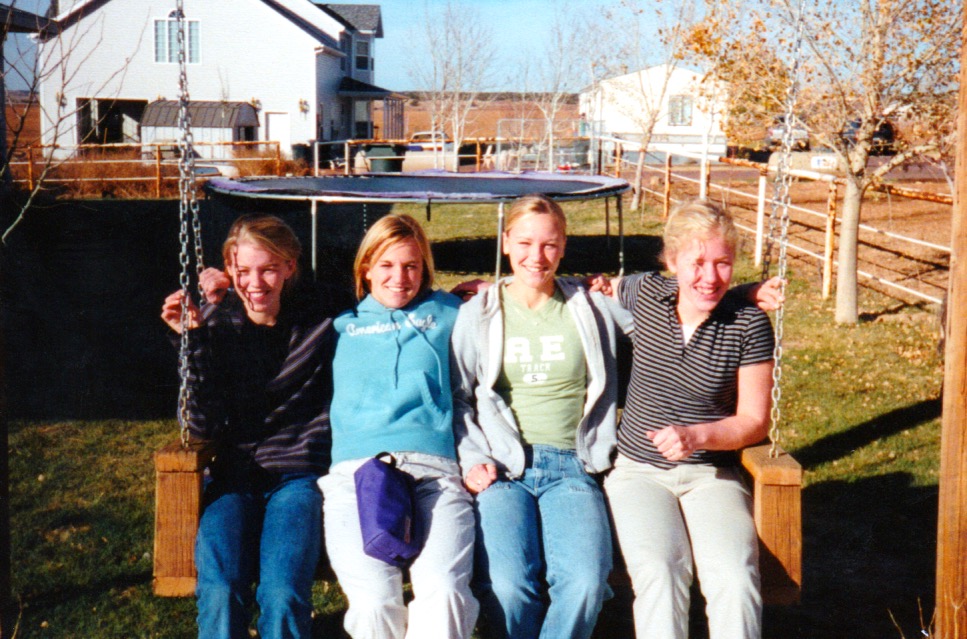
When I was twelve years old, we learned that my cousin Lance had SCA7. The news shocked all who knew Lance and understood the consequences of having this disease. When I first heard the news, I went into a room, fell to my knees and started balling while I attempted to pray to God. It sounds dramatic, but I was so sad! I love all my cousins and the time I get to spend with them. Lance and Callie (brother and sister) were the only ones who lived far away from our home in Utah, so getting to see them was always a special treat growing up. We typically saw them during the holidays and then once or twice more during other times each year. We made trips down to Arizona, and they would come up to Utah. Callie and I would even write to keep in touch. I just adored Callie and Lance (and also Uncle Scott and Aunt Carolyn). We all did! I loved playing, pulling pranks, and laughing with Callie, my cousin Lisa, and sister Aubree. I also loved hearing Lance’s many, hilarious jokes and seeing his passion for sports. And I loved how my uncle Scott made our visits so much fun. He would sometimes pretend to drive with his eyes closed, making the kids feel lucky to be alive when we arrived at our destination safely! It was moving, too, to see Aunt Carolyn’s bright personality struggle with this disease. Her family did so much to help her, and she tried so hard to serve them in any way she could despite her disabilities. You could strongly feel how much she loved her family. I loved their family, and it hurt so badly when we all subsequently found out that Callie also had this disease. By then I was fifteen years old. Her parents said that she had already known for the previous two years, but had kept it a secret from everyone. It caused me to reflect back on all the times I had seen and been with her during that time and now realizing that she actually already known. I just cried!
Later this same year we learned that Aubree also had SCA7. I felt like my heart could not bear all these tragedies. First, it broke when finding out about Lance, and then again with Callie. With Aubree’s news, my heart shattered. The disease began to feel too heavy and burdensome! The last time my family went to Arizona to visit, it shocked me to see the progression of the disease in Carolyn and how difficult it made simple acts of life. For instance, on this trip I watched Callie help her mom in a public restroom. She wheeled her into the restroom, then lifted her out of her wheelchair, and finally helped her with everything that followed. Carolyn also stayed in bed much of the time and did not have energy to join family outings. We also observed how the disease had started negatively affecting Lance’s balance and coordination. This was all going to begin happening to my little sister, and I would have to witness it. Again, all of this was heartbreaking.
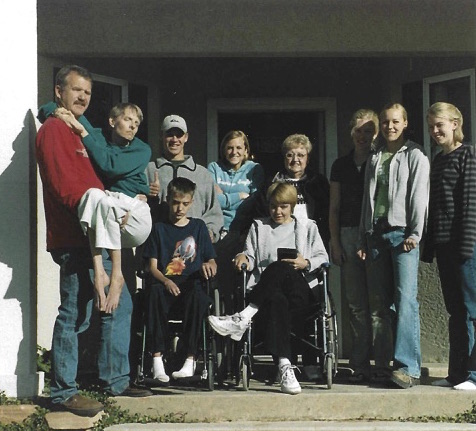
To top it all off, this was also the time when my mom first started using a wheelchair. I turned sixteen years old that year, so the responsibility of giving my mom rides now fell to me. I often took her shopping. It was a familiar scene to see me pushing my mom in her wheelchair down a corridor at the mall or an isle in the grocery store. My mom loved shopping (and so did I)! I especially loved shopping with her since it was pretty easy to get her to buy things for me! After years of my three older brothers taking her shopping, which they willing did but did not necessarily enjoy, I think she savored having a daughter who enjoyed shopping just as much as her. Generally speaking, my mom tried to be frugal in her purchases, but it would not surprise me if our family’s shopping budget went up when she and I started going out together. We often ran into my peers or acquaintances while out and about, and I would remind myself, ”It doesn’t matter what they think. I love my mom and want to help her.” Doing errands, tasks, chores, and other things from a wheelchair was so much more difficult and restrictive for my mom. It was during this time that I also started to help her a lot with meal preparation and cooking. In addition to her physical handicaps, she also struggled a lot with mental ones, especially depression. This compounded the difficulties of life. My poor mom had to deal with all of this, and then she had to put up with immature teenagers–like me. I remember one shopping trip when my mom wanted to go to “one more” store. I decided that we were done, and since we were already in the car, I simply ignored her request and started to drive home. My mom kept trying to convince me to go on the final errand to this store, but I stubbornly and selfishly just kept going home. My mom got pretty upset with me, and the only thing she could think to do to express her anger and frustration was to throw the milkshake in her hand out the window onto the busy street where we were driving. It must have been so exasperating at times for my mom to be so dependent on a teenager like me. I know that she did not like to have to be dependent on others. She often said that she felt like she was just a big burden on everyone. Seeing my mom struggle like this, thoughts began to press upon my mind that this disease was way too much, and I even felt abandoned by the Lord.
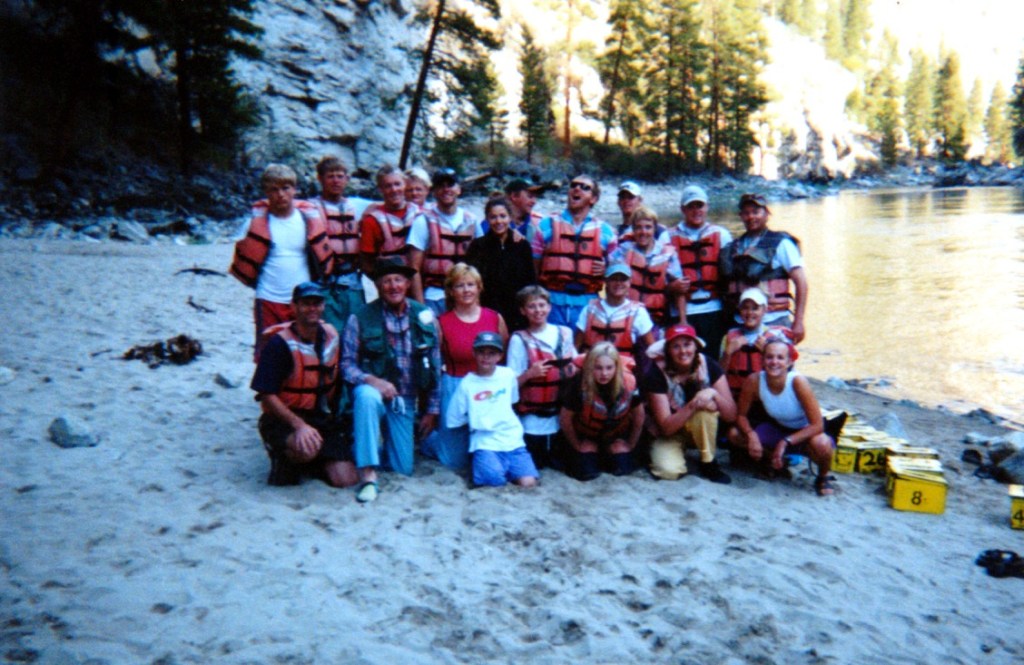
The above paragraphs paint a dismal picture (something we can all do if we only focus on the negative). However, my life during this time was not all bad; there was so much good. As those that have already read my previous blog posts may have noticed, one way that my family dealt with all this hard stuff was playing. We played with family, including extended family, and boy did we play!!! In all these adventures we also tried to find ways to include my mom as much as possible. Each year we usually took several trips to the family’s Bear Lake cabin and a trip or two to Lake Powell. We did back packing trips in the Wind River, Bob Marshall, and Uinta mountains. We did white water rafting on many rivers in our own small, family raft, but one of our most memorable trips was a guided tour down the middle fork of the Salmon River. Many of my cousins and their families went on this trip. Some other favorites were when Aubree and I went on a Caribbean cruise with all the adults, a camping trip along the Oregon Coast, a ski trip in Targhee, snowmobiling in Yellowstone, scuba and shark diving in the Bahamas, Puerto Rico, the exotic island Culebra, and an Alaskan cruise with Aubree, Callie and the adults. There is an experience that I would like to share from this last trip mentioned.



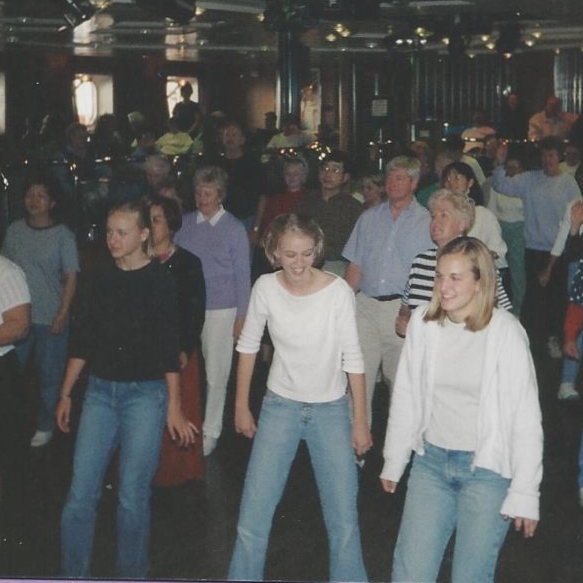
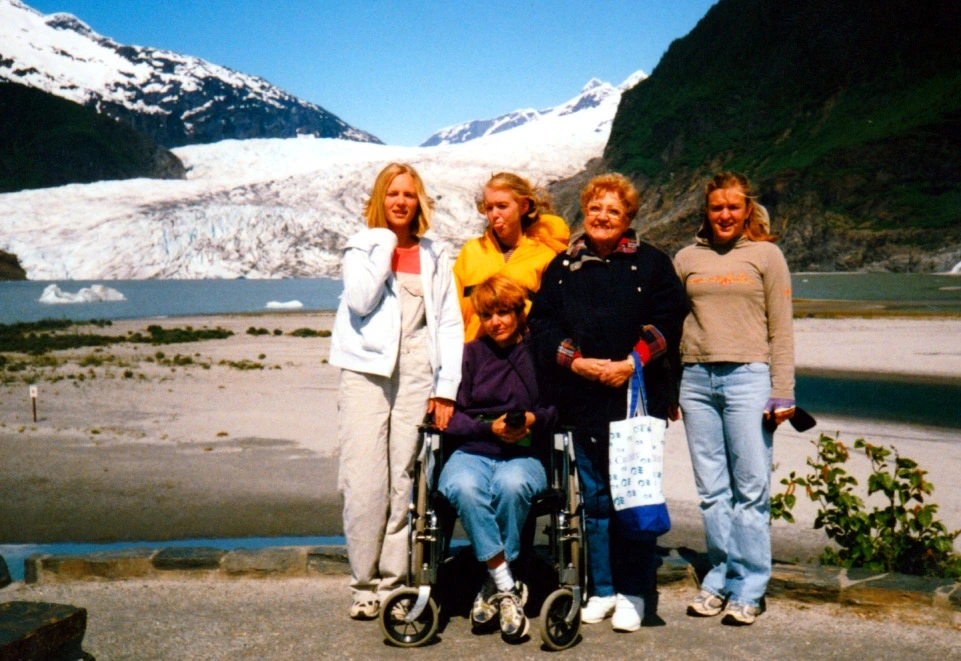
We went on the Alaskan cruise the year after we found out that both Callie and Aubree had this disease. We three girls had so much fun together. My parents and Grandma Canfield were the adult family members we accompanied. I think that the three of us (Callie, Aubree, and myself) were the only kids on the whole ship. We became famous (or at least well recognized) because we were the only young people and were constantly running from one place to the next. We were all over that ship! We probably stopped to get ice cream almost every hour of the day. One evening, we lost track of time, and my dad came looking for us. He found us soaking in a remote hot tub at the stern of the ship at approximately 2 AM. One day on the trip, my dad told us that the drink of the day was a free, non-alcoholic fruit smoothie, so we could order it. That night, while sitting in the theater waiting for the daily entertainment show to begin, we asked a server for the drink of the day. He brought us what looked like hot chocolate mugs with whip cream and chocolate shavings on top. Despite our confusion at having been given hot chocolate instead of a fruit smoothie, we started to eat the whip cream and then took our first sips of the drink. It tasted awful! And it burned our throats going down, but not because it was hot. We realized all of a sudden that it was alcohol! Immediately, we ran outside and started to gag and spit over the railing into the ocean! After recovering from the shock and burning, Callie was very upset. We all were a little upset, but Callie was mad. As part of our Church’s religious beliefs, we do not drink alcohol (or coffee or tea), as well as abstaining from tobacco products and other illegal substances. We had lived this health code our entire young lives. Not one of us had ever even tasted alcohol before this moment. It was an honest mistake, and we would not get in trouble for it, but still, Callie was mad. She marched back into the theater and found our server. She asked him what he had served us. It was some drink with rum in it! She began to chew out the guy for serving alcohol to under age kids. I think the server barely even spoke English, and I am sure he felt terrible. It was amazing to me to see a young teenager chew out an adult man. I personally was still afraid of adults. This experience struck me deeply because here was a girl watching a disease slowly take away her beloved mother’s life, seeing the same disease also progress fairly quickly in her younger brother, and now she too was having to face it. And yet she fiercely sought to keep God’s commandments. You could clearly see that it was extremely important to her. All of this occurred at a time when I personally had been feeling that this disease was too much and that God had abandoned our family. And here, Callie, who was suffering much more from this disease than I was, sincerely trusted in Him and His gospel without wavering. Her example left a deep impression upon me.


Even more impressionable than Callie’s example was my own mother’s example. This disease was also hard for her, and daily I watched her struggle with it in so many ways – small and large. In her trials, she often turned to God for help, and church was very important to her. We attended every Sunday, and she served there in various ways (e.g. youth teacher or whatever). She performed her callings to the best of her abilities, but I know it was not easy for her. She was faithful in fulfilling her ministering assignments, praying daily, and listening to the scriptures. Seeing her great faith and hope in the Lord was inspiring. I knew God gave her the strength she needed to endure this disease with an inner peace. She knew that it was all going to be OK. Sadly, many of my high school friends were members of the same church, but after graduation, they lost their faith and left the church. I easily could have been just like them, yet my faith was never really in question, largely because of my mom’s example. This was also true for my siblings. Because our mom knew it, we knew it.
Around the time that I turned 16 years old is when I requested and received a patriarchal blessing (a special, recorded blessing given once in a person’s lifetime and by the laying on of hands that we believe serves as a personal guide (or scripture from God) just to that individual. Now I freely admit that at this time in my life I was spiritually immature. My prayers and scripture study were minimal. And even though I attended Seminary daily at school and church on Sundays, I was not too engaged and more often than not was just going through the motions. When I received my blessing though, I was amazed to feel God’s overwhelming and pure love for me. My blessing indicated that I was supposedly a really amazing and spiritually strong daughter of God. The words of the blessing left me in awe, and I knew that I had a lot of growing to do.
This was also around the time when I first suspected that my parents probably knew something about me having this disease. Just after school had started, my parents decided to take Aubree and me, along with some friends, to Lake Powell for the weekend. One night when we were camping on a beach, my parents lingered in the parked boat along the shore. I went to them to ask some question, and as I drew near it was evident that they were having some serious conversation. When they saw me, they stopped talking; my mom was in tears. When I asked what was wrong, they quickly brushed it off. I sensed that they were talking about me; however, I didn’t pry and tried to let it go. I will never forget that moment though because I also sensed it was something big.
Later this same year, my brother, Josh, was thinking about proposing to his girlfriend, but he hesitated because of concerns about possibly having inherited the disease. He knew first hand the challenges this could bring to a marriage and family. What if he passed it on to his future children? My dad calmed his fears by telling him that he knew for certain that he didn’t inherit the disease, and he also stated that my other two brothers didn’t inherit it either. He had inadvertently stumbled upon this knowledge years earlier when our immediate and extended family participated in a genetic study on SCA7 at the University of Utah. We all had our blood taken, so they could determine the affected family members. This would allow them to better study how the disease passed from one generation to another. The results were supposed to be kept strictly confidential, yet somehow my dad accidentally saw the final pedigree chart revealing who inherited this disease (and who did not). He saw that Lance and Callie had inherited it, along with Aubree. This information he already knew of course. He also saw that I had inherited it! This was news to him, but he noted that no one else inherited it. My three older brothers and the rest of my Canfield cousins were in the clear. After my dad told Josh that he had seen these results, I then asked him about Aubree and me. He lied and said that he only saw my three brothers results. He didn’t see ours, so he didn’t know (I am grateful that he did not tell me the truth at that time because I wasn’t ready to carry the burden, and as my dad, I believe that he knew I wasn’t ready either). I believed him, but at the same time wondered if the reason why the doctors didn’t show him mine or Aubree’s was because we had it (especially given we already knew Aubree had it). Despite this real doubt, I chose to hope that I might not have it. At some point, I also made the connection with the Lake Powell experience and this new information from the study, but I refused to let go of my hope.
Fearing now in the back of my mind that I might have the disease, my prayers began to change as I thought about what was most important to me. I remember sincerely praying many times afterwards that if I had this disease that God would still allow me to marry and have children. I saw that family gave my mom’s life so much joy, meaning, and purpose despite having this disease. I knew the same was true for my Aunt Carolyn. It was sad and painful to think that Aubree may not have these things… Growing up my parents were constantly telling us that family and our relationships with one another were so important. That is why we spent so much time together and with extended family on vacations. The time we spent together resulted in very close relationships among our family – parents, siblings, cousins, aunts, uncles, and grandparents. These relationships meant (and mean) everything to me! So with all my heart, I wanted a family of my own.
My high school and college years were so much fun! In high school, I joined the swim team and made some really awesome, fun friends. We hung out and played together most weekends and some week nights too. We also had tons of fun at school. My friends and I enrolled in a Unified Studies class where you spent every other school day getting out and doing a variety of outdoor activities. We played and played and played; it was lots of good clean fun together. Looking back, I think I just wanted to forget about this disease and the possibility that I could have it. During my mid to late-teen years I did start dating a boy exclusively, and I held on pretty tight…since I longed for the opportunity to one day marry. I wanted to ensure that someone would want to marry me, even if I had this life-threatening and debilitating disease. Eventually, I told my boyfriend that I could have this disease, and he was OK with it. After High School, he left on a two-year mission for our church, and I planned to wait for him with the intent to get married sometime after his return. Then I started my university studies at Brigham Young University (BYU) and lived at home (a 10 minute commute at most). Almost all of my high school friends went in different directions, doing their own thing. My best friend Katie, though, also attended BYU, but she lived in the dorms on campus instead of at home with her parents. She immediately made lots of new friends through her BYU church singles congregation and her many dorm mates. I, on the other hand, was not meeting many people. It was difficult for me to make friends in my large college classes or at my home Orem church singles congregation. I began to feel lonely, so we requested special permission for me to attend Katie’s BYU singles congregation, even though I lived in a different geographic area. Permission was granted, and it was such a blessing for me! I had a blast with Katie, participating in all the many church activities with her and the other singles our age.
It was during my freshman year at BYU that my Aunt Caroline (Callie’s mom) passed away from SCA7 at 40 years of age (Callie was a senior in high school). Our Canfield family all traveled to Arizona for her funeral. It was heart-wrenching to see Uncle Scott say goodbye to his wife, my cousin Lance in a wheelchair, and Callie’s balance clearly much worse than the last time I’d seen her. Plus, children and youth shouldn’t have to say goodbye to their parents. You could see the hurt and pain on their faces. I again felt that this disease was too much for God to ask someone to endure, and I was angry with Him. My dad spoke at the funeral, and his talk was life changing for me. He spoke of this life and that our individual trials and sufferings are all part of God’s plan. My dad even called it a marvelous plan, the plan of salvation, and he stated that there is great meaning, purpose, and beauty in it all. My dad is a powerful and moving speaker, and in this talk I felt strongly that he spoke the truth and I felt God’s love for me. This talk is in the post {Carolyn’s Funeral Talk by my dad}, so you can read it for yourself. After the funeral, I felt determined to become more of that spiritual person that my patriarchal blessing described. I had made little or perhaps even negative spiritual progression during my high school years. My primary focus was on having a fun time with friends and my boyfriend. I began to strive to change, making a greater effort to establish good spiritual habits like daily prayer, scripture study, and seeking to repent fully of my sins. This was the beginning of when I feel I started to become more of the person I really was inside.
Towards the end of my first year of college is when my dad invited Callie to come study at BYU. I had already been talking to my dad about moving out into an apartment near campus with Katie. As I was trying to become more spiritually strong, I began to think about the possibility of me having this disease and pondering a possible future with it. This caused me to start having reservations about marring my missionary boyfriend. Up to this point I had strictly waited for him and had not put myself out there to be asked on dates. However, I had the impression that I would not marry my missionary boyfriend, but rather meet the person who I was to one day marry at BYU. I knew meeting a boy would likely not happen while living at home. Yes, it was costly to live away from home, and I did not have the money. It would require help from my parents. With Callie now coming to BYU, living in an apartment was a much more appealing situation for her too (vs. having her stay at our house and commute). Callie coming tipped the scales, and my parents finally decided to help me out with the expense. I did not say anything about these changes in my letters to my missionary boyfriend. I regret this. I should have been honest with him about it. I was just unsure of my future and not ready to close that door. And I didn’t want to hurt him…or me.
Around this same time, another cousin on my dad’s side of the family, Kayla, also needed a place to live in Provo as she was transferring from Utah State University (USU) to Utah Valley State College (UVSC), a college right next to BYU. With Kayla, we (Kayla, Callie, Katie and I) had enough to fill an apartment and looked forward to being roommates. We found a fun and large apartment complex called the University Villa and signed contracts to live there, starting in the Fall. That summer Kayla and I lived at my parents house and attended summer school. We sought special permission to attend the church singles congregation that we would be attending in the Fall, and an exception was granted. We started to meet and get to know many of our future neighbors. Also, guys started asking me out on dates. This calmed my worries about meeting my future husband. I even started to exclusively date a young man from Arizona. We had a real fun summer together, but by the end of that summer, we both came to realize we were not right for each other and broke up.
That September Callie came to BYU, and we moved into our apartment. It was going to be a fun year together with her, my cousin Kayla, and best friend Katie! I was especially excited to have Callie there. With her having the disease, I knew it would shorten her life significantly. And on top of a challenging future, she would now be taking college classes with limited eyesight and bad balance, making things much more difficult by the day. She was a bit nervous about it all, but I was determined to help to make it a good experience. You can read about this in the post {Callie, College Years}. That year we had so much fun together and made lots of great memories. I personally grew, learned, and was influenced so very much by getting to be Callie’s roommate. I appreciated and cherished her patience and kindness towards me. In addition, I also enjoyed growing closer to Kayla and Katie.
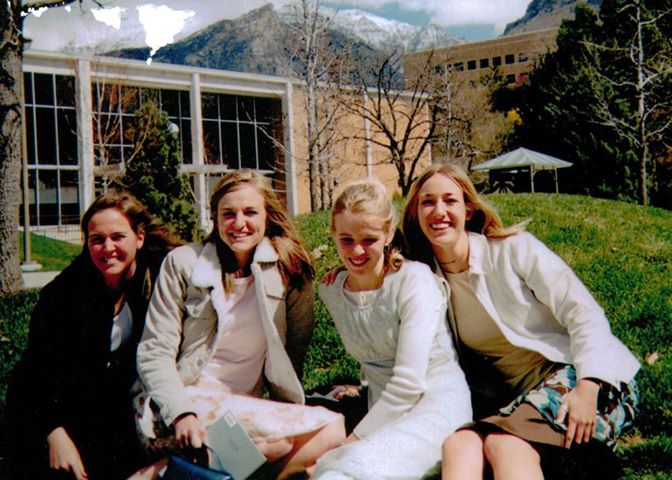
Dating was the other thing that excited me that school year. The prospect of marriage in the future was very important to me given I had the potential of having SCA7. Things would have to move quickly if I wanted to have kids while still healthy. As fate would have it, in the first week of moving into the University Villa, a boy named Dave came by our apartment with one of his roommates to introduce themselves to us. I immediately thought Dave was cute, and I liked him the more I learned about him. He was majoring in economics which I thought made him smart. Also, I had seen Dave a couple times in the summer from a distance. I remember him cheering for me by name at a softball game with a bunch of people from our singles ward. People started to tell me that he was a real nice guy. Now that I had officially met him, I began to have a big crush on him.
In that first month of the Fall semester, I went on a couple of dates with other young men, but I did not have any real interest in them. Then finally Dave asked me on a date to the BYU Fall Fling. I was real excited. For first part of our date we went to a BYU girl’s volleyball game, since a couple of the girls on the team attended church with us. That part of the date was just okay, but afterwards we met up with another couple to go to the on-campus Fall Fling festivities. That is when the date started to get fun. There was a big inflatable obstacle course. We decided to race each other. Dave was obviously going to win since he was a muscular, marathon runner. We agreed that I would get a 5-second head start. If I won, he would make me dinner (my way for us to get together again!). If he won, I would make him banana bread (his favorite). When it was our turn to race, Dave quickly counted to five in like half a second. He easily beat me. Afterwards, I would not commit to the banana bread, since he obviously cheated. We did lots of other fun activities together that night. Several days after the date, he did invite our whole apartment to eat a dinner that he made at his apartment. And I eventually made him some banana bread too.
I hoped Dave would ask me out again after the Fall Fling. A friend who had been in our singles congregation longer and that knew Dave better, said that Dave had taken many of the girls in our ward out but never asked them on a second date. This made me a bit nervous until that next weekend when he asked if I wanted to join him and a group of friends to climb Mt. Timpanogos. They planned to leave at 1 AM, so they could see the sunrise from the summit. Timpanogos is one of the tallest mountains in Utah, which is saying a lot since Utah has many tall mountains. There is a road that goes halfway up the mountain, and then you walk four to five hours along a trail from that point to the peak. It’s quite the feat, but it is something I had done before since this mountain was in my backyard growing up. I had just never done it in the middle of the night. I was also very used to hiking mountains from the many backpacking trips my family had done. So when Dave asked me if I would like to go, I was very willing and excited to come. Dave and I talked pretty much the whole way up and down the mountain. We really got to know each other pretty well and had a real fun time together. I think he was impressed with how the whole hike was pretty easy for me. The other girls needed lots of breaks and were struggling at the end. I also think he enjoyed hearing stories about my family and the many trips we had taken. For my part, I continued to like him the more I learned about him. After this pivotal date, we began to see each other every day and then to date exclusively.
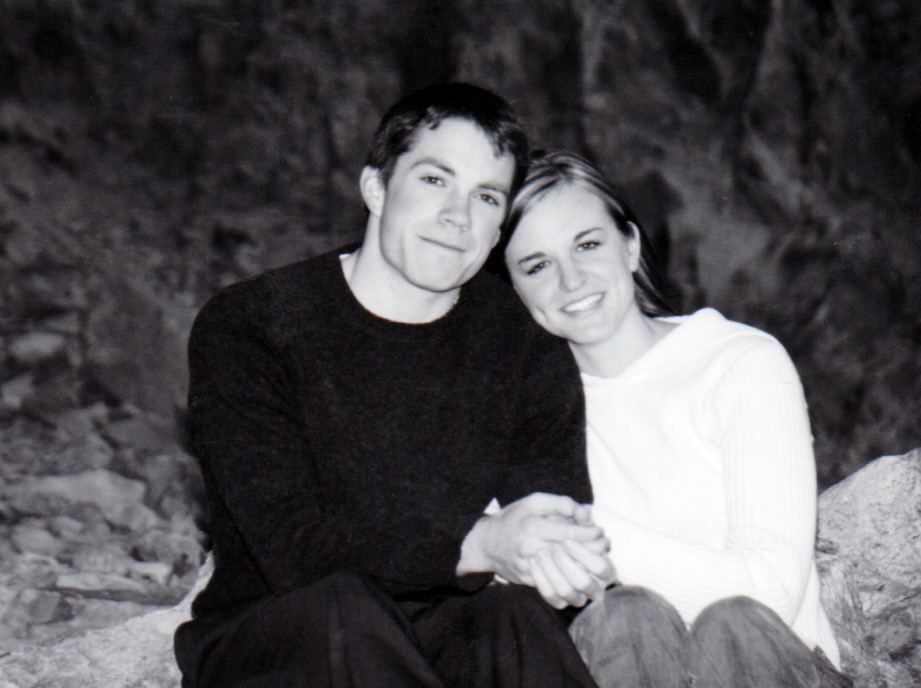
I think I fell in love with Dave and wanted to marry him much sooner than he did. He was so kind, hardworking, ambitious, smart, and good with his money. He was also in shape and to top it all off-super good looking! But the thing I loved about him most was his spiritual strength. He had a strong testimony of the gospel of Jesus Christ, and he lived his faith. He also loved to help and serve others. These qualities were important to me, especially if I had the disease. Another thing is that he brought out the spiritual side in me that was described in my patriarchal blessing. I felt that he brought out the real me…and I loved that.
Dave met my family early on in our courtship, since BYU was so near to my home. I saw my family multiple times a week. He first met them at a BYU weekly campus-wide devotional one Tuesday morning. It had become a tradition for my parents and any family attending BYU to meet up in person at the Marriot Center (where BYU plays basketball) to listen to the selected speaker. As my mom was in a wheelchair, we sat on the ground floor (best seats in the house). Then after the devotional, my parents would take us all out to lunch. At the time I started dating Dave, it was usually my parents, my brother Luke, Callie, Kayla, and me. One Tuesday, I brought Dave along to the devotional to meet my family. When my mom first shook his hand, she greeted him and said, “Mandee tells us you are practically perfect.” This made Dave laugh, but in my eyes, he was. There were other devotionals, Sunday dinners, and events with my family after that. At Thanksgiving, Dave also joined me and my family, since his family lived in Illinois. After the feast, my Grandma Canfield stood up to express her gratitude for the Resurrection, the Lord’s Plan of Salvation, and that families can be together forever. These meant everything to her, since her husband and four of her six children had passed away from this disease. They would be with her again. Dave enjoyed seeing extended family share the same faith because his parents were converts and did not share the same faith as their immediate and extended families.
That Christmas I met Dave’s family. I was excited when he asked if I would like to come to Illinois, so I could meet his parents and younger brother Joe. I had already met two of his siblings, Carl and Grace, since they were also attending BYU at this time. That year I was more excited to fly to Dave’s home in Illinois on Christmas day than I was for presents. When I stepped off the plane in Chicago, Dave and his parents were there to meet me. I liked them, and they were very kind to me. I hoped that they liked me too. I had a good time getting to know Dave’s family better during the week I spent there, but most of all, I enjoyed being with Dave. One day we all drove to Nauvoo, a small town in Illinois that is a historic site for the Church of Jesus Christ of Latter-day Saints. I can still remember sitting in a large log cabin where a senior missionary showed us how pioneers made pottery on a spinning wheel. The missionary compared the clay being shaped by the craftsman to mortal women and men in the hands of God. If we allow Him to shape and mold us by striving to do what He wants us to do, then He makes us into something amazing and beautiful, much more so than we could ever make of ourselves. This lesson left me with a great desire that God would mold and shape me into what He knew I could become. This experience and associated feelings have always stayed with me. Later, on one of the last days of my stay with Dave’s family, he and I went on a walk together. We talked about our relationship, and Dave said that he liked the way things were going but wanted to take things slowly. That was OK with me, but I already knew that I wanted to marry him. I just needed to wait for him. I was confident it was all going to work out.
When we returned to BYU after Christmas for the winter semester, Dave and I continued to date. February marked six months of dating steady, and I wanted to have another DTR (Define The Relationship) talk. While talking to some friends about my desire, they suggested that I ask Dave about his housing plans for the coming summer. The apartment complex where we both lived was offering a discounted summer contract for those who wanted to stay in their apartment. The thought was that this subtle approach would naturally bring up our relationship plans if marriage was a possibility. We would need to try to find married housing, not single’s housing for the summer. During school, Dave and I often met up at the Hunter law library to study. This was Dave’s favorite spot because it was quiet. While sitting at a study table in the law library together, I casually asked him his housing plans for the summer. He paused to think for a bit, and then he really surprised me by responding, “Mandee, I want to marry you.” I was shocked, but a huge smile that I could not contain appeared on my face! I replied, “I would like to marry you too.” Then, like two giddy kids, we started to make plans for our future. Apparently, Dave had already decided that he wanted to marry me, and he had even talked to his parents and older brother about it. He was just starting to make plans to formally ask me, but with my housing line of questioning cover for a DTR, it came out when it did. That weekend he formally proposed using a temporary ring. He made me a romantic candle lit dinner, we danced, and then we hiked a couple miles up a local peak to a beautiful lookout of the valley. At the lookout, he knelt on one knee in the snow, extended the ring to me, and formally asked me to marry him. We were now officially engaged!
Backing up in my story a bit, a couple of important things happened before Dave formally proposed to me. First, Dave called my dad to ask him if he could marry me. My dad told him yes, but asked him to come to his office on campus to talk more about it. Second, my dad called me to ask if I would meet with him at his office that morning before his scheduled meeting with Dave. I was a little confused but agreed to meet with him anyway. That night as I thought about meeting with my dad the next morning, I knew it was going to be an important conversation. I remember walking to his office feeling very somber. When I saw my dad in his office, I could see sadness in his eyes, and it appeared that he was holding back tears. I knew what was coming; my heart was breaking. He then told me that I had the disease SCA7. Our tears started falling together. I knew it was hard for my dad to tell me this. Once he composed himself, he explained that he had known for years that I had the disease. He learned when he saw the results for my brothers. He had seen the results for all of his children at same time, learning that Aubree and I had it. He kept this knowledge from me because I hadn’t started to shows signs yet and he did not want me to bear the burden until it was necessary. Getting married and having children meant it was time; the disease could affect another generation if I didn’t know. I was grateful he did this because it is such a heavy burden. I knew that I had to tell Dave and learn if he still wanted to marry me. He would know what all this would mean having been around my mom and Callie. Plus, the disease was something we talked about during our courtship. In addition to telling me I had the disease, my dad also talked to me about our options for having children since we knew there was a 50% chance of passing the disease on to children. As such, our options included: risk passing it on, adopt, or not have kids. None of these options were appealing. We definitely wanted to have children, and adoption was OK, but it would take a lot of time and money (which we didn’t have). He then shared a fourth option that he had discovered doing some research, since he cared deeply about these things too. He had learned about a procedure called IVF/PGD. He explained that it was a way for us to have children of our own without passing on the disease to them. It was a very expensive procedure; however, he and my mom had saved up some money for us to attempt it. They knew we would need to have kids as soon as possible, so I would have time to raise them before the disease became too debilitating. We were going to be poor students and starting life together without many resources, so they had saved for us. Wow! I was so grateful for my loving and wise parents that cared for me so well. We both sat there filled with emotion as I tried to process it all. I had known that I could very likely have had the disease, but letting go of the hope that I might not have it was hard. My dad asked me to come home for dinner that night; our whole family was going to be there. We hugged, and I left to go meet with Dave who was waiting to talk to my dad next. Just outside the building, we sat on a bench together and talked. I started to cry before I could even tell him about the conversation with my dad. He knew what my tears meant though, and he reassured me. He told me that this didn’t change things; he still wanted to marry me. When he decided to marry me, he had made the decision as though I did have it. He sufficiently understood what this disease meant from seeing Callie and my mom. I had also told him all about it. He then said that marriage is eternal, but this disease is not. That it was an earthly trial that he was willing to go through with me. I was so comforted by this. I then smilingly told him, “Good luck!” as he went to talk with my dad. My dad talked to him about me having this disease, and Dave reassured him that he still desired to marry me. Dad then told him the same information and options for us to have children. I think Dave was grateful for the help and insight of my parents too. I am very grateful that I had Dave there with me.
That night I went home, and all my family was there – my parents, Josh, Dan, Luke, and Aubree. Everyone looked so sad, since my parents had already told them the news. I was touched by their concern for me. My dad and three brothers then gave me a priesthood blessing by the laying on of hands. I do not remember the words, but I will always remember the powerful feeling of love, especially the love of my family. After the blessing, they each gave me a hug. I felt awed by the overwhelming power of family love. Before I left that night to return to my apartment, I went into the office room at my parents’ to get some things. My brother Dan followed me in there and expressed his great concern for me. He worried about how hard it was going to be. This meant a lot to me, and I was again just so thankful for my family’s love and care for me.
This period of time and the months that followed were filled with gratitude and excitement for the future. I felt so thankful that the Lord had answered my prayers that if I had the disease, He would still grant me the opportunity to marry and have children. It now appeared that both of these were going to happen in the very near future. I was so excited to have found a good man to marry that I knew was the right fit for me. On top of all this, my family provided great support as I took on the burden of the disease personally and prepared for a big, personal, life transition. Even though my future was going to be darkened by this disease, I was still excited because I knew it would also be filled with many wonderfully good things. It would not be easy – niether marriage nor parenting is, but I had had many examples to look to in my large extended family. Family would be so worth it. I felt so much meaning and purpose in my life, like I had never felt before. I knew it was because I was striving, in my meager way, to follow God’s plan for me and grow closer to the Savior. Like the pottery analogy, if I let Him shape and mold my life, He could make it into something truly wonderful.
Now I had a wedding to plan, but first there was an important matter of business to address: ending things with my missionary. I needed to inform him that I was getting married to someone else. This was hard because I had been leading him to believe that I was faithfully waiting for him. I truly regret my behavior in this instance. What I had done was not only rude, but dishonest. I should had been open and honest with him from the beginning. Regardless, I wrote the “Dear John” letter and felt horrible sending it. Lesson learned: It is so important to be honest!
With that unpleasant task behind me, it was time to plan a wedding. Dave had been accepted to a summer internship program with BYU in Washington DC, so we had to decide if we would get married before or after his internship. We both liked the idea of getting married before the internship in April, and I felt like DC would be a fun adventure to start our marriage. This meant I had only two months to get everything ready. By this time my mom was pretty far progressed with the disease, so I did much of the planning on my own. However, I wanted to include her as much as possible. For example, we went wedding dress shopping together, and we picked a venue for the reception. In parallel with planning our wedding I was still taking a full load of civil engineering classes. I felt overwhelmed. Considering my situation – I had this disease, was getting married, and planned to have kids asap – resulted in a dramatic decline in my desire to finish my Civil Engineering degree. Plus, it was very unlikely that I would be able to use my degree. As a result of this logic, I decided to drop half my classes. This created the time I needed to continue planning our wedding. From that point forward, things went very smoothly. I was able to secure a wedding planner with the venue we had chosen, and a lot of friends helped out with other parts of the celebration. Some helped with flowers, another with the cake, and one did pictures. It all came together beautifully and turned out better than I could have hoped.
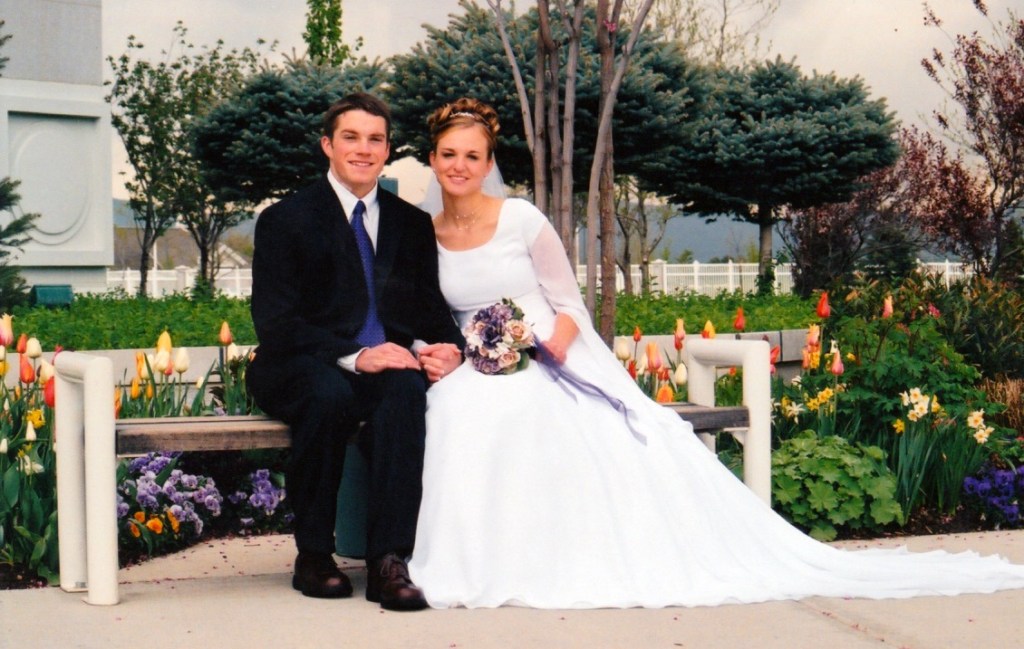
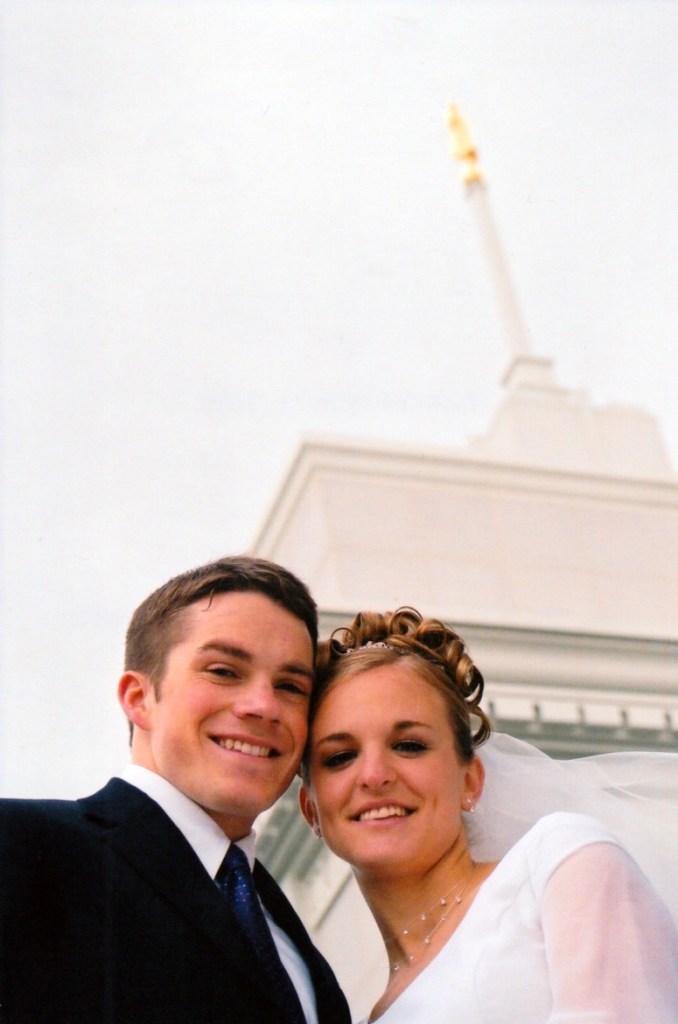
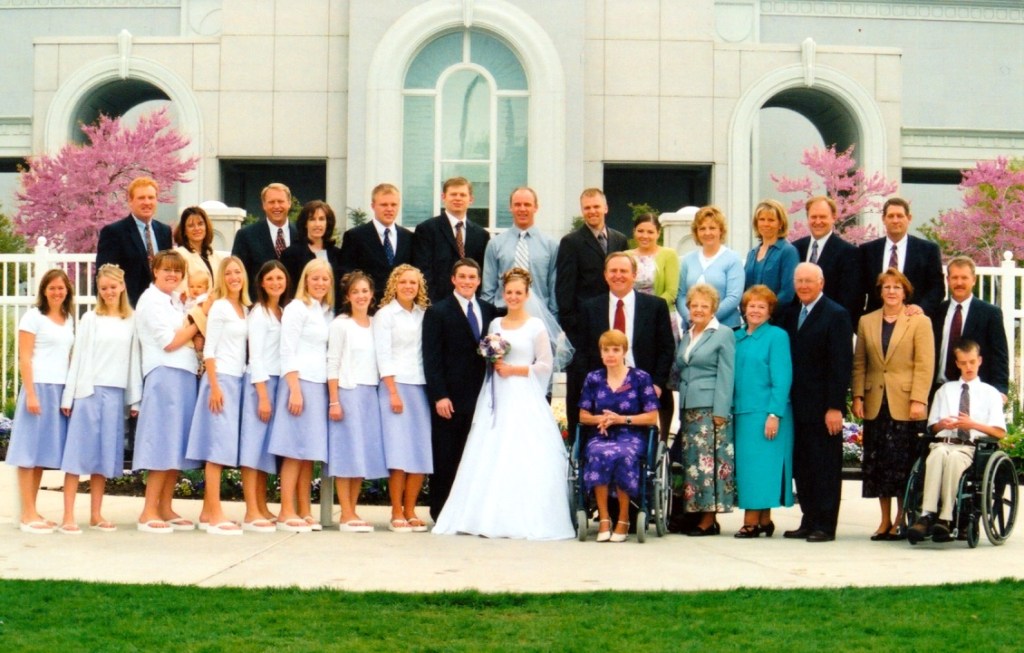
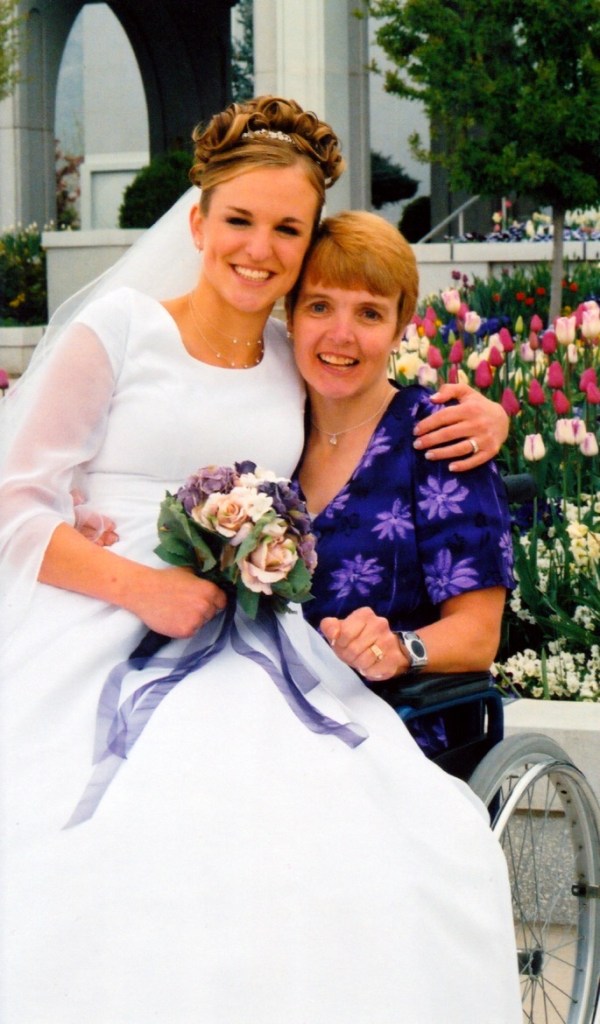
We were married for time and all eternity on April 20th in the Mt. Timpanogos temple (American Fork, UT). It was more than I dreamt it would be. After the ceremony, we had a luncheon with family and close friends. Very nice things were said. That evening was the first of two receptions, and many people came to celebrate with us. It was so good to see and receive the well wishes of neighbors, friends, and family. It was a really good day! We spent our honeymoon in Park City, UT and at Bear Lake on the eastern Idaho side. It was a wonderful break together, just the two of us. After our honeymoon, we returned to my parents’ house in Orem. We only had a couple days to pack before leaving to spend the summer in Washington DC. Along the way to DC we stopped at Dave’s parents’ house in Illinois for a second wedding reception with his family and friends in that area. Dave’s mom put together a lovely reception for us. Then we were off again, heading across the country to DC.
It turned out that Washington D.C. was NOT the fun adventure I thought it would be. I really struggled! The summer married housing at the BYU Center in DC was already filled by the time we decided to get married in February, so we lived at Dave’s cousin’s house in Maryland. She and her six kids lived in a beautiful house about 1-2 hours north of DC. We made our first home in her basement. We really enjoyed their company, and Angie and her kids were very good to us. The difficult part was Dave’s daily commute during rush hour. We timed his commute, and it lasted 2 hours there and 2 hours back! It meant he was gone at least 12 hours each day. To make things worse, the internship was not paid! We had to pay for gas and subway tickets at a time when our funds were very limited. We paid these expenses from wedding money gifted to us. Angie kindly let us live with her for essentially nothing (we paid a little for food each week). We felt immense gratitude for the wedding money gifted to us; it ended up supporting us through that first summer. Every time we needed money that summer, another wedding gift of money would come in the mail! Miracle after miracle. Originally, we planned for me to get a paid job. However, I applied everywhere (and then some), but nothing worked out. Most of the places I applied wanted me to work nights and weekends, and I did not want to give up that precious time with my new husband. With his long commute, I barely got to see him. On top of that his internship was with an office full of women. I figured that he spent more time with the women there than he did with me, his new bride. I admit; I was jealous. I was stuck in a basement room all day everyday with absolutely nothing to do. This was in the days before smart phones, and all I had was a small TV with a couple basic channels. Each day I would wait for Dave to come home, and we would talk on the phone during the 2nd half of his commute every day. Dave felt bad for me, but there was little he could do to improve my situation. After about a month of this routine and struggles, I was done! I wanted to go home. I wasn’t too kind to Dave about my pain. Our marriage was not off to the best start. I knew marriage would not be easy, but this was just too hard for me. Maybe I could live with my parents during his internship and get back together upon completion of his program. I called up my parents and told them my plan. They listened patiently to me, and then they told me that it was very important that I stayed with Dave in DC and stick it out. They talked to me about the importance of marriage and encouraged me to do my best to make it work. This was not what I wanted to hear. I didn’t think a temporary separation would hurt things, but my marriage was very important to me. I did not want to do anything that would hurt it. Next, I talked to Dave. I urged him to talk to the BYU-D.C. professor in charge of the program about leaving early, since it was too hard for his wife. He really did not want to do this because for months the professors had strongly discouraged students from leaving their internships early. Plus, he was having a great experience, but after begging and pleading with him, he finally spoke with the head professor. He didn’t talk to him about leaving early, but he shared him how I was really struggling. He treated Dave kindly, and he brainstormed with him on things that could help. I appreciated Dave doing this for me, and I decided to try to stay and stick it out together. I began to pray and pray for strength and help. Things did slowly start to improve. I found some short-term jobs, thanks to Angie and her connections. She even let me borrow her car to get to these odd jobs, since we only had one car (that Dave used to get to his internship). Angie was sooo good to us! And I am grateful for the relationships we made with her and her kids. I was also grateful for the extra time we found for me to spend with Dave. The professor allowed me to come in on Friday’s to the BYU center which gave me another half day plus with Dave each week. In the end, my parents were right; it was good for our marriage that I stayed. By the time we left though, I was a mess. Driving back to Utah I could not stop tears from flowing. They were tears from the struggles and also for the joy of leaving and being done with it. Poor Dave now had to deal with a wife who was unwilling to go and do whatever his very ambitious career ideas were. I had come to realize that everything would not just magically work out and that I was not as strong as I thought I was.
One reason I bring up this DC experience is because I did a special topical study on faith while stuck in the basement with nothing to do that summer. Having recently learned that I had this disease and with the personal trials I faced that summer, I needed more faith. In my opinion, I was spiritually young at this time. In the scriptures I began to read of the many stories when Jesus healed others. Also, I read many times where the Lord counseled us to: “Ask and ye shall receive, seek and ye shall find, knock and it shall be opened.” As I pondered these things, I came to the conclusion that we all (meaning all my large family) needed to unite our faith and ask for healing from this disease in a special prayer and fast. We had never done this in my lifetime. Everyone had definitely prayed and asked for this individually many times, but never all together. Surely, our combined faith through fasting and prayer would make the difference, right? I remembered the time in my parent’s marriage when they did this after my mom first learned she had the disease, but the Lord’s answer was “no” at that time. I thought if we did it again, it might now be time and the answer “yes.” I called my dad and told him my plan. He paused to answer, thinking of how to best respond. He asked, “Do you think that Callie and Lance (my cousins with SCA7) did not already have enough faith to be healed?” There was not another person I knew that had more faith than those two. Then he asked, “What about your mom and sister?” They too had great faith, more than I did. He continued, “If they all already have the faith to be healed, then why have they not been healed?” He then asserted that it was not a question of asking, because we both knew very well that they, along with a multitude of others, had already asked for that healing many times. He told me that he would also feel foolish asking them to participate in a special family fast, especially Callie and her family. He believed it might somehow suggest or imply that they must not have already displayed the faith needed to be healed. We both knew that was untrue; their family was such a bright beacon of faith. After hearing his point of view, I came to feel that the idea was foolish too. I was beginning to understand. I remembered what my mom said in a talk she’d given at a BYU Women’s Conference. In her talk, she shared what she had learned about faith and what it really meant. She said, “We have to have great faith that Christ loves and cares about us and that He will always do the right thing. Before I always thought faith was just believing hard enough that something could happen. But now I believe that faith is having complete trust in our Savior Jesus Christ.” That summer with my study on faith, conversation with my dad, and remembering my mom’s words I felt like my gospel understanding and faith in Christ began to grow stronger.
I want to end this portion of my story with one more experience that taught me about faith. When Dave and I finished our summer in DC, we returned to BYU to finish our degrees. Life began to get much better (as compared to the DC experience!). We rented a small apartment close to the University Villa apartments, so I could visit my sister and cousin often who lived there. I had a full schedule of engineering classes that semester, and both Dave and I landed security guards jobs at the BYU library. I also started the process for us to eventually have kids of which I will share all about in my next post. During that first semester, there was one class I took that I want to mention. It was a personal history class. I chose it because I felt a need to write our families’ SCA7 histories. The class taught students how to record oral histories and then transcribe them. As part of the class, I interviewed my grandma Canfield, mom, cousin Callie, and sister Aubree about their SCA7 stories. I learned so much about faith from them and their experiences. Reflecting on my struggles that summer and longing for faith, I realized that to increase my faith, I had to increase my trust in the Lord. Trust in His wisdom to not heal us from this disease, and trust in his plan for me. Still, deep down I really felt that we should be healed, and I somewhat doubted His love for me. As I recorded these interviews though, I was awed by their strong and certain trust in His wisdom and His love for them. For example, here is a snippet from the recorded interview with my sister. She said, “I feel like the Lord wants to heal us from this disease. Sometimes I think I can just ask Him and pray for a cure and be righteous. Then I kneel down and pray for it, and I feel like I am not suppose to ask for it right now. I honestly can’t say the words to ask Him. I want to ask Him for it, but at the same time I know it is not the right time. I really feel the Lord has a time for it – if it is the time, He will do it. In the meantime, He will give us strength…strength to deal with it and strength for our families. He will make things wonderful for us.” I have found a lot of strength for myself in these words from my sister. They have increased my faith.
Up to this point in my life, I had not shown any outward signs of having this disease, yet it had already had a large impact on me. My future scared me, but I believed like my sister that there would be a cure for our family in a coming day and time. I hoped like this would come before things worsened too much for me. I held onto this hope very tightly, yet I suspected my life would still be filled with trials because of this disease. I am so very thankful for the examples of my family members who have gone before me. They set an example of enduring to the end and remaining true to the faith. Over the years, through their examples and personal experiences of my own, I have come to greatly trust in our Lord’s great wisdom and infinite love!
-
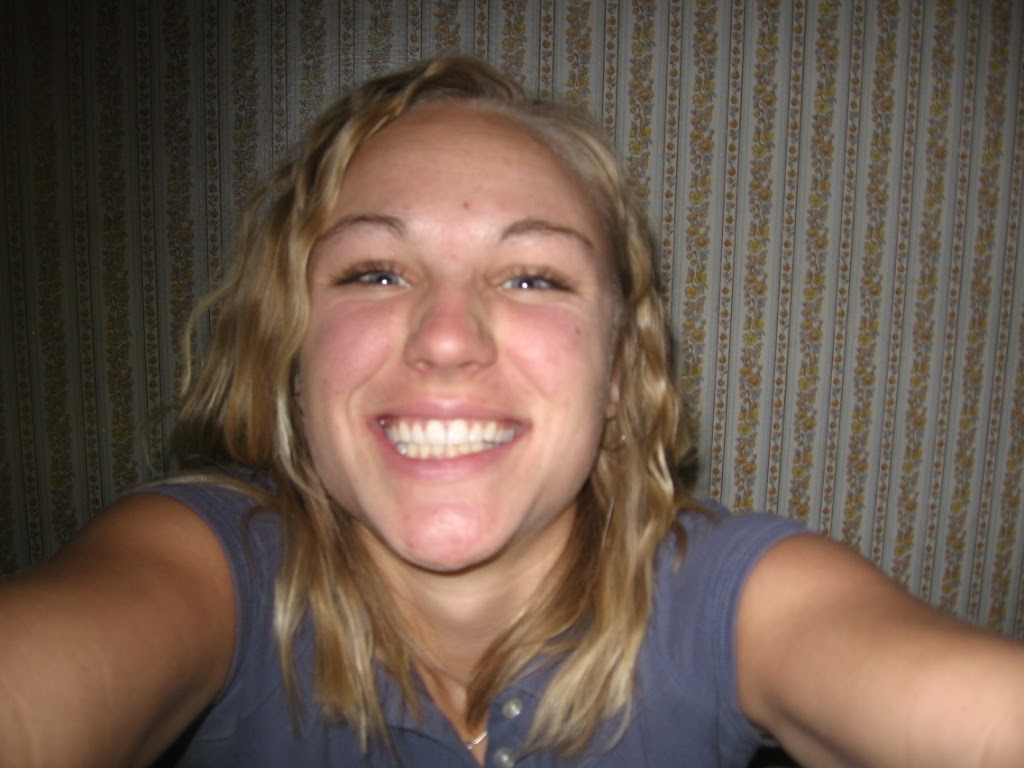
My younger sister, Aubree, amazes me. She has been and is such a bright example of optimism and hope to me. She started showing symptoms of this disease at a fairly young age, and that meant that her not too distant future would be very, very difficult. Knowing this, she has tried to enjoy life to its fullest and taken every opportunity available to her to make her life a good one. This first part of her story is sad, but it is also filled with many wonderful experiences. If you were to ask her, I believe she would agree that her life has been a charmed and blessed one. Through all her struggles to date she has learned the value of seeing the the positive and good in life (probably because seeing and focusing on the bad would be too depressing and not how she wants to live). She has persistently practiced and lived by optimism and positivity such that it is now a gift of hers, even a character trait. At the time of this publication she sits in a wheelchair and is almost completely blind, yet she remains optimistic and smiles often and sincerely. She is amazing.
Aubree’s SCA 7 story is very inspiring. I have been looking forward to sharing it. Because she lives so close to the Spirit, she has had some incredible experiences. Her attitude and actions in dealing with the disease have taught me more about what faith is. I hope you feel her faith throughout this post.
Aubree is the youngest in our family. As the “baby” of the family, you might say she is spoiled as my parents have given her most of what she has asked for over the years. My siblings and I do not mind at all because we just want her to be happy too.
Her story begins around the time she started Junior High. A couple years previous to this, we all found out that our cousin Lance had inherited SCA 7; he had started showing symptoms at the young age of 10. This shook us all pretty bad, and we naturally started to worry about the same thing happening to us since our mom also had SCA 7. The year Aubree started Junior High, we found out that our cousin Callie was also beginning to show symptoms. This was a devastating and scary blow. It made the personal fear of inheriting the disease increase two-fold.
My dad had read that color blindness was one of the first symptoms to show itself with this disease. He found a color blindness test in the encyclopedia, and out of curiosity, he tested each kid when we got home from school one day. He did not tell us what it was for. We all passed the test, except for Aubree. He then knew that she had inherited this disease. He kept this realization to himself. Here are his words about this experience: “That night I could not sleep. I went into the other room and poured my heart out to Heavenly Father. I begged Him for a blessing for Aubree. I asked Him to let me suffer rather than her. Even when I returned to my bed, I wrestled with the Lord all night long. It was the only time in my life that I prayed all night long. By morning, I was weak and humbled. I had slowly come to the understanding that what I was asking for was not Heavenly Father’s will. But I also had slowly developed a strong feeling that my Heavenly Father and Savior would be there for us every step of the way and bless us with strength. They spoke peace to my mind concerning the matter.”
That next summer (before Aubree started the 8th grade), we went on a vacation to our grandparents’ cabin at Bear Lake. This is a place we went to often, spending time with our extended family; it was like a second home. One day while there, Aubree was by herself on the patio looking out onto the lake. It was a familiar and peaceful scene. She said that in her mind she could see herself in the preexistence, and the Lord was asking her if she was willing to have this disease, SCA 7, when she came into this world. She responded that she would. She then knew that she had this disease. A feeling of comfort and love came to her and lingered. She knew it would all be OK.
At the end of the summer, she went to the Junior High with a friend to complete her registration for the upcoming school year. As part of registration there was an eye test. It was an E chart where you had to say what direction the E was facing. She could not see the E at all and completely failed it! Afterwards, the test administrator gave her a paper that said she needed to go to an eye doctor. This completely shocked Aubree! She knew already that she had this disease; she just didn’t realize that the symptoms would start so quickly. She thought the disease would manifest itself in her later in life, like her mom, coming after she was married and had some kids… This realization really scared her. She was still so young, and this meant that the disease would likely progress much more rapidly for her. She was not ready for this!
Aubree came home completely shocked and devastated. She was very nervous to tell my mom about it, so she briefly mentioned to her that she failed the school eye test, tossed the paper on my mom’s dresser, and then quickly disappeared into her own room. I remember coming home and finding my mom very upset and in tears. As I tried to figure out what was wrong, my mom showed me the paper, and she told me that Aubree gave it to her before running to her room. As I read the paper, I realized what it meant. Oh no, this could not be! This was so horrible! It was such shocking news that I didn’t know what to do. My mom kept on saying that it was all her fault. I tried to reassure her, but it was futile. I could not stop her guilt and tears.
My dad soon came back from work, and he went straight to visit Aubree in her room. He reassured her of his and our family’s love for her and also the Lord’s love. Aubree remembers the love that she felt really helped calm her fears. My dad then told her that she needed to talk to her mom because she was consumed with guilt. Aubree was the only one who could reassure my mom by letting her know that she was going to be OK. The three of them decided to go see the doctor, just to be sure. They knew that they would have to see a neurologist (not an optometrist) to address her eyesight, since it likely was more than just simple bad eyesight corrected by glasses. They were able to make an appointment for the next day with a Dr. Degree. She was someone who had already done a lot of research on this disease and knew our family. After this appointment, they would have a definite answer.
My parents were very vague about all of this with me, and Aubree would not talk to me. I felt very shocked by it all. All I really knew was that they were going to a doctor the next day to “confirm things.” I thought that this could not be happening to our family, especially Aubree! That night I prayed harder than I had ever prayed in my life to that point that she would only need glasses. I hoped so badly it would be so. I don’t think my three older brothers knew what was going on at this point. Luke was getting ready to start his senior year of High School and was busy with friends. Dan was on his mission in Mexico, and Josh was living away from home, attending BYU.
The next day Aubree and my parents made the commute to the University of Utah hospital to meet with Dr. Degree. Many different eye tests were performed, and they took a number of pictures of Aubree’s eyes. She said it was an exhausting experience that took a long time. In the end, it was officially confirmed that she did have SCA7, and it had begun to affect her eyes.
Their drive home was somber. My dad had already discovered that my sister had this disease from the colorblindness test he did, but it hurt him to see how hard it was for her. My mom felt terrible that she had passed this disease onto her daughter. The disease was my mom’s biggest trial in her life, and now it was going to be her daughter’s too. Aubree also already knew that she had it, but again it was happening much sooner than she had expected. Her plans for the future were going to be very different and much more difficult than she had initially hoped. It was a subdued and sober moment in time for them all.
When they returned home, Aubree escaped to her room, and just cried and cried and prayed for help. She was again filled with fear. However, while praying, she said that she felt an overwhelming feeling of love. She said that she could feel her Savior’s arms around her. It was a poignantly comforting experience. And so once more, the love of her Heavenly Father and Savior, and also from her family, helped push her fear aside. She has commented since that one scripture that really resonates with her is the one that says “perfect love casteth out all fear.”
Our whole family gathered together that night for dinner, except for Dan who was in Mexico. By this time we had all heard the results from the doctor’s visit. As we sat around the table, my dad told us about the doctor’s visit — that it confirmed Aubree had SCA7 and the disease was beginning to affect her eyesight. This was scary because she was so young which meant it would progress much more rapidly than it had for our mom. Every one of us had tears falling heavily, something I had almost never witnessed my brothers and dad do. It was a heart wrenching and sad time! Then my dad continued speaking, and I will always remember what he said. He said that if we take this disease a day at a time, it is not so bad. Imagining a future with this disease is extremely scary. It is a very depressing and heavy thought to carry. But dealing with it one day at a time helps the person affected to realize what abilities she still has, to use them, and to be grateful for them. This is a much better way to live, bearing a disease bit by bit instead of all at once. It makes it doable. I know from many conversations with Aubree over the years that this is something that has helped her not to worry excessively or be anxious about her future. In this moment, it also helped to be together as a family. As we sat around our kitchen table and grieved together, we felt the power and strength that comes from a family.
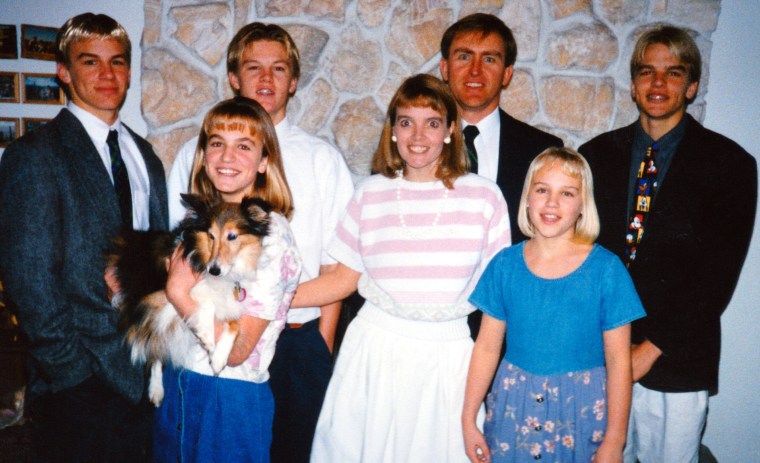
My bother Dan eventually received the news while he sat in a small café in Mexico that had a public computer with the Internet. He said that he began to openly cry as he read this news in an email my dad had sent him. Again, it is rare for any of my brothers to cry, especially “strong as an ox” Dan, but this was such sad news to hear! Now all the family knew and our hearts filled with tender compassion for our younger sister and the trial she would face.
Aubree was determined to use whatever abilities she had for as long as she was able. One example of this is swimming. Three of her four older siblings were on the high school swim team, so she wanted to do this also. Not being in high school yet, she decided to join the rec swim team. She loved it! Then later when old enough, she joined the high school swim team and enjoyed it too. I swam two years with her. Our team held two-a-day practices, one at 5:30 am and the other right after school. I really struggled to make the early morning practices. I was our driver, so many mornings Aubree would wake me up to go. I remember often saying “I can’t!” She would beg me and be annoyed if I stayed in bed. Then, if necessary, she would call a swimming friend to pick her up, or worst case, miss practice all together. If it weren’t for me, she would have made it to many more practices. In fact, she actually helped me to make a lot more than I would have otherwise. With her hard work and love for the sport, she excelled and competed in the state competition. Swimming is something she would enjoy doing for the next 10 years of her life.
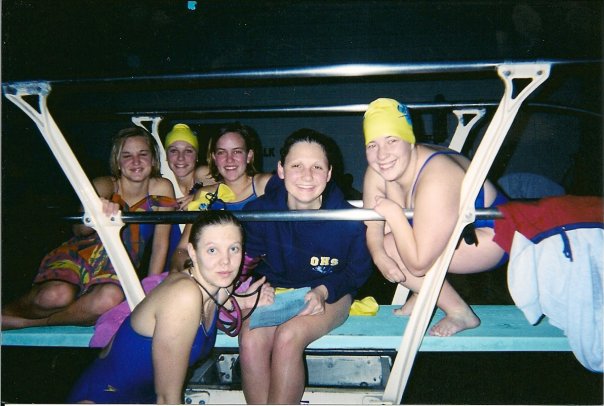
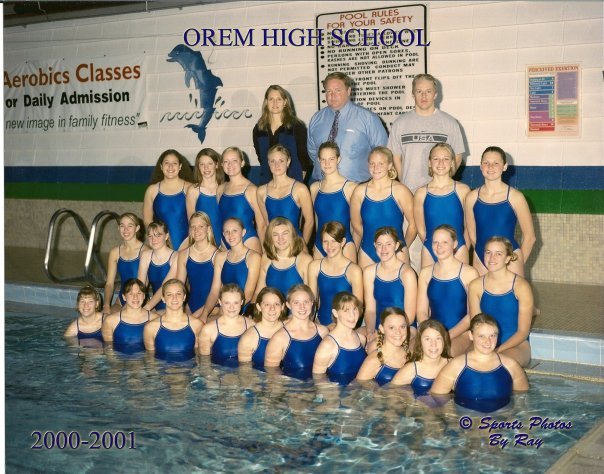
Aubree feared that this disease was going to make her high school years hard, but fortunately, this fear did not come to pass. The disease only affected her eyesight minimally, and her balance was still good even when she graduated. In class, she could see the board if she sat in the front. And when that got too hard, she asked her teachers to say out loud what they were writing. She was even able to get her driver’s license. It was limited though, so she could not drive on the freeway. Amazingly, her friends didn’t even know she had this disease, and she didn’t tell them either. She kept it a secret for as long as possible. This was something she did not want us (her family) telling others. It was important for her to be treated normal. And mercifully, she did have a very normal and even charmed high school experience.
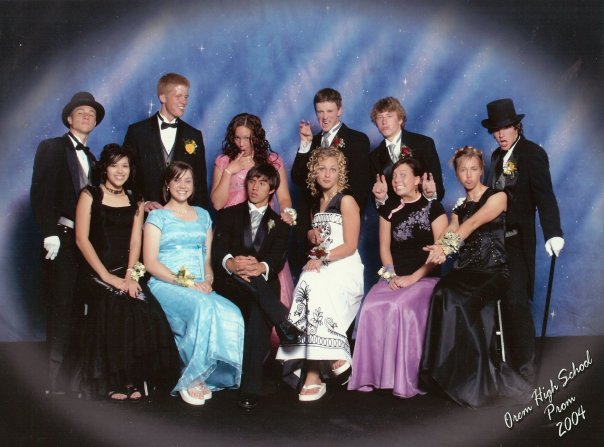
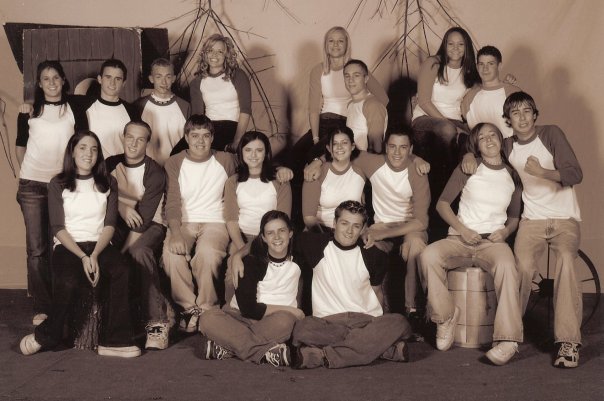
High school is often all about friends, and Aubree had a really good group of friends. They gave themselves a name: the M.A.U.D. squad (with the secret meaning of More Air Under Dair!). This name is telling of how much they giggled and were silly together. They had funny senses of humor and fun personalities. The MAUD squad spent most of the school week together. They were in a Unified Studies class at school. This is an all day class every other day where you participate in a variety of outdoor activities. On the weekends, this same group socialized together regularly too. Aubree is a very cute girl, along with all her friends. In Utah there are many school dances, and I think the MAUD squad got asked to every school dance. These relationships and experiences added to what was again, a wonderful high school experience for Aubree. She was blessed to have such great friends then, and they all still keep in touch today. However scary this disease was at the time, it positively pushed Aubree to seek to experience more and enjoy the people and time she had from a young age.
M
The summer after graduating high school Aubree landed a sweet summer job at Aspen Grove, a summertime resort in the Mountains up Provo Canyon Utah. It was a wonderful and unique opportunity. One of her church leaders knew the owners of Aspen Grove, and this connection opened the door for her and one of her MAUD squad friends, Carrie, to get jobs there. All summer long many groups or individual families come to Aspen Grove to enjoy fun outdoor activities and food while staying in cabins. The employees live there at the beautiful mountain camp as well, and they enjoy the good food and same fun activities as the visitors (but during their time off). And they get paid for this! Aubree and Carrie had a great and memorable summer working there. They enjoyed their “Tepee Tuesdays” (when they weekly slept in a Teepee there), swimming in the pool, savoring the beautiful outdoors, eating great food and bonding with their co-workers. Aubree tells the story of an eating contest with all the workers; it was for breakfast one morning. They had Belgian waffles with whip cream and strawberries. As typical, the contest was to see who could eat the most waffles. Aubree ate a whopping 11, wowing everyone including her large, male opponent that could not keep up with her. It is funny because Aubree has always been a skinny girl but with a big appetite. While working at Aspen Grove, she and Carrie would go running or jogging everyday on long runs. They were training to run a half marathon. Aubree could not run fast because of her declining balance, but it didn’t stop her. The regular long-distance running helped her appetite and possibly gave her the winning advantage. At the end of the summer, these two friends ran the Provo Canyon half marathon together. They definitely had a very full, fun, and adventurous summer working at Aspen Grove and furthered their friendship.
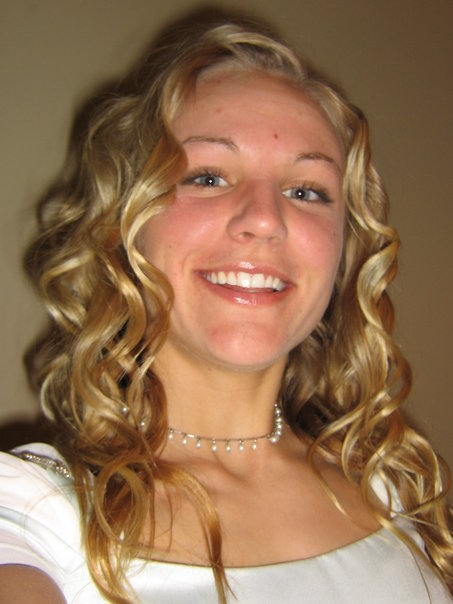
After the summer, Aubree started her Freshman year at Brigham Young University. Having a dad as a professor there made it easier for her get accepted, and it cut tuition in half. Her eyesight worsened during the college years, so that she could no longer drive. This was not really an issue though since many college students didn’t have cars and everything needed was within walking distance. In her classes, the main issue was reading the board. She could see paper and books by holding them close. Similar to high school, she resorted to asking her teachers to say what they were writing on the board, or she would ask those next to her what the board said. This was all the help she really needed. She chose to major in Recreational Management, something that matched her fun-loving personality perfectly. During these years the disease remained essentially invisible to others, something she greatly enjoyed, so she could be treated normally. Although not anticipated, she roomed with her cousin Callie, taking my place since I had gotten married. Cousin Callie had SCA7, and she was much further progressed than Aubree, experiencing major balance and vision loss. She needed help walking and seeing, and those around her gladly assisted. Aubree helped her, as did the many other friends whom Callie had made from her previous year at BYU. Aubree and Callie got along very well. They both had funny senses of humors and great personalities. During their two year stint as roommates, they grew extremely close. Together they went hot-tubbing, hosted dance parties, pulled pranks, downed dozens of milk shakes at the nearby Malt Shop, and shared their clothes. Aubree said that she came to greatly care for Callie and cherished her example – one that showed that a person could be truly happy even while having a serious disease.

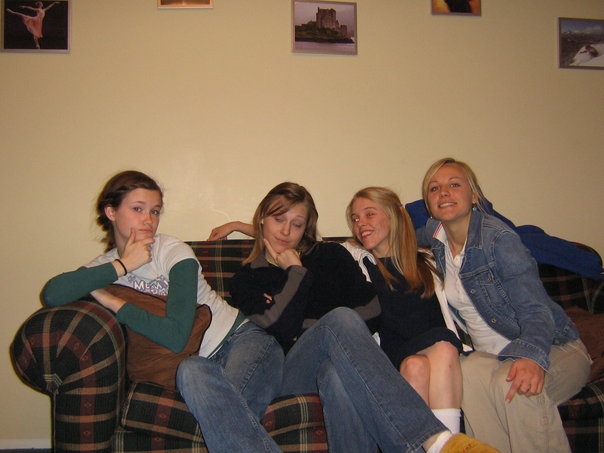

Dating was a big part of Aubree’s college experience. She is such a cute and fun girl that she got asked out on dates almost every weekend. She enjoyed all the fun activities and getting to know all these different boys. She was even known to kiss boys on their first dates. …There is a funny story that she tells of a boy who wanted to take her ice-skating on a first date. Though the disease had not affected her balance to the point that you could notice any issues when walking, she did in reality have bad balance. For example, she could not walk on a beam or run real fast (only jog). As skating requites good balance, it is something she could not do. She tried telling this to the boy without saying she had this disease. He was very persistent though, and he would not take “no” for an answer. She relented and went ice-skating, but she could not stand up on her skates without falling. He helped her onto the ice where she really could not stand at all. The young suitor finally got the point that she really did have bad balance. It was a frustrating experience for Aubree, so on that first date, she did NOT give him a kiss good night! Over the next two years she dated several boys exclusively, but none of the relationships got serious enough to have “the talk” about having this disease. There was one exception, a young man she dated her Sophomore year. She told him, and he seemed to be OK with it. Aubree, however, broke up with him shortly after because our dad thought he lacked sufficient ambition to provide for his daughter. In the end, with so many opportunities to fall in love, getting into a serious relationship is something she tried to avoid. She did not want to put the heavy burden of this disease on anyone else, and so she kept back a bit and hesitated to take the plunge.
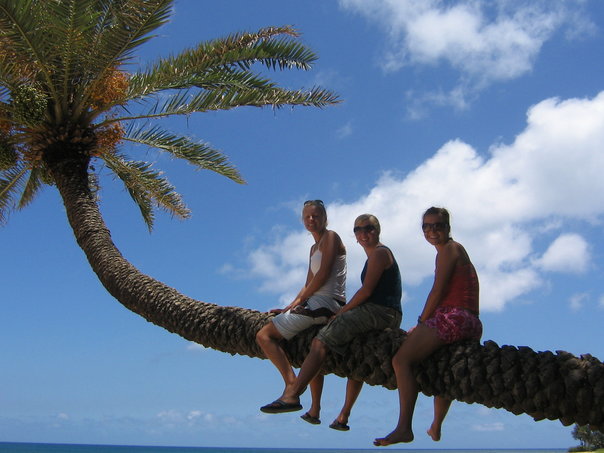
After her first Fall and Winter semesters, Aubree and her friend Carrie attended BYU Hawaii for the summer semester. They even persuaded another MAUD squad friend, Jenny, to come with them. When they got to Hawaii, they moved into their apartment (which was right next to the beach), started classes, and landed jobs at the Polynesian Cultural Center. They were living the dream, except Aubree felt that between work and school she did not have enough time to enjoy Hawaii. So she dropped all her classes! In the end, BYU Hawaii did not offer the classes she needed for her major, so she did not feel too bad about it. Now she was able to play a lot more. Her friend Jenny decided to drop her classes too, and Carrie only kept her fun one – Ukulele! They spent everyday the rest of the summer (when not working) swimming in the ocean and riding the bus around the island to explore. It was a magical summer.



Again Aubree wanted to experience all she could, so she jumped at opportunities she had to go to Italy and then to more of Europe during and after her second year of college, respectively. Her friend Carrie’s parents were serving as church mission presidents in Italy, and she planned to visit them during Christmas break. She invited Aubree to go with her. They had a blast touring Europe and enjoying the food. Aubree especially loved the Gelato ice cream. They even skied the Alps during their trip. With Aubree’s balance getting worse, skiing was getting hard, but she was grateful she could at least experience the Alps, even if she had to go slow. The next summer she was able to go to Europe again with my parents and cousins on a Scandinavian cruise. They toured castles in Russia and Switzerland, road a boat up canal streets in the Netherlands, ate Danishes in Denmark and hiked the green hills in Scotland. These trips to Europe (and her summer at Hawaii) cost money, but my parents were willing to help her out because they too wanted her to be able to experience these things while she still had her abilities. They wanted to help her enjoy the life she was given.

KONICA MINOLTA DIGITAL CAMERA 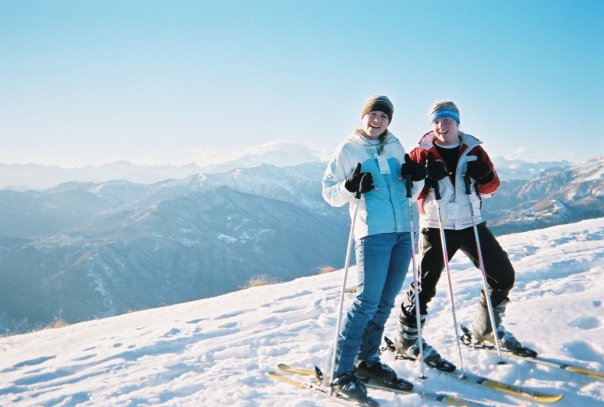
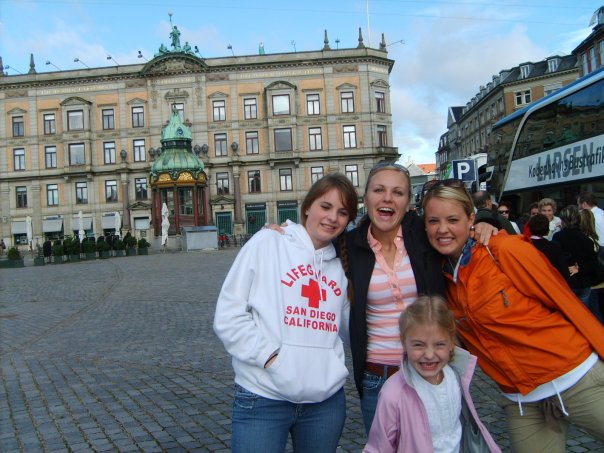
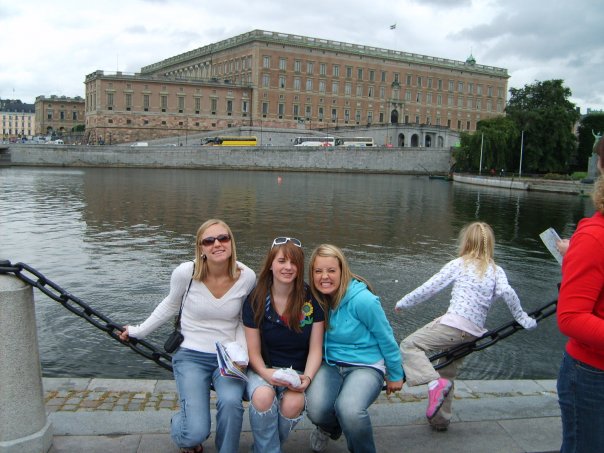
The summer before her third year of college is when cousin Lance, Callie’s little brother, passed away. Our family drove down to Arizona for his funeral. Aubree enjoyed spending time with Callie there and remembering Lance’s wonderful life. Aubree tried to persuade Callie to come back to BYU with her, but Callie wanted to stay home with her family. Aubree took a picture with her and Callie at the funeral. Later Aubree showed it to her then boyfriend, and he said, “Hey! Its Calcutta!” (a nickname that had been given to Callie over the last couple of years). Everyone loved Callie and would miss her. Aubree would especially miss not rooming together and not sharing the rest of the college experience.
Aubree lived her Junior year with another cousin, Diane. This was actually their second year as roommates. The previous year Diane lived with Aubree and Callie. Aubree and Diane also grew close over the college years; they would be roommates for two and a half years total. Diane had enjoyed the hot-tubbing, prank pulling, and malt shop trips with Callie and Aubree. She was a great roommate to Aubree. They too shared clothes (more Aubree wearing Diane’s clothes!). Diane plucked Aubree’s eyebrows for her since she could not see them. They played hard together. Once when it rained really hard, they ran around in it, getting drenched. Diane majored in Dance, and Aubree enjoyed going to see her many performances. She really enjoyed her time with Diane. During this school year, Aubree continued to date often. That year she dated two boys seriously, both of whom she told that she had SCA7. The first one was scared by it, and they soon broke up. The second was just fine with it, and Aubree thought she might marry him. After a time though, he ended up breaking up with her. She was a bit hurt by it, but she went on with life and didn’t worry too much about it. Plus, she felt it was probably better if she did not put the burden of this disease on someone else.
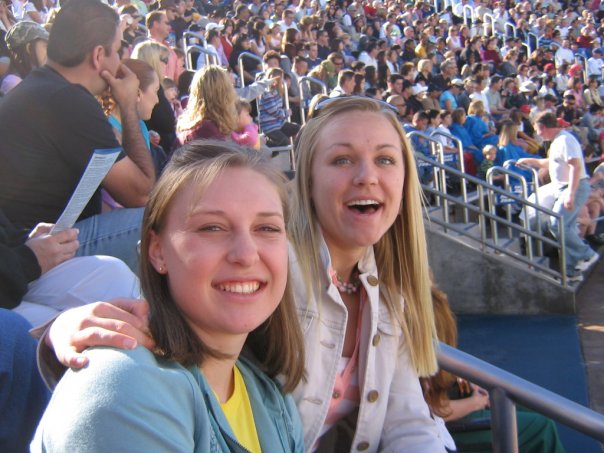
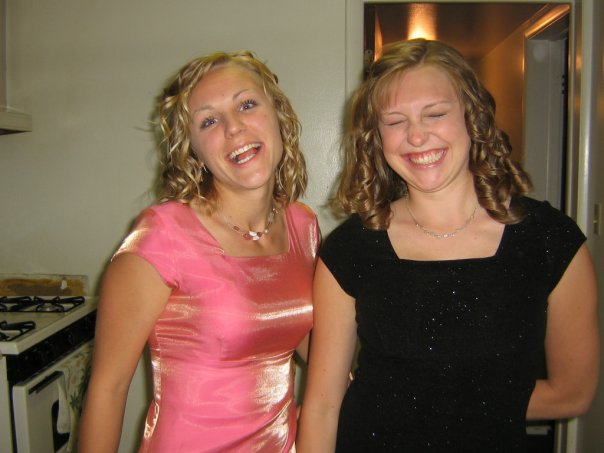
It
At the beginning of her Senior year, Aubree met Taylor. She and her roommates were going on a trip to Salt Lake City with some boys and their roommates. Taylor was in this group, and he and Aubree really hit it off. They talked with each other the entire hour-long drive there, the whole time they were in Salt Lake City, and the drive home too. They even had their first kiss when he said goodbye to her that night. After this, they saw or talked to each other most every day. They quickly fell in love, and so Aubree had the dreaded talk with him. She told him how she had this disease. She was nervous to tell him because she really liked him. He told her that on his mission, he had some experiences were he learned to have an eternal perspective. He believed that those experiences would help him to deal with something like this disease. This was a great comfort to Aubree. The Lord really did help to lead them together.
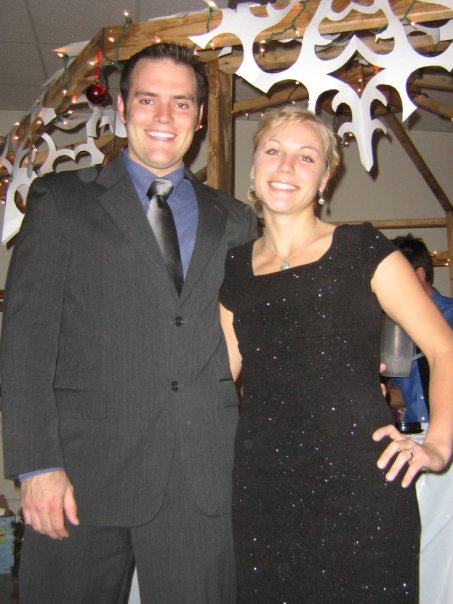
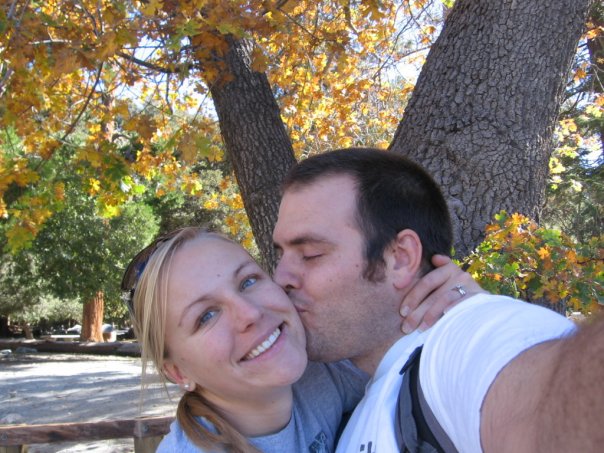
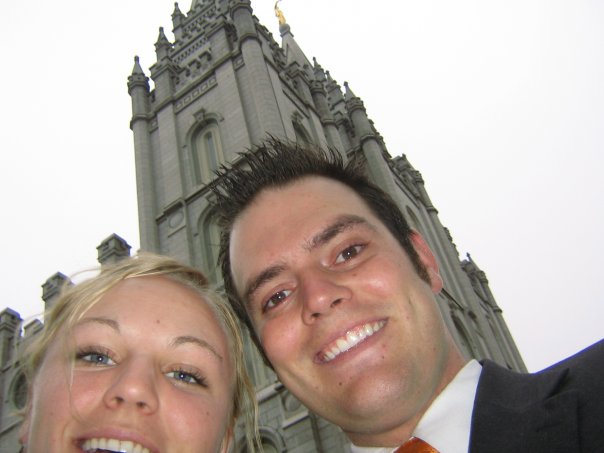
While dating, Aubree saw Taylor hug another girl, and she did not like that. She went home angry and told Taylor that it was probably better if they just broke up since she really didn’t want to put the horrible burden of this disease on him anyways. He sent her a text her back saying that he loved her too much to let her go. The two of them really enjoyed each other, and they continued to date and grow closer. For Thanksgiving, Taylor invited Aubree to California to meet his family. Taylor has a large, close-knit family. He is one of seven kids, all boys and one girl. Aubree loved his family and had a lot of fun with them. While there, he took her snorkeling and then had a picnic on the beach. He proposed, and Aubree said, “Yes!” They had a most beautiful wedding in February, the same day as both of their mothers’ birthdays. It was the perfect gift to give them.
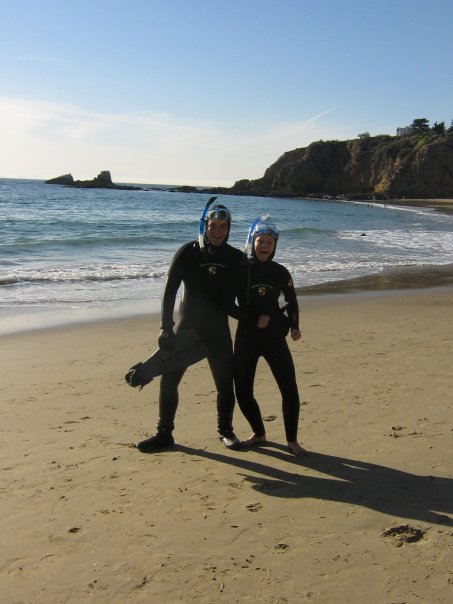
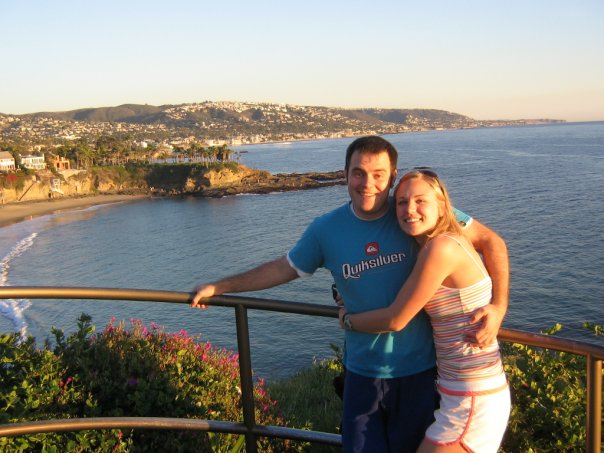
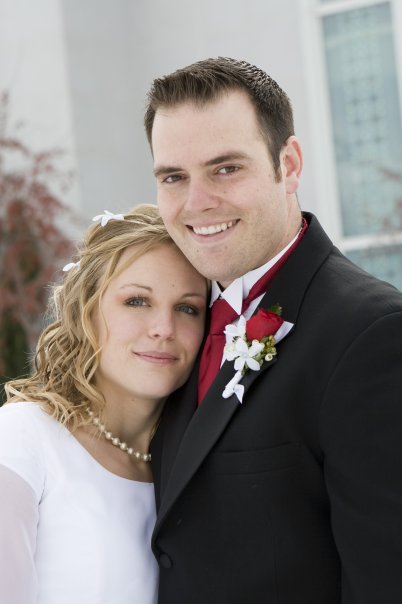

After their wedding and honeymoon to an Island resort off of California, they returned to BYU to finish their degrees. Aubree graduated in Recreational Management, something she thoroughly enjoyed. She immediately found a job that summer at the Provo mental hospital, using her degree. She worked there until the end of the summer, and then they moved to California. They lived with Taylor’s parents while he started his career as a high school physics teacher. Life was good and things turned out to be much more wonderful than Aubree ever believed possible. When she first found out in junior high that she had this disease, she knew it would progress much more quickly for her than it did for our mom. She feared that it would make her high school and college experiences very difficult and that she would not be able to get married and have children. Things however turned out to be exceptionally better than she could have ever hoped. Yes, she had to deal with bad eyesight and declining balance, but neither had significantly affected her that much. Others could not really even tell anything was wrong, only if they were looking for it. Her high school and college experiences were rich and full of many wonderful experiences. And now she was very happily married to a wonderful man who loved her and whom she loved very much. You can read about them having their only child, Sam, on the post: Having SCA7 Free Children. Looking back Aubree feels that the Lord has helped her to have an extremely full and wonderful life. He has answered her prayers and those of many others. No, He did not heal her of this disease, but he did help her to feel of His great love, as well as the love of those around her. And this perfect love cast out all her younger years’ fears.
In addition to love, her faith has also helped to push out fear. Aubree strives to live by the advice my dad gave the day our family found out about her having this disease. You need to take this disease one day at a time and enjoy the blessings of that day. That takes faith. Aubree really does not worry or get anxious about the future, and she clearly sees the blessings she enjoys each day. I believe that this is why when I call and ask her how she is doing, she replies, “Good, great, and wonderful!”
…Before telling the rest of Aubree’s story, I will share the first part of my own story and my IVF/PGD experiences in order to have children. So stay tuned for the next two posts about me, myself and I! Haha…I feel like this has been a long time coming.
-
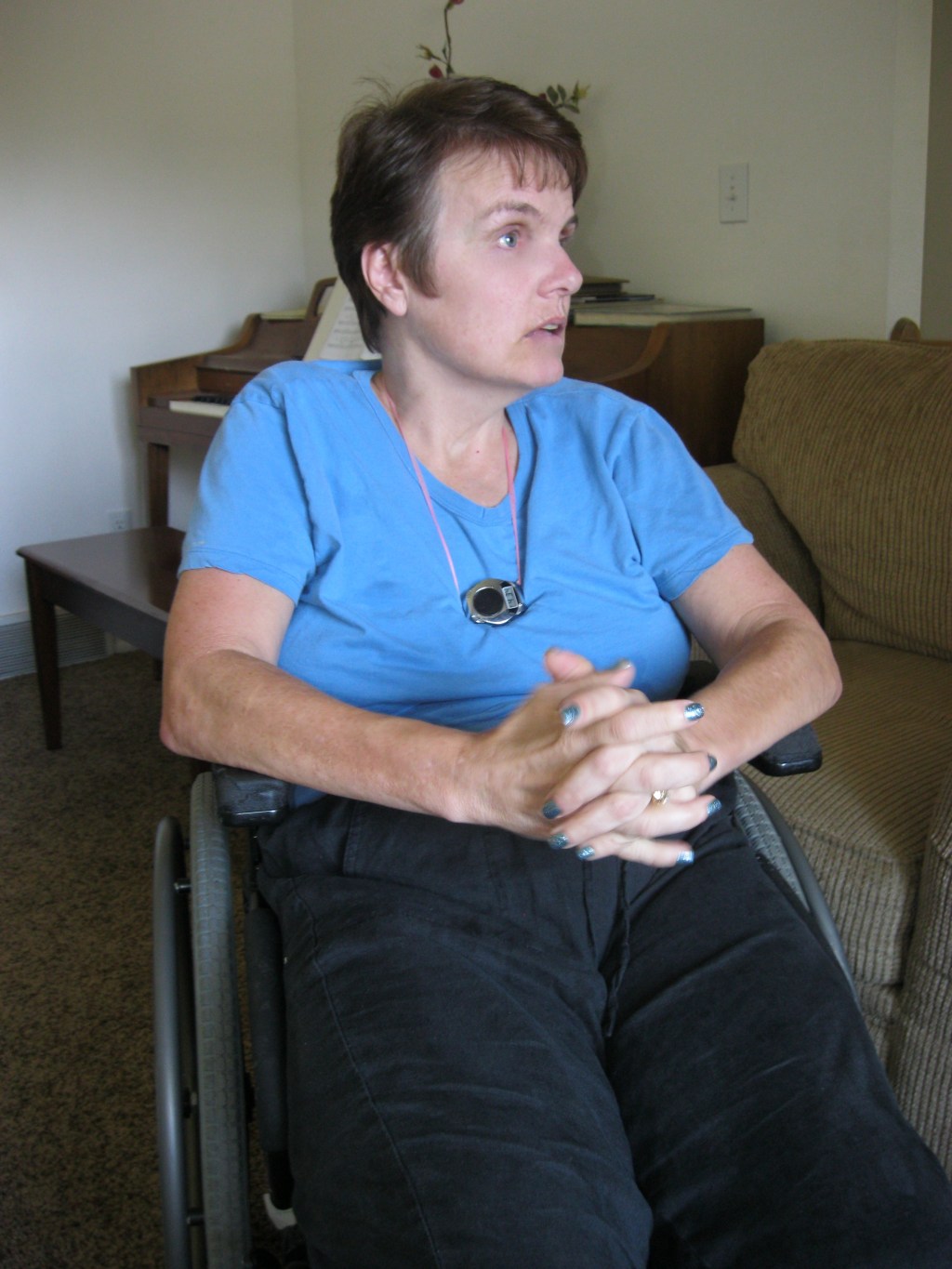
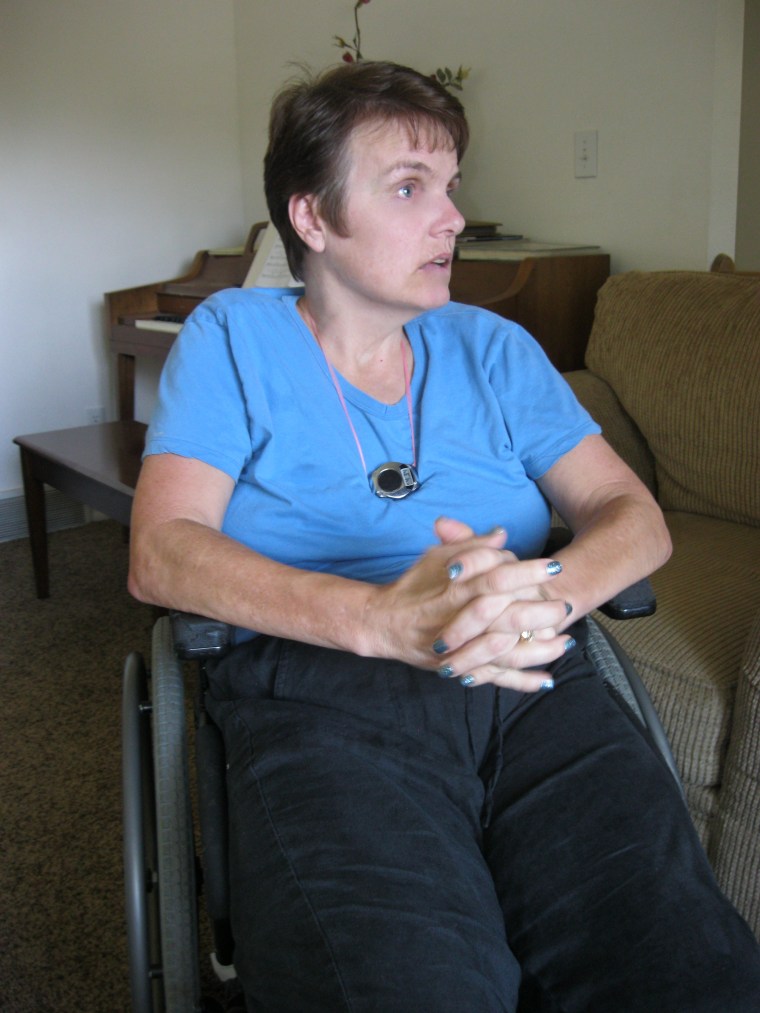
The final ten years of my mom’s life were particularly difficult. It was hard on so many levels. In a way it scares me to write the final post of my mom’s life because this will very likely be my own fate, unless a miracle happens. The silver lining through out this last period is love. Not just any love but charity, which is the pure love of Christ. My mom needed a lot of help, most especially from my Dad, and us, her family, and also the many people around her that had to step up for her. What resulted was a wonderful outpouring and feeling of pure love. My dad now says that he came to realize that this is the purpose of life, for us to learn godly love.
“Charity suffereth long, and is kind, and envieth not, and is not puffed up, seeketh not her own, is not easily provoked, thinketh no evil, and rejoiceth not in iniquity but rejoiceth in truth, beareth all things, believeth all things, hopeth all things, endureth all things.
Wherefore, my beloved brethren, if ye have not charity, ye are nothing, for charity never faileth. Wherefore, cleave unto charity, which is the greatest of all, for all things must fail–
But charity is the pure love of Christ, and it edureth forever; and whoso is found possessed of if it at the last day, it shall be well with him.” Book of Mormon, Moroni 7:45-47
Around 2004
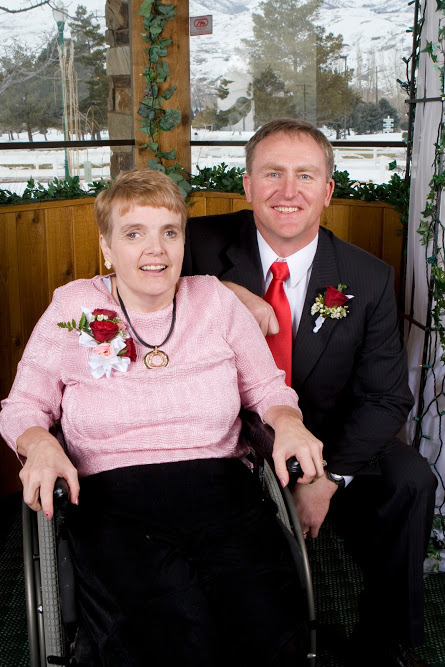
The last ten years of my mom’s life began with my parents becoming empty-nesters. My youngest sister, Aubree, moved into an apartment by BYU with our cousin Callie where they were both enrolled. I got married in April. My brothers Luke and Dan were home from their missions, going to college at BYU as well. And Josh, the oldest, was married and had one child, Maddy (the first grandchild). My mom LOVED her grandchildren! Life really was good, but the disease made things hard.
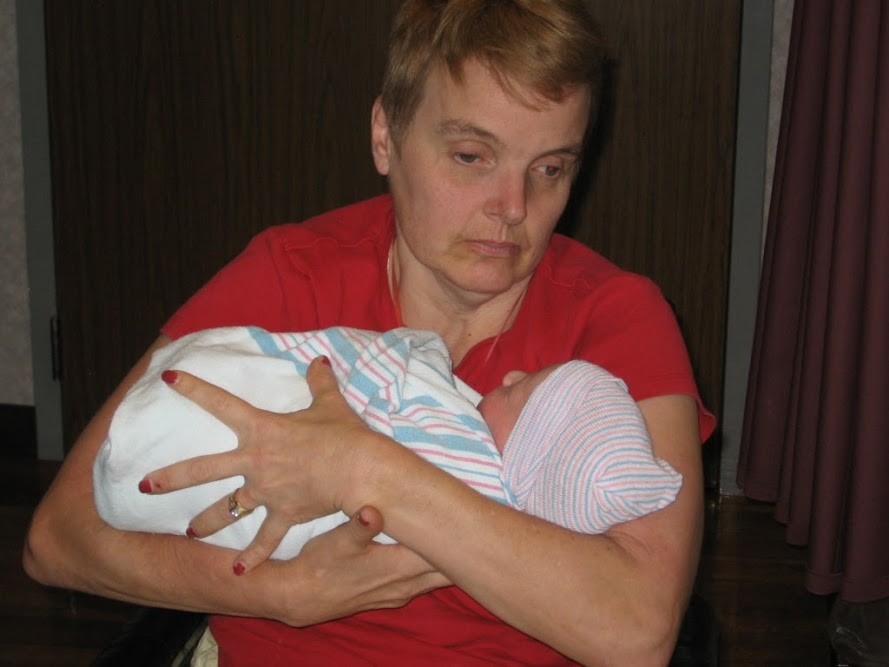
With the disease worsening, my mom’s Jazzy or electric wheelchair became too hard for her to operate. Her eyesight and deteriorating coordination made it hard to avoid objects and obstacles. It was also much more difficult to get in and out of the Jazzy to do things like gardening. Reluctantly, she gave it up and began to use a regular wheelchair. It was hard for her to give it up. Although, she had worried at how weak her legs were becoming due to lack of use while sitting in her Jazzy. Transitioning to a regular wheelchair, she removed the foot rests and used her legs and feet to get around. This now gave her legs daily exercise, and she enjoyed this. Sadly, it was during this transition that she had to give up gardening. My mom knew that my dad did not enjoy yard work, and all the kids, her helpers, had moved out. And so her big flower beds by the front door filled in with grass. The garden beds in the back yard were also emptied. I think my mom was probably grateful that her eyesight was bad enough that she couldn’t see her empty flower beds.
https://www.youtube.com/channel/UCO8APm728uoozLpgCZiTXEQ
My parents developed a good system at home for meals and cleaning. With the yard now simplified, they also simplified the cooking. Costco sells really good, preassembled meals that can be placed into the oven, crock pot or microwave. Thus, easy cooked meals from Costco became their go-to. For Sunday dinners with their college kids, including their spouses and children and any other family in town, they developed a factory like approach to serve such a big group. The meal was usually a crock pot roast, mashed potatoes from food storage potato flakes, Rhodes’ orange rolls, fresh pineapple and a veggie soaked in butter. Together they were quite the team to feed such a big crowd each week. My dad would say, “Cindee was the brains, and I was the hands.” During these years, my dad also had to help more and more with the cleaning, but my mom tried to help out as much as she could. It helped that it was just the two of them at home.
As the disease took away abilities, my mom and dad looked for things she could do to continue enjoying life to the fullest, so they adapted, got out of the house and still experienced much. For example, she had to give up scuba diving. Her last dive was in Hawaii with my dad and her father-in-law, Jack, and they saw the giant manta rays. As scuba diving became too hard for her and unsafe, she turned to snorkeling instead. And when that became too difficult, she and my dad did more cruises, something still very enjoyable from a wheel chair. She enjoyed all the food, shows and even the sights as most places had handicap accessibility. The next three years they went on one cruise each year. In 2004, they went on a Panama Canal cruise with their parents. In 2005, they went to New England, and in 2006, they went on a Baltic cruise to Russia, Scandinavia, and Madagascar with Aubree and my dad’s sister’s family. She also traveled with my dad when he traveled for his work. In 2006 and 2009, they went to China and Dubai, respectively. My mom and dad knew that if they had something exciting to look forward to, it made enduring the disease easier. My mom and dad always had a fun vacation on their calendar (and many times more than one!).
When my parents were not on vacations, they kept busy getting out and having fun together. They discovered that the nearest movie theater offered free movie tickets to those in wheelchairs and to the person accompanying her or him. So every Friday morning my mom would call the theater to hear what new movies they were showing. Then that week they would go watch all the good movies. I think they saw almost every movie not rated R for several years. Eventually that theater stopped its offer, so my parents stopped attending weekly. In addition to movies, another thing they enjoyed doing together was fishing. My dad loves fishing! He goes all the time, and he figured out a way to take my mom along. He found a fishing rod with a giant reel on it. Even with my mom’s poor coordination, she was still able to work the reel because it was so large. When my did lake fishing, he used a fishing float tube. If my mom came, he would tie their tubes together, and he would steer them around the lake fishing. My mom loved doing this with him, and she surprisingly fared quite well. She meticulously keep score of the number of fish they each caught. Then, when we kids would call home, she would brag how that week she caught more fish then my dad, an impressive feat given my dad is practically a professional fisherman. I think he has far surpassed the 10,000 hours of practice. So even with a very limiting disease like SCA7, there was still a lot in life to enjoy. My dad helped make my mom’s life so good.
Life was good, but it was about to get real tough. My mom loved to talk on the phone with her family and friends. While talking on the phone to others, she would move around the house in her wheelchair, using her feet to power the chair. One day while talking to a neighbor and simultaneously wheeling about the house, her front wheel went over the ledge of the stairs leading to the basement. She and her chair tumbled down the stairs. My dad heard the fall and subsequent screaming as he ran to her. He found her lying at the bottom of the stairs, screaming in pain with her wheelchair nearby. He immediately called 911, and when the ambulance arrived, the paramedics transported her to the hospital. The doctors took x-rays of her back, but they reported that she was fine. Nothing was wrong!? My mom was still experiencing severe pain, so the doctors on staff at the time sent her home with some pain medication. The neighbor with whom my mom was speaking when she fell happened to be married to a doctor, and they came by to see her after she returned from the hospital. Our neighbor doctor could tell that something was wrong. He was shocked that she was sent home and told that nothing was wrong. My mom and dad went back to the hospital, and this time it was discovered that she had crushed her vertebrae (in three places). She went to a radial specialist that filled her crushed vertebrae with a fluid to put her spine back in place. Afterwards, my mom spent several weeks on her back in bed, plus several more months of pain and being careful, waiting for her spine to heal. The doctors prescribed Lortab to cope with the pain. When she first took it, she started to hallucinate. It was so bad that she screamed and tried to sit up when she was supposed to keep still. It was scary to see and a great relief when it wore off. After this, my parents never wanted to try Lortab again, and instead used Percocet. It was a long, hard road recovering from this accident. This happened to be the same year (2006) that they had their Baltic cruise planned. My mom had about four months to heal sufficiently in order to go on the trip. By the time of the cruise, she felt well enough, and they were able to go and have a really good trip.
The emotional aspects of the disease became as challenging or more so than the decline and loss of physical abilities for my Mom. For a time, roughly five years, my mom had been taking Prozac, an anti-depressant, and it worked well. However, it had some side effects that bothered her, so one day she stopped taking it. She did not tell my dad, and almost immediately she began to feel very anxious. She became upset and very difficult to reason with. In this state, she could not lay in bed for long and had to be in her wheelchair, pushing herself around with her feet. Sleeping was difficult. She just cried because she felt so upset. After this went on for a few days, my dad discovered that she had stopped taking her Prozac. He persuaded her to resume taking her medicine, but oddly, it did not help calm her down. She still could not sleep and was very upset. It was like she was having a never ending panic attack! My dad said that she went three days without sleeping at all. It was a very hard time, and she could not be left alone. We had another neighbor that was a neurologist. They went to see her, and she performed a battery of tests on her. She sent my mom home with medicine. It helped her to sleep for short periods of time, but she was still really upset and crying much of the time. After a week or so, the neurologist prescribed a different medicine and the results were essentially unchanged. It helped a little but not enough. They tried several different medicines over a month or two period, but again, none of them worked. My dad finally had the inspiration that they should just increase the amount of Prozac. He shared this idea with my mom’s regular doctor, and she agreed. She also thought my mom needed an anxiety medicine to help her sleep. In the end, she increased her Prozac levels from 20mg to 80mg and prescribed Temazepam before bed . It worked!!! She finally calmed down and could sleep whole nights through again. It was such a relief!
Even though my mom calmed down and slept better again, her emotions remained fragile. This had been the case since her depression started, but it slowly worsened as the disease progressed. Her triggers became much shorter, and she would lash out more quickly. For example, my dad loved to fish, and he went often. My mom would get annoyed and emotional that he was going fishing once again, and she would passionately and even angrily shout things like: “You love fishing more than you love me! If you had to choose between fishing and me, you would ALWAYS choose fishing!” And she would continue on and on. None of this was true. Yes, my dad enjoyed fishing and spent lots of time doing it, but he also did so much for my mom daily and gave of himself to make her happy. I’m sure it was tempting for him to lash back. I know I did it at times, and I sincerely regret it. Not saying my dad was perfect, but he gained perspective that helped him. He once told me that he realized that it was not my mom saying those things, but it was the depression. Many times I witnessed my mom get upset with my dad and lash out at him, and in return he would often make a joke about it and lighten the moment. For example, he would laughingly say, “Yep, I sure love fishing.” My dad also lovingly teased my mom every so often, especially when she made shopping trips to Costco. She usually came back with super-sized desserts and candy, something she loved. He then told whoever was at the house afterwards that Cindee was famous at Costco and the workers knew her by name since she was such a regular. He would make other playful comments like: “It looks like you bought the whole store!” or “I am going to have to take away your membership card.” She usually had her set of good comebacks. Despite the difficulties in controlling her emotions, she did have a lot of love and gratitude that often shined through.
My mom’s day to day life was very restricted due to her many failing physical abilities. She could not get out of the house on her own, and household work was also becoming too difficult. This gave her a lot of time with a very limited list of things she could do. This is one of the most depressing parts of this disease. You do not get to spend your life doing things you really want to do. If she could, I bet she would have spend her time helping out her kids and grandkids because family meant everything to her. That said; my mom did do some good things with her limited list. Of course there were her regular TV shows that she watched each day: The Price is Right and Oprah. In addition, she did some more enriching things like making use of the Library for the Blind. They sent her a large tape player with extra large buttons to control it, so people like my mom could easily operate it. Those utilizing the Library would call it, and a worker would send you as many books on tape as requested. Its book selection was fairly extensive and all free. My mom once requested that it continually send her all biographies and autobiographies starting in alphabetical order. She probably listened to a hundred plus biographies and learned about ALL kinds of people. She would often ask others for book recommendations, and then she would request and listen to them. If she found an author she liked, she would listen to all of his or her books. She especially enjoyed mystery books. This library reported that it sent her 501 books in her lifetime. The Church of Jesus Christ of Latter-day Saints also sent her the scriptures and the monthly Ensign magazine on tape. Each day she would listen to the scriptures and each month to the entire Ensign magazine (as soon as it arrived). My dad joked that she was the first member of the church to read the Ensign and do her visiting teaching each month. Thanks to her tape player, my mom was very well read!
Another very enriching activity for my mom was spending time with her many good friends. It went both ways. She would call her friends and neighbors to set up monthly visiting teaching, weekly shopping trips, or just to talk. And in return, she had many great friends that served and helped her out. There were so many that I cannot name them all, but I will mention two to three to show examples of their selfless service and genuine friendship. Tami and Laura were assigned to be my mom’s visiting teachers. They became familiar friends by coming by often to come help my mom with whatever she needed. Tami was a nurse, so she new how to help someone like my mom with physical challenges. In addition, she put together some CDs for my mom to listen to, and she helped my mom decorate our front room with curtains and pictures. Eventually our church congregation geographical boundaries were changed, and Tami and Laura were not in my mom’s ward anymore. Laura, however, continued to visit, and she stayed very close friends with my mom. She helped my mom weekly for many years…all the way to the end of my mom’s life. Laura, a super healthy woman, would daily drink a “green drink” packed full of natural vitamins. Somehow she persuaded my sweet toothed mom to also drink one daily. Everyday she would bring my mom a green drink, seriously every day! And on days that she could not come by, she would leave extras in the fridge. This lasted for years! It was amazing. Along with the green drinks, she would take my mom to a nearby nail salon to get a manicure every month. My mom always had her nails decorated for the holiday of the month. Her nails looked amazing, and the grandkids loved to see whatever was on them. Laura was also a good tennis player, and occasionally she would take my mom to see some of her matches. Most importantly though she also spent a lot of time just visiting with my mom. They had many good memories together. One other special friend of note was Celecta. She took my mom on many of her weekly grocery shopping trips and on MANY other errands. She actually passed away shortly after my mom. I know they are continuing their friendship in Heaven. Those women mentioned here and many, many others not named here definitely touched her life for good. My mom cherished her friendships with these special women; they were her ministering angels.
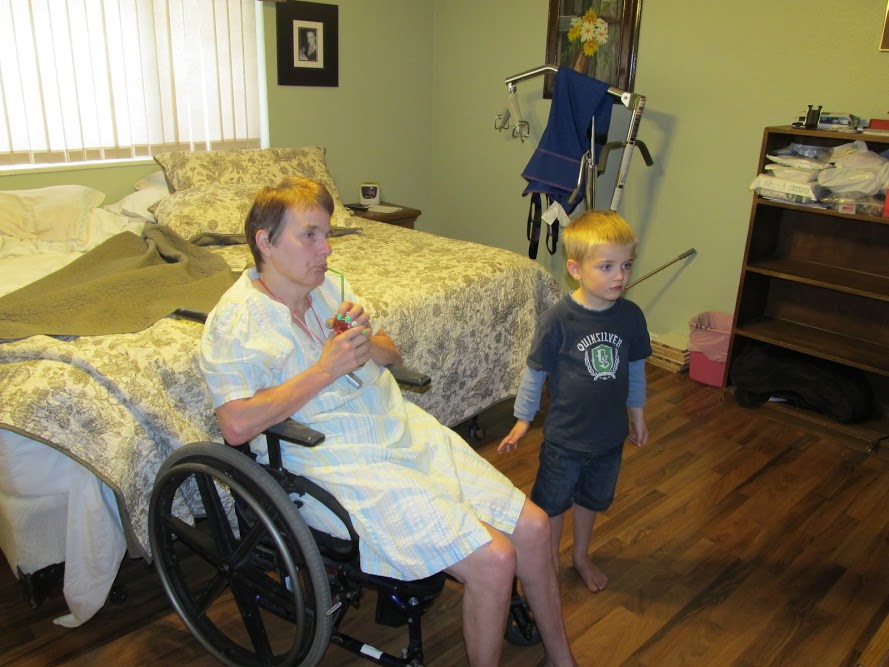
The disease continued to get worse, and there was yet another time when her emotions became too difficult to deal with again. My mom starting having panic attacks much fore often and severely. For example, once my parents chose to travel by plane for a planned vacation. Prior to this particular trip, on airplane trips my mom would put her hands on my dad’s shoulders from behind and awkwardly walk with him down the isle. It was probably quite the scene, and I imagine they hated all those eyes looking at them. After sitting, my mom would try her best to not go the bathroom. For the specific trip mentioned though, this routine became too difficult. The airline required that a special isle wheelchair be used. The flight attendants placed her in the chair and strapped her in. They would not allow my dad to help (something my mom was super-uncomfortable with since he knew how to best help her). Inconceivably they left her unattended, and she fell out of her chair! My mom became so upset that by the time she got to her seat she was crying and yelling out; she was having a panic attack. My dad did his best to calm her, but the flight was miserable. The loss of additional abilities also set her off. Examples included things like not being able to dial phone numbers or use the TV remote because of her lack of coordination. This meant more waiting on other people (i.e. to call her or to dial for her). When she started having a hard time pushing buttons on the TV remote, my dad searched for and found a remote she could do on her own. Seems like it had four super large buttons that she could navigate. This overall process of losing abilities, dealing with emotions, looking for solutions to problems, and then finding a new normal was hard, and it just kept happening. Soon enough she struggled to feed herself. She could not get off her bed unassisted or similarly off the toilet. As if these things weren’t enough, people started to struggle to understand her increasingly slurred speech. Dealing with these struggles led to panic attacks. Fortunately, she was able to sleep at night with the prescribed anxiety medicine, but the days became very difficult. Her doctor eventually prescribed clonazepam, a real strong medication to be taken when things were out of control and too hard. It worked well, but essentially knocked her out for 24 hours. She would sleep for much of the time, but when finally awake, she was like a vegetable or zombie – either quiet and just staring off into space or with extra slow and slurred speech. Neither my mom nor my dad liked these side affects. My dad only gave it to her when things were really tough. He named this medicine the “I don’t give a damn pill!” For a time this helped my parents cope with these tough situations, and it wasn’t needed too often. Sadly, after a year or two it stopped working. Her body became immune to its affects, and it no longer calmed her down. She learned to deal with it, and my dad did a lot to avoid her triggers and to try to help her stay happy.
My dad knew that one thing that helped my mom stay happy and up in spirits was getting her out. Too much time inside gets depressing. One thing they did together was bike rides. My mom’s poor balance prevented them from using their tandem bike, so my dad found a recumbent tandem bike that did not require balance. It had shoes that attached to the peddles, and my dad made a seat belt for her. Despite limited abilities, my mom could now go biking. They did this so often that they got in pretty good shape and became easily recognized among the Provo Canyon trail regulars. The bike was also so unique that people started to ask if they could take pictures of them on it. In addition to small local adventure, my dad also sought bigger, global adventures. My mom was still able to go on some cruises as one of the main events is eating great foods, one of her favorite things. She could also enjoy the music and shows at night and experience new places, even if she could not do much there. In 2010, my sister Aubree and I, along with our spouses, joined my parents on a Caribbean cruse. During this trip my mom needed someone to feed her, since she didn’t have the coordination and sight to get food onto her utensil and into her mouth. We all took turns feeding her throughout the trip. At the different stops, there were some things my mom could do like swimming in the ocean in her tube while others snorkeled or scuba dived. We all had a really good time on this trip, including my mom! Her last cruise was a Mexican Riviera cruise in 2011 with all her family, kids, spouses and grandkids. It was a large group, and we enjoyed our time together as a family. These activities and trips gave my mom something fun to look forward to and to keep her spirits up.
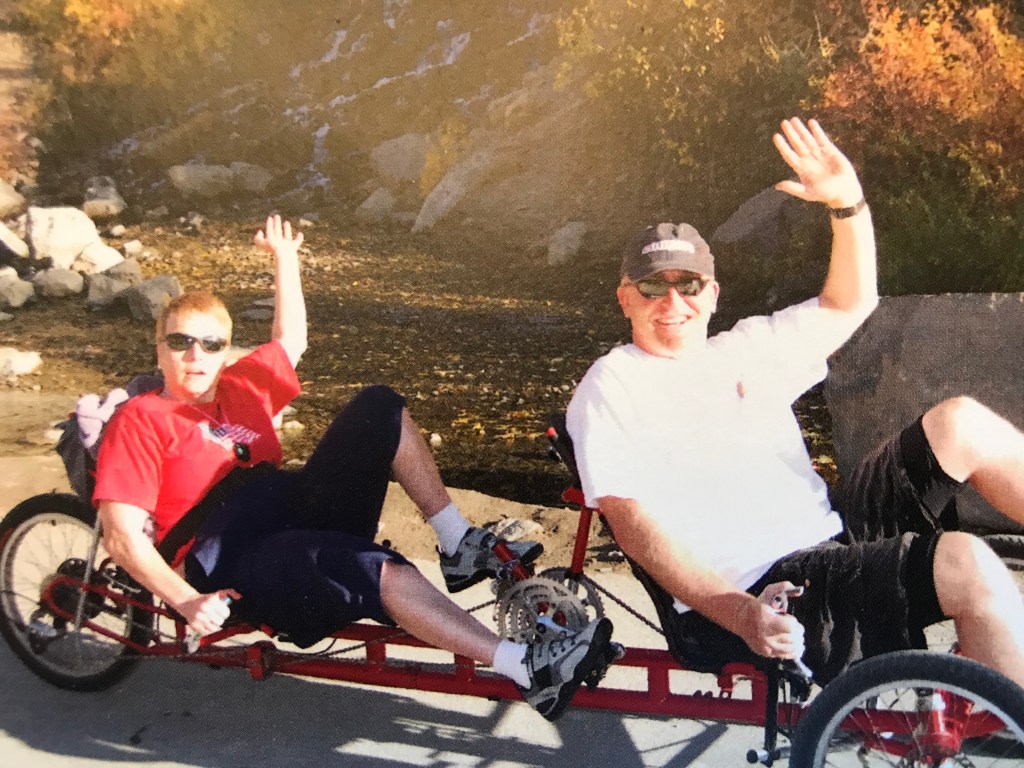

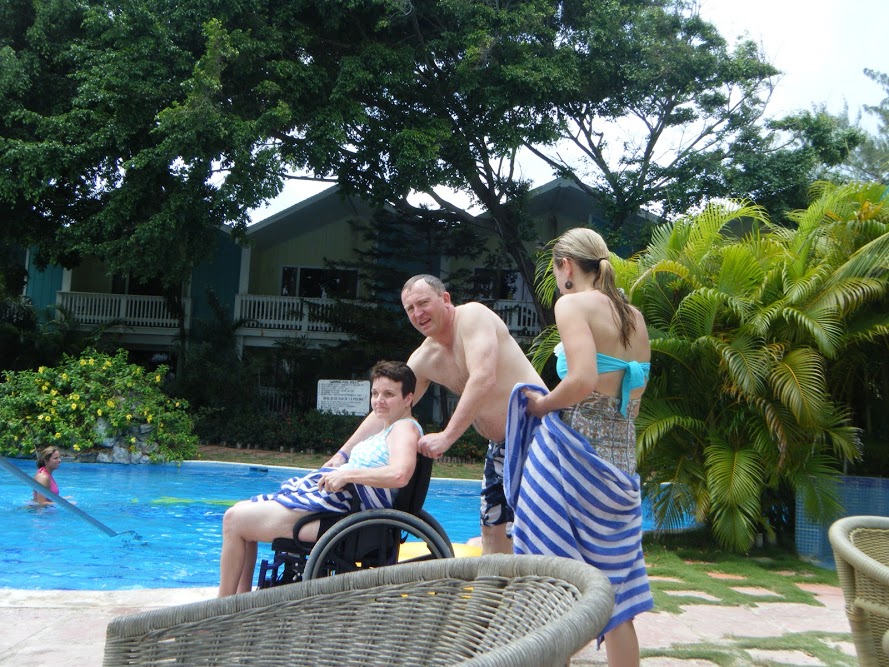

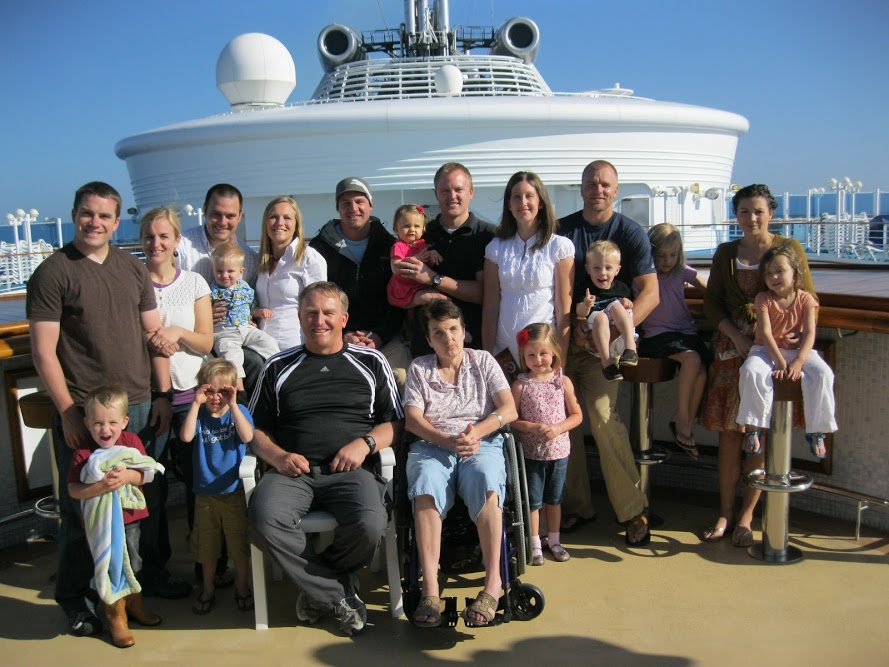
Fishing was another activity that got my mom out of the house; it was a big part of my parents’ life because of my dad’s passion for it. He took my mom with him whenever possible. As a professor, he took two months off in the summer, and during this time, he often took a long fishing trip to northern Idaho and Montana, where the fly fishing is excellent. His trip would be several weeks to a month long. My parents bought a large camper trailer for trips like this. For several years my dad persuaded his mom and dad to accompany him and my mom. My mom could not actually go fishing with him on these trips since there was a lot of walking involved. My grandpa, who also loved fishing, was my dad’s fishing partner, and my grandma would stay in the camper with my mom, helping care for her. She fed her, helped her into the bathroom, and assisted her in and out of bed. Everyday my dad and grandpa would leave early to fish, and my mom and grandma would spend their day in the trailer. It was too hard to get my mom in and out of the camper. They usually listened to books, watched movies and talked. My grandma also enjoyed working on crochet and sewing projects. While these trips were not easy for my mom or especially my grandma, they did it for my dad. My mom knew that he did so much to help her, so she was happy to go. And I know my dad was grateful for his parents generous help.
In addition to his big summer fishing trip, my dad enjoyed doing many smaller fishing trips throughout the year. Given the loss of abilities, it became too hard for my mom to fish in the float tube. However, she could still fish with him on Strawberry Reservoir in the family ski boat. Often thought my dad fished various rivers throughout the state. He would probably do a weekend fishing trip as often as once a month or so. When planning one of these 1-2 day trips, my grandpa and I would help out. My grandpa would come by my house (not too far from his) early in the morning to pick me up with whichever kids I had at the time, and then we would make the hour trip south to my parents’ home. I would then stay with my mom, and my dad and grandpa would take off fishing. Over the years, my kids and I were able to spend a lot of time with my mom while my dad went fishing. At this time, SCA7 had also started to affect my eyesight such that I was no longer able to drive. Other than that, I did not have any other significant limitations while caring for my mom. During these visits, my mom and I would eat together, watch movies, talk and walk (push her in her wheelchair) to a nearby park where my kids loved to play. I am so grateful for this time we had together. It kept our bond strong and alive.
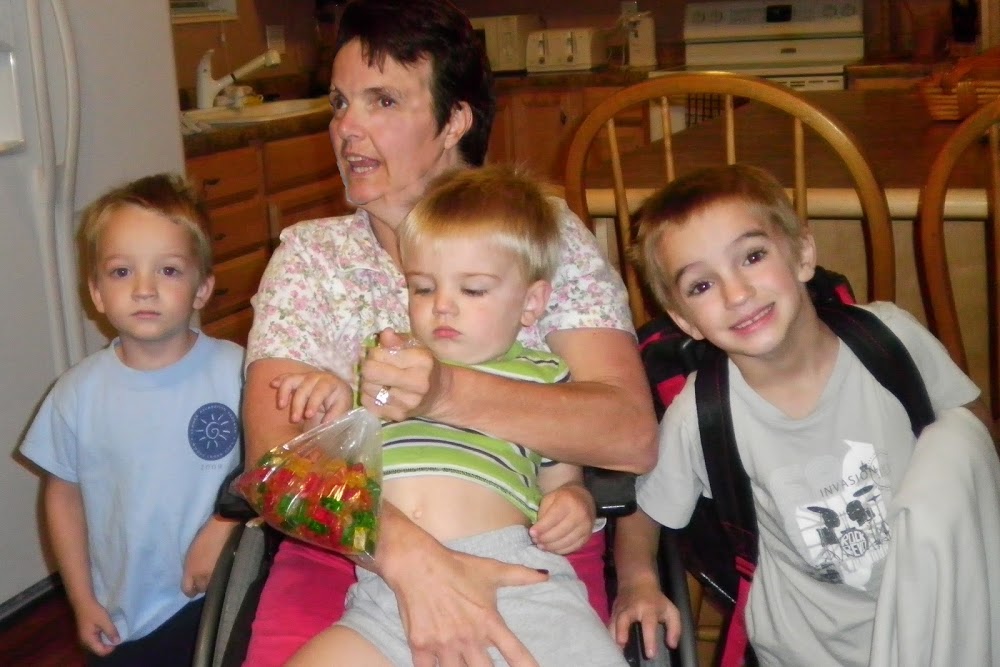
Once while staying with my mom, she fell out of her wheelchair! She was at the point where she could not lift herself up after sliding down a bit in her wheelchair. My dad had to help her sit up straight in her wheelchair; he would have her put her arms around his neck, and then with his hands on her armrest, he would help to lift her up as she held on tight to him. On this particular day, I did my best to keep her sitting up. However, when I was in another room, she got too far down in her chair and slid backside onto the floor. She screamed and cried, not due to pain, but because of a panic attack. At this point in the disease’s progression, she was completely blind and couldn’t roll over unassisted. Sitting in a wheelchair, my mom could still use her feet to slowly push herself around a bit, but out of her wheelchair and on the ground, she was stuck (and blind). I could understand why she was so panicked. Unfortunately, I could not lift her up off the floor as I was many months pregnant with twins at the time. I called 911. This was actually a normal thing for us to do. My dad had to leave my mom home alone when he went to work, so he got her an alarm that she wore around her neck. If there was an emergency, she could push the button, and it would contact 911 for her. They would then come to the house to assist her. She pushed the alarm a couple of times previously when she fell out of her wheelchair, bed, or whatever. An ambulance and fire truck would both come. The service was free if the ambulance did not have to transport her to the hospital. As such, my dad told me to call 911 if my mom fell out of her chair. It is funny to think that seeing an ambulance and fire truck at our house was not a big deal. In this instance, after calling 911 to request help, I sat with my mom and tried to talk with her and to calm her down. She eventually did calm down, and emergency responders came and lifted her back into her wheelchair. This experiences taught me to stay calm (even when things around me got crazy) because it all worked out and I new it was all going to be OK.
Sometime later after this incident with my mom, I called her, and she was super depressed. Apparently, she fell out of her wheelchair twice that week while my dad was at work, and sadly she was not wearing her emergency button around her neck at the time. There was absolutely nothing she could do, so she had to lie there for hours waiting for my dad. Even with all of her good friends and neighbors, no one happened to come visit on either occasion. When I heard this, I just ached, imagining her lying there and remembering how panicked she was that day with me. It must have been so difficult for her, and worse still, it happened twice! My dad said that when he got home and found her on the ground, she was covered in tears and in a deep depression that she was struggling to escape. After this, my dad hired hospice to come daily to watch over and care for my mom while he was at work.
It It
Not long after this experience, I was again staying with my mom while my dad went fishing. During the stay, one of her friends came to visit, and as I knew her too, the three of us sat and visited together. My mom and I shared with her some of the strong spiritual experiences my mom had had with the disease in years past. After listening, she asked, “Now that this disease is so much harder, do you feel the Spirit extra close helping you?” My mom replied, “No, not really.” I was very bothered by this! I knew she wasn’t saying that she never felt the Spirit. She still daily read her scriptures and prayed, went to church weekly, kept her covenants and the commandments; I am positive she felt the Spirit to a degree as she did these things. BUT…she was saying that during this VERY hard time in her life, she did not feel an extra measure of the Spirit (which she and the rest of us really could use).
I went home and began to ask God questions or say in my prayers things like: “Where are you?” “When my mom was stuck on the ground, why didn’t you send one of the many faithful women around her to come help?” “I can’t see your hand in it all. Is the promise true that You will not leave us comfortless?” “All I see is my mom suffering, and oh how she longs for her sufferings to end!” Her sufferings ranged from small to large. Small and simple things had become challenging. Examples would be like the many times I would hear her in her bedroom, flipping through all the channels to find the show she wanted to watch. The up/down button was one of the few she could press on the channel changer. I would often go to her room to help her get to the channel she wanted. She be on something like channel 177 but wanted channel 2. Another small thing would be when she was struggling to find a book tape; after finally and successfully loading it into the recorder she would push play only to discover she blindly selected the wrong book. After a couple of attempts of this, she would call out for help. So frustrating! Things like this happened pretty much daily. On our phone calls, it was clear how little she could do and how much she needed help, yet she had to wait and wait and wait some more. I hate thinking of all the times she had to wait for someone to help take her to the bathroom. I personally hate having to hold it! Then there were the family memory making moments she missed out on. One time our family (my parents, their kids and grandkids) took a trip to Bear Lake, Idaho. She had to stay back in bed whenever we went out to play. She would listen to her books all day long, since it was hard for her to come with us. Everyone went outside, playing all day on the beach or in the boats on the lake. At meals and during breaks I tried to sit with my mom and talk with her. A few days into this trip, my mom asked for a priesthood blessing; she did not ask very often. I believe she was hoping to be healed, knowing she was nearing the end. My dad and three brothers gave her a blessing, but she was not healed. The next day, as I sat and talked with her, she told me that at her funeral she wanted it to be a party with a disco ball and dancing. Being freed from her disabled body would be something to celebrate. She said that she planned to be celebrating to the max, and she wanted us to be happy and celebrate with her. She truly wanted to be freed from her diseased body and the accompanying suffering.
All I could see was my mom’s sufferings with no relief, and I could not see the Lord’s hand. I knew He was there and that He loved us. I had had too many witnesses to deny His existence and involvement in the lives of His children. So I prayed and prayed that I could see His hand because He felt so distant and hidden. After a few weeks of this, I one day searched SCA7 on Google. I had recently told someone that I had this disease, and the next time I saw her, she told me they were so, so sorry for me. She had searched it on Google and was shocked at what she learned. Out of curiosity, I did the same and was also shocked. My heart ached as I watched videos of several people who had our same disease. They had been placed in nursing homes because they did not have family to take care of them. They looked so lonely and forsaken.
Instantly, my eyes saw and recognized God’s most lovingly, kind and gracious hand in my mom’s life. First and foremost, she had my dad. Together they raised a large family that was still a big part of their lives, spending time together often. My dad took my mom on many trips, traveling to different parts the world. All their many many adventures together made my mom’s life so much sweeter and exciting. My dad also consistently found ways to solve for my mom’s decreasing abilities so as to allow her to enjoy life along the way. For example, he helped find the jazzy, built the many wheelchair ramps around our home, purchased the tandem recumbent bike, designed and built the wheelchair buddy, bought her special fishing rod and a large keyed phone and remote, and planned and took her (and us) on many vacations that she could still enjoy. The list goes on and on. Plus, he was her caregiver. He hand fed her all her meals after a certain point, and he showered and dressed her each day. He put her in and assisted her out of bed; he took her to the bathroom several times a day. Then, he hired hospice to take care of her while he was at work. In addition, he shouldered home duties: cleaning house, meal and clothes shopping, cooking, and laundry (all these things in addition to his full time career as a BYU Engineering professor). Note that this wasn’t just for a couple years; my mom showed symptoms and suffered from this disease for almost 30 years. The last decade of her life, the care giving responsibilities were heavy. Not to be forgotten, over that period my dad was also especially good at taking care of my mom’s emotional well being, a big part of this disease. Nobody could cheer my mom when she was feeling down like my dad could. I have never met someone so resiliently optimistic. He has such a positive outlook on life. He is a brilliant realist, but he is also energetic and enthusiastic about experiencing the good this life has to offer. With how unrelentingly hard this disease is, I never saw or knew of my dad being depressed. He truly was a perfect match for my mom and all she had to face. I know the Lord had a hand in helping them to find each other.
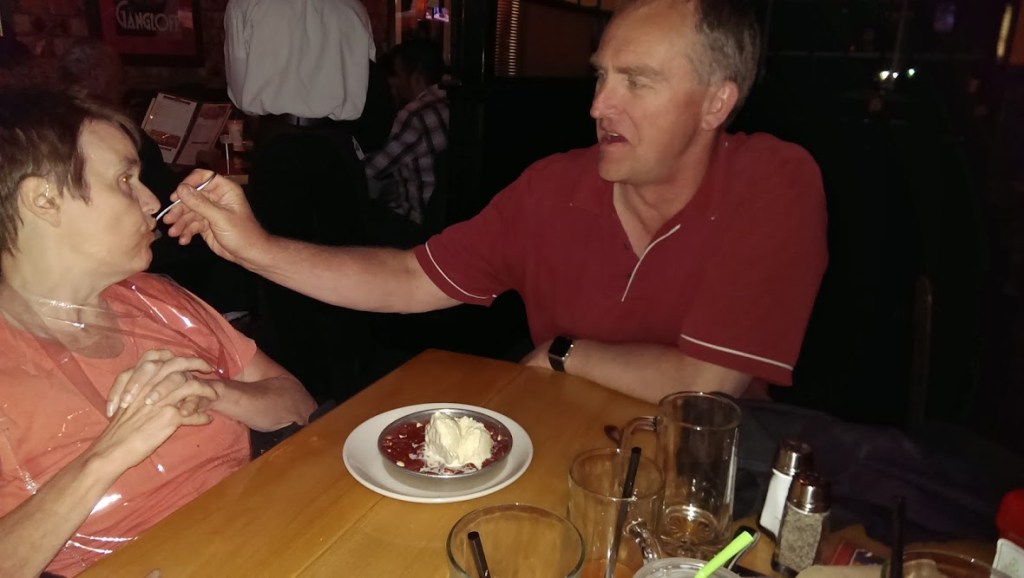
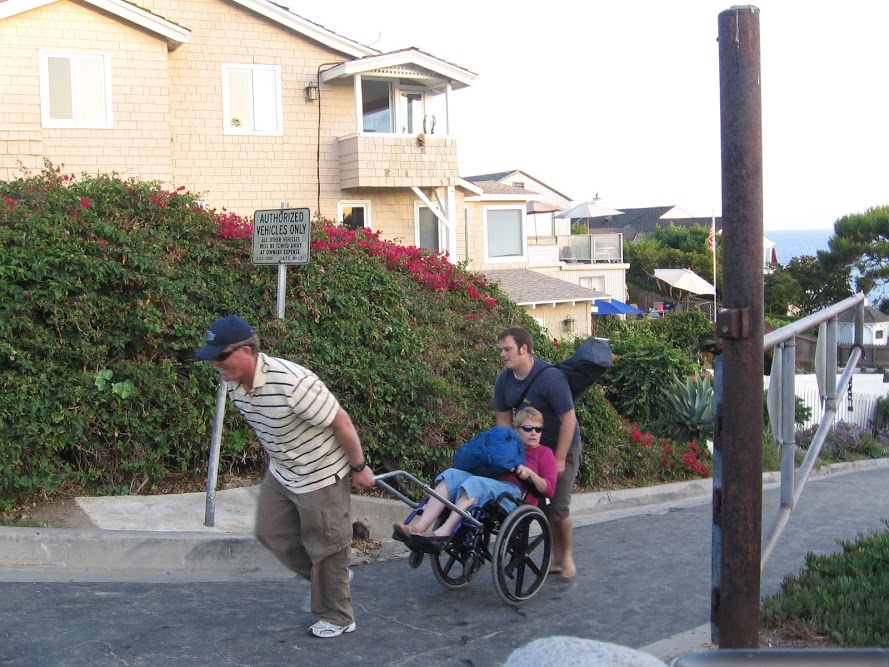
Yes, my mom did fall to the floor and lie on the ground for hours waiting and panicing, but the Lord knew that my dad would come home, take care of and comfort her in a way that no one else could. He knew that she would be OK in life because my dad loved her and was deeply committed to her. On top of that she had children, a sister, a mother and in-laws who helped or were willing to help when needed. She was also surrounded by many wonderful neighbors and friends who did so much to serve my mom (and dad), like bringing them several home cooked meals each week. They did this for years. Importantly, the Lord was also always there for her to turn to in prayer, helping her find hope, peace, and comfort. Sure, the disease was extremely hard for my mom to deal with, but now I could see all the wonderful and good people and things that the Lord had put in place to help my mom endure her heavy burden. My mom truly was not left comfortless.
As mentioned, my dad had hired hospice to come help my mom on days he had to work. Hospice usually only comes to a home if a person is in the last year of their life. My dad knew that my mom was nearing the end and that she needed the help, so they came. My mom ended up living three more years, and fortunately, hospice continued to help during that entire period. Several nurses helped my mom during this time, and they were good to my mom. They came to know each other well. I even came to know some of them well, since I often talked with them while visiting and spending time with my mom. In addition to hospice, Sister Bailey continued to bring my mom her green drink each day and would often stay to visit. They had a special relationship. My mom also had other sweet friends that continued to help and visit her too.
In the last couple years of my mom’s life, she often used gratitude to stay upbeat. She had become fairly immobile, weak, and tired at this point. Most of her time was spent in bed napping and listening to books. Around this time, my family and I moved to Oklahoma because my husband took a job there. His parents lived in that area of the country. It broke my mom’s heart when we moved (and mine too!). Sister Bailey brought my mom chocolate each day for awhile after we moved to cheer her up. I would call my mom a couple times a week to stay in touch. It was hard though because her voice had become so slurred that her speech was difficult to understand, especially over the phone. Often I asked her to repeat herself and then guessed what she said. I hated how frustrated it would make her feel, so I only asked when I really needed to know what she was saying. A couple times on hard days my mom expressed her frustration at not being able to do anything. Then she would call back the next day to apologize and list her blessings. It would be things like: “I am grateful I can still listen to books and for the new remote dad bought me, so I can actually change the channel on my own.” Her list always made me awe at the power of gratitude. I frequently heard her list her blessings to me. It helped her so much.
On New Year’s Day 2013, my mom told me that her new year’s resolution was to live one more year. This surprised me because the end was close and also because my mom often spoke of wanting to die to be freed from her body. This then was her way of saying, “I am going to face this next year with a positive outlook.” And she did it! She lived about one year and three months more. Almost a year exactly before she passed away, my mom and dad took my sister Aubree and her family to an all inclusive resort in Cozumel, Mexico. They all enjoyed the food together, as well as the ocean breeze and the hot tub. In this final year my dad also took my mom on his fishing trips, since I was no longer able to watch her overnight. Once (and only once) he left her at a nearby nursing home; my mom absolutely hated it. From then on my dad would take my mom and their camper trailer. The nurses taught my dad how to insert a catheter into my mom, so she could be comfortable in the trailer while he fished during the day. He made sure she was comfortable, and he came back often enough to help her when needed. My mom was glad she could still accompany him, and she was happy with the arrangement. Although, there were a couple trips when she became violently ill; she vomited all night long. On one of these two occasions, my family and I happened to be visiting my parents and with them on the camper trip. It was terrible! When she vomited, she could not roll over, so she gargled in her throw up. Again, it was terrible! These trips ended early to take my mom back home. After talking with the nurses the second time, they put it together that it was altitude sickness. On both trips they were camped in the mountains at high altitudes, so my mom was not getting enough oxygen in her blood. This was the cause of her sickness.
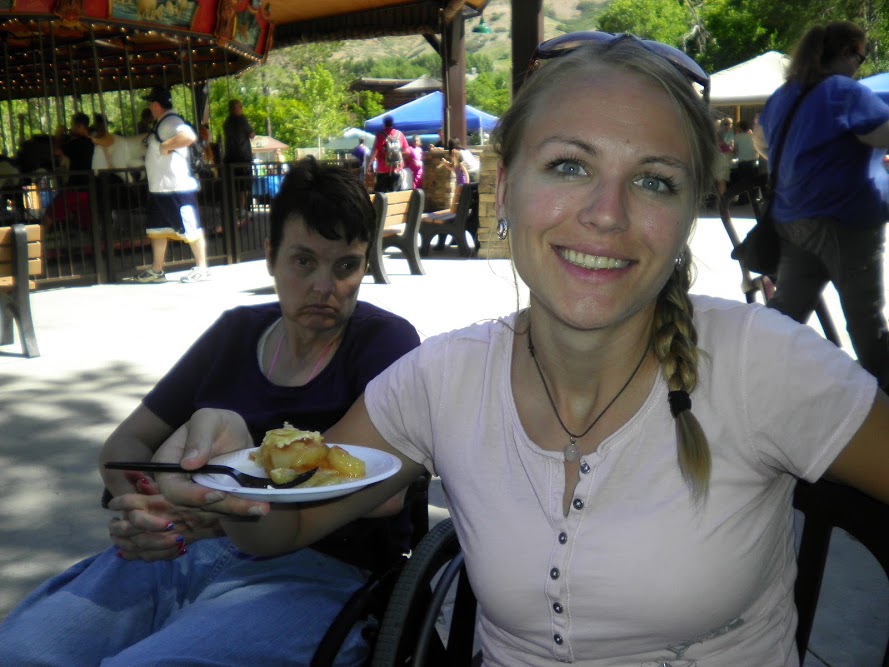
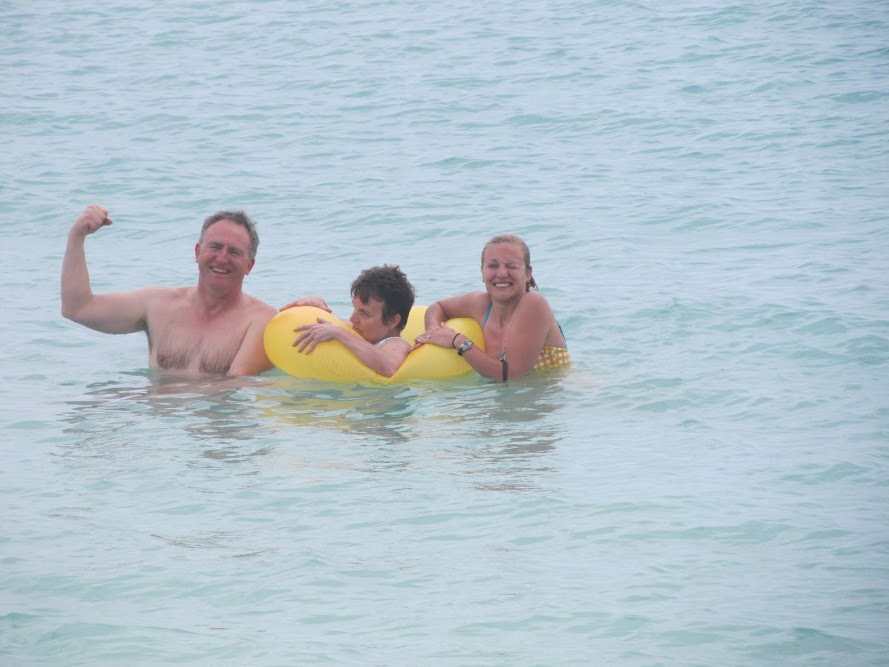
In September of that year, my cousin Callie passed away from SCA7. My parents, some siblings and I met up in Snow Flake, AZ to attend the funeral. The morning before the services, we all went to the new Snow Flake temple. In the temple, I primarily focused on helping my mom, and I remember it being really hard for her physically. All she had to do was sit in her wheelchair for two hours, but even that was a struggle. She got really hot, despite a cool, well air-conditioned environment, and she kept slipping down in her chair. All she wanted to do was go back to the hotel to lay down and nap. After the funeral the next day, my mom was anxious to get home to her comfortable bed. I was struck with how weak she had become.
At this time my oldest brother, Josh, was living in New Zealand with his wife and four kids. They had been there about a year, and they invited my parents to come spend Christmas with them on the island. This is something my parents really wanted to do except that the idea of such an extremely long airplane flight made my mom very uncomfortable. The last flight she took didn’t go well at all due to her anxiety. As mentioned before, even being in her wheelchair for a couple hours at a time was getting hard. She also was starting to experience pain in her legs and back. Recently, her doctor had prescribed morphine pills her pains and discomfort. She only took them when needed. Knowing they could use these, my dad also thought of a plan to give her a strong sleeping pill, so she could sleep through most of the flight. With these two aids in place, they decided to make the trip. Their flight went fairly well thanks to the sleeping pill and morphine. They had a really great time in New Zealand. As my mom was surrounded by her grandkids on Christmas morning, she said it was her best Christmas ever! Maddi, Josh’s oldest was able to read to her while she was there, something Maddi had done for her previously when living close by in Utah. My mom also enjoyed all of Josh’s family’s favorite foods that they had discovered while living there. Another memorable experience was going to the ocean and enjoying the water in her tube with her family playing around her. Everyone thoroughly enjoyed and savored this last time they shared together.
After the Christmas trip to New Zealand, it became more apparent that the end was soon approaching. My mom continued to get weaker over the next couple months, and she also began to take the morphine pills more regularly to address her pains. Generally, she was less alert, and her speech was also very slurred. In March, we had a trip planned to Las Vegas, NV for an ataxia conference. Dr. La Spada, a doctor developing a drug to stop our disease, was going to be there, and we hoped and planned to speak with him in person. Right before leaving, my brother Luke’s wife, Melinda, had a third baby girl three weeks early! My mom had the opportunity and blessing to hold this new grandbaby before the trip. Luke remembers this time too because my mom was also able to very clearly say that she loved them all so much. Given her very slurred speech, this was a tender mercy. I flew to Utah to meet my parents, and we drove together to the conference in Las Vegas. There we met Aubree, her husband, Taylor, and son, Sam. That first day we did some sight-seeing, checked into our hotel, ate dinner and went to bed. At dinner, my mom wouldn’t eat anything; my dad tried hard, but she refused. She was very tired and went immediately to bed. We all slept in the same room, and during the night, my mom started breathing funny like she had a bunch of flem in her throat. It was a very unsettling sound. The next morning my dad could not get my mom to eat. Again, he tried real hard, but again, she refused. Before leaving Utah for the conference, my mom’s good friend, Carolyn, brought her some German chocolate cupcakes, a favorite. She ate one, and that is the last time I remember her eating anything. That had been more than a day ago, and now my dad could only get her to take a couple sips of water. That day we went to two conference meetings, and my mom was already tired and ready to leave. The meeting with Dr. La Spada was next, so she was going to have to endure. Towards the end of the meeting, my mom had become so uncomfortable that she started to cry out. I took her outside of the room to the hallway to help her and allow the meeting to go on without interruption. I think she was having a panic attack. I did my best to calm her down. I just kept telling her that it was OK, and that we would leave soon. It was difficult to see my mom so uncomfortable. Eventually, we went back to the hotel room, so she could rest. That evening my dad brought my mom down to the pool to watch Sam learn to swim. I remember my dad sitting with my mom. He could only get her to take a couple more sips of drink while also encouraging Sam to swim across the pool for $1.00. That night, while sleeping in the hotel, my mom’s breathing was terrible sounding with all the flem rattling in her throat. We have since learned this is called the “death rattle.” It is a very disturbing sound or noise. Even now I can still hear it in my mind when I reflect back on it. The next morning we said goodbye to Aubree and family, and my parents and I drove to their home in Utah. My mom was not talking much, but on the drive we were able to discuss her funeral and what she wanted for it. She told us that she wanted all five of her kids to speak.
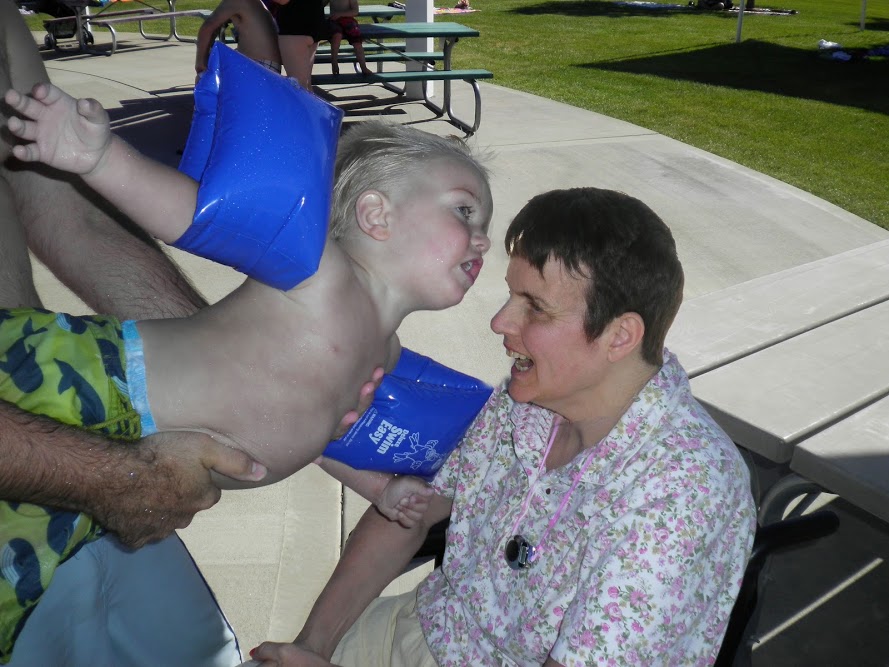
When we got home, hospice came to the house, and we talked with them about my mom’s breathing and refusal to eat anything. They told us that her body was beginning to shut down and that she would probably pass away within the week. They informed us that she wouldn’t eat because she was aspirating, meaning everything she ate would go strait to her lungs. We knew she was not doing well at all, so this news did not surprise us. I cancelled my flight home to Oklahoma, so I could be with my mom during this time. She was becoming less and less responsive. She would hug you back, but she would not really talk anymore. My dad called family and close friends to tell them this news. Lots of people came to visit over the next couple of days. She had lot of friends come to say their goodbyes, and many people brought us food. It seemed like someone was always there. Sadly, I was not able to have much time alone with her. After a couple of days like this, my mom was no longer responsive. Most memorable of the many visitors was that of my grandma Canfield and Aunt Caren. They sat with my mom, their daughter and sister, respectively, and they cried. It is not an exaggeration to say that my aunt Caren truly mourned for her; we could her hear her cries from the other part of the house where we sat. This was Karen’s fifth sibling to pass away from this disease.
My sister, Aubree, flew to Utah on her own, so she could be with my mom too. It had only a few days since we said goodbye to her in Las Vegas. My mom had not eaten or drunk really anything for over four days now. She was completely unresponsive, and her hands were tightly clenched shut. We hoped that this did not mean that she was in pain. The hospice nurses continued to visit and to ensure that my mom was as comfortable as possible. That day her breathing became irregular. She would breath once or twice, and then she would pause for half a minute or so before breathing again. The end was near… That evening two of my brothers, Dan and Luke, came to visit. All of my mom’s kids were there except Josh, since he was in New Zealand. My dad and all the kids present sat around my mom lying on her bed and just talked. It was a special time, and I believe that my mom could hear us and enjoyed being surrounded by her family. Afterwards, my brothers went home for the night, and Aubree and I stayed at my parents, sleeping in the guest bedroom across the hall from their room. That was the last night my dad slept next to my mom. Through the night I could hear my mom’s inconsistent breaths; I kept waking up all night long and listening to hear that she was still breathing. I didn’t want to miss the moment she passed. I felt like it should be a spiritual and special moment – a way of saying goodbye.
II
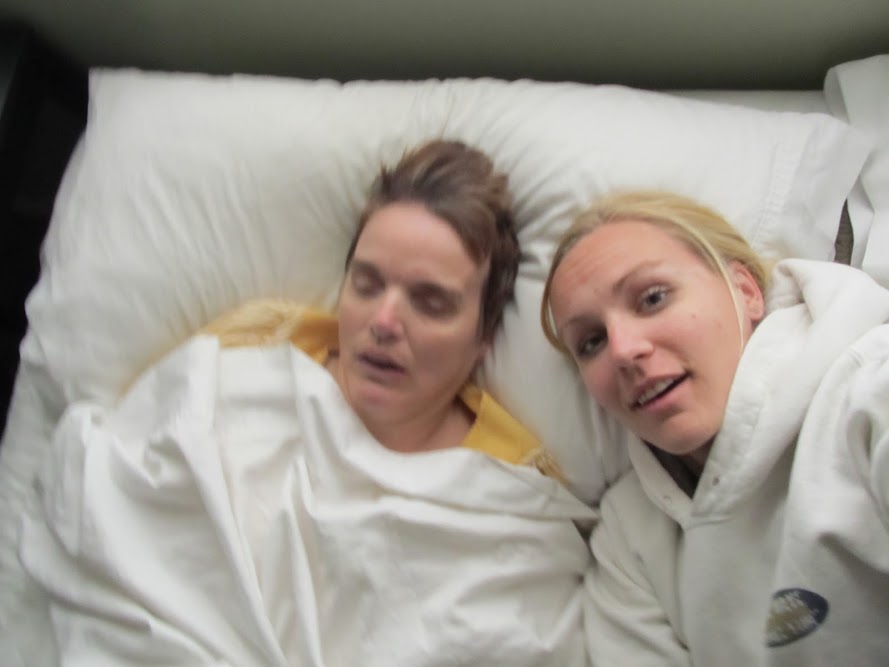
When morning finally came, I was relieved to find that my mom was still breathing. My dad told me that it was an especially hard night for him; he had expressed his final goodbyes. I sat with her for a bit after waking up, and then Aubree asked if I wanted to do exercises with her in the living room. My dad had gone into another room as well to do some work on his laptop. We didn’t know how much longer my mom would survive in her current state. It could be any moment or day away. We found things to keep us busy, so we weren’t next to her all the time. I decided to leave my mom’s side to join Aubree and do Pilates. As soon as we finished, I came back to my mom’s bedside, but she was no longer breathing. I called out to my dad to hurry and come. Both my dad and Aubree came into the room. My mom was gone. We had missed it! It was a moment I felt deeply that it was important to be there and to witness, but I missed it. I just started to cry, and I walked into the front room of the house to be alone and to weep privately. I could feel my mom there, above me, saying, “Don’t cry because I am SO happy!” Imagining my mom happy and being reunited with her family (that had already passed on), God our Heavenly Father, and the Savior, Jesus Christ, brought a smile to my face and peace to my heart.
My dad called my brothers to tell them the sad news. My brother Luke arrived soon afterwards, and we called the mortuary. They came and took my mom’s body away after we had said our goodbyes. Then the hospice nurses came to clean up and retrieve their equipment (used to care for my mom). Many of these nurses had known my mom for several years by now. While talking with one nurse and thanking her, she told me that she had never seen a husband take such good care of his wife as my dad had. She said that she had taken care of many ailing, married women, and it was rare to see the kind of love, care and attention my dad had given to his wife. She remarked that it was truly amazing to see. I knew this was true because I personally saw how much my dad did for my mom. She was so lucky to have him, and my dad in turn was also lucky to have my mom. I too was sure lucky to have her! I can see her now in my mind’s eye with her hands closed into tight fists. She faithfully endured to the end. It surely was hard, especially towards the end, but she did it. It is something I hope I can do too. Thanks mom for your example!
After my mom’s death, my dad was showered with letters from family, friends and neighbors. Many of these notes expressed how the example of my mom and parents had touched their lives for good. At the funeral, many others came and verbally expressed something to the same effect to my dad. Over the years my dad had observed the impact of my mom’s example on others, and the notes and letters affirmed it. This is why he put the following scripture on the front of her funeral program: “Yet ye shall be patient in long-suffering and afflictions, that ye may show forth good examples unto them in me, and I will make an instrument of thee in my hands unto the salvation of many souls.” Alma 17:11, The Book of Mormon
This disease was without a doubt hard to endure, but my dad said that he came to understand through his experiences helping my mom with this disease that the purpose of life is to learn to love, or charity. Reading the attributes of charity listed in scripture, I know that this hard disease truly did increase those attributes in my mom and all those around her. The scriptures say that charity:
– suffereth long
– is kind
– envieth not
– is not puffed up
– seeketh not her own
– is not easily provoked
– thinketh no evil
– rejoiceth not in iniquity but rejoiceth in truth
– beareth all things
– believeth all things
– hopeth all things
– endureth all things
We could all use more of these attributes, and my mom having SCA7 provided abundant opportunities to grow in charity. Thus, charity was the brightest part or silver lining of this disease. As Paul said, “…the greatest of these is charity.”
Below is a movie made of my mom before she passed away. Hope you enjoy it.
-
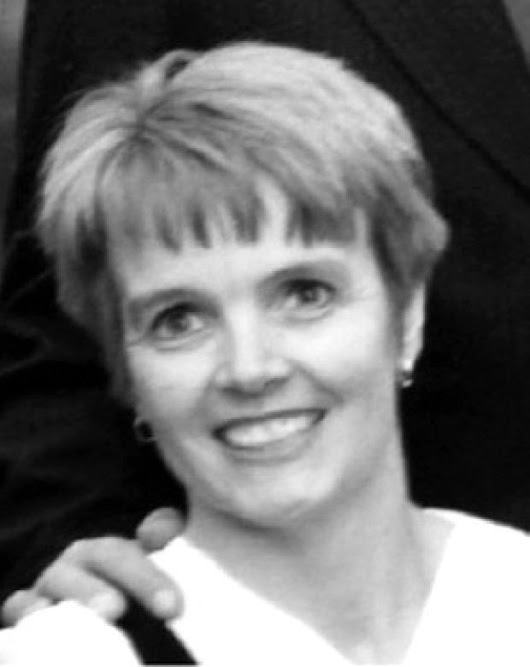
“‘Why should we not hope that righteous desires and Christlike yearnings can still be marvelously, miraculously answered by the God of all hope?’ We all need to believe that what we desire in righteousness can someday, someway, somehow yet be ours.” – Elder Jeffery R. Holland
The principle of hope best describes the second part of my mom’s story. As the disease SCA7 decreased her abilities, her hope increased in a day without sufferings and the restoration of her abilities in the Resurrection. Jesus Christ is the source of all hope because He is the only one who can promise wholeness and eternal joy. Hope is a very powerful and sustaining thing; it can help anyone to endure with joy and peace amidst a storm. Hope provides comfort when things are turbulent because it provides a vision of how things will be in the next life. This is what my mom found through hope as the disease progressed.
At this point in the story, my mom had already been showing signs of SCA7 for around five years. Her eyesight had been affected minimally, and she was still driving. We had just moved to a new home in Orem, UT, and then my mom’s sister Cathy passed away. This marked the beginning a ten year period of my mom’s life in which the disease would progress to the point that she could no longer drive and her balance would decline such that using a walker was required. Yes, things were not easy during this period, but she still enjoyed many parts of her life with few limitations. Family and great friends sustained and served her, and she felt her life charmed and good. Following this period, the next five or so years would bring her sufferings to a deeper level, as well as her faith and most especially her hope. This is the time when the depression began to strike and a wheelchair became necessary. Additionally, speech, eyesight and hand-coordination became more of an issue. The heaviness of this disease began to weigh upon her.
NEXT 10 YEARS (~1989 – 1999):
In the beginning of this 10 year period, my mom’s eyesight was still fairly good. At first she mainly experienced onset color blindness. I remember while driving with my mom having to sit close to her, so I could tell her what color the light was. “It just turned yellow, Mom.” And while sitting at the red light, I or my siblings would tell her when it turned green. I never remember feeling unsafe, and my mom had no accidents during this time. As her eyesight worsened over the next couple years, she would avoid the freeway and stayed fairly close to home. My younger sister Aubree remembers my mom once running over a curb on a turn and then saying, “I probably shouldn’t be driving anymore.” So a few years after our move, my mom did give up driving. I am sure she drove a couple times on small trips after this decision was made (because I myself have done this!). Plus, my brother Dan vaguely remembers her doing it.
When speaking of the inability to drive to a large group of women, my mom referred to it as a “real pain.” I myself have not been able to drive because of this disease for over 10 years now, and “real pain” doesn’t even begin to describe how hard it really is! With five kids to care for, I am sure my mom felt the pain of this loss daily because I definitely do. There was grocery shopping, other shopping, doctor and dentist appointments, kids’ school issues and sports, recreational outings, and so on. My mom made lots of phone calls asking neighbors and friends for rides. She did not like having to do this because she did not want to be a burden to others. This is something we her family knew very well. She only called for a ride when it was necessary. And when she did call, she would often say something like, “When are you next going shopping…?” My mom learned to plan her outings strategically. Things like grocery shopping and other errands were done when my dad got home from work. We found a dentist close to home, so we could walk to our appointments. We would ride the bus to BYU to go swimming. I have lots of memories riding the bus. Also, we had to say “no” to a lot of things like sports or different activities because it was not worth finding a ride. This limitation or pain really was felt daily.
About a year after my mom stopped driving, our family moved to Virginia for a year. My dad accepted the opportunity to take a sabbatical from teaching at BYU in order to get more experience working for NASA. We rented our house in Utah, and we drove across the country. In Yorktown, Virginia we moved into a three bedroom apartment. It was smaller than our home, but given it was only for a year, we tried to enjoy living there while it lasted.
Two things helped my mom not feel stuck in that small apartment all day, every day: 1) help from others and 2) vacations or outings. My mom quickly made friends with those who went to our same church, which we actively attended. Some of these friends willingly gave my mom or us rides. I remember calling home sick at school, and my mom called someone to pick me up. I was in fourth grade at the time, and I remember being nervous because we were new and thinking my mom wouldn’t be able to find me a ride. But she did! The kindness and service of these friends were a great blessing to my mom and our family. The other great blessings were outings and vacations. When my dad arrived home from work in the evenings, we got out most nights to run errands or to go to church or family activities. Almost every weekend we went to visit historical sights in Virginia and the surrounding areas, and there are a lot! I remember getting sick of seeing yet another Civil War battle site. We saw them all! It was fun though because we did most of these outings with friends. A good friend of my dad’s from high school just happened to be a part of our same church congregation there. He, Scott, and his wife, Sarah, had a super-fun, large family of 8 kids that were our same ages. They joined us on most of our outings. Not only did we see the historical sites with them, but we also went to amusement parks, Washington DC, camping, and the beach. We made lots of memories with this family for the year we lived there. I know my mom stayed good friends with Sarah for the rest of her life. Other memorable vacations during this year include a church history tour with my grandma Canfield, who was visiting, and Christmas at the Florida Keys. These outings and vacations, as well as the loving service of others, helped lighten my mom’s burden of not being able to drive.

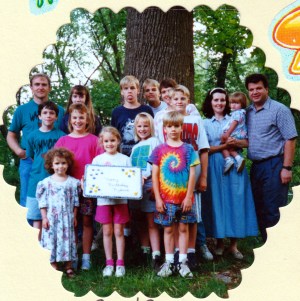
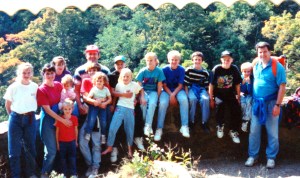
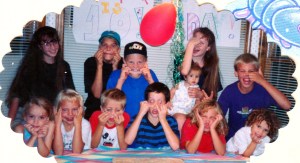
While in Virginia, my mom’s dad, Grandpa Paul, was not doing well, and he peacefully passed away. The possibility of Grandpa dying while away was a major concern my mom had about going to Virginia. She worried that she wouldn’t be there for her mom and dad, since she knew his health was poor and deteriorating. My parents determined that only my mom would fly back to Utah for the funeral because it was too expensive to fly our entire family. The family drove to the airport to drop her off. After arriving, my parents told us that they had gotten special permission to let us go on the airplane to see it, since we had never been on an airplane. We thought that was super cool! We boarded the airplane, and my parents invited us to sit down and check it out. Eventually, we started to get anxious because the plane was shutting the door, and we believed we would be stuck on the plane. When the plane started moving, we yelled, “STOP! We need to get off!” My parents then told us that my Grandpa’s church congregation pooled together money to fly our entire family to the funeral. We really enjoyed getting to see our family and to say good-bye to my grandpa.
My dad completed his sabbatical, and we returned home to Utah. By now my mom’s balance was becoming more noticeable, but she could still walk unassisted. The biggest help came only half a year after we returned home from Virginia. My oldest brother, Josh, turned 16 years old and got his drivers license! I believe my mom was looking forward to this day more than Josh was. The day he turned 16 years old he had his license and a car. My brother cherishes this time because of the many hours he spent with my mom. He remembers driving all over town with her to find the right gifts for birthdays, for example. They talked a lot while driving, and she was excited to hear about his day. Whatever the issue in his life, she was always on his side. He felt like he could tell her everything, and he did. They connected and bonded through this time together. All of us kids have memories of the time we had with our mom, once we got our divers license. We drove her wherever she needed to go. Being able to serve our mom like this helped us grow up and be a little better. Even with her kids driving, there were still many times when she had to call neighbors and friends (teenagers do tend to be busy). Of this she said, “I can’t drive and its a real pain, but I can’t help but think of the great friendships I have made because of the time I spend with people while they take me places.” It is true that my mom had many really great friends throughout her life because she needed their help and they selflessly served her.
Another blessing was that the many vacations continued. Not being able to drive often results in a feeling of being stuck at home, so vacations helped my mom to feel the opposite. We usually had a fun trip planned, and if there was good weather, then we went somewhere that weekend. I think we explored, experienced and camped at most places Utah has to offer, which is a lot! My mom had packing and camping down to an art. I loved all the meals she made us. For some reason her cream corn and frito chili pie were always so good when cooked on the camp stove. On our many road trips my mom always had goodies for us to snack on. In the winter time, we would go to our Bear Lake cabin to ice skate. We also did a lot of snow skiing trips around Utah. We often did night skiing since it was more affordable for a family. My mom still skied with us, taking careful and intentionally wide turns down the mountain, so she wouldn’t go too fast and get out of control with her bad balance. Also, my dad would have to travel sometimes for his work. Whenever he did, he would take my mom with him and make a trip out of it. They were able to travel to amazing places, and they often invited their parent(s) to join them. They traveled to France, Egypt and Israel on one trip, and to Chile and Argentina on another. They also went to Italy, Germany, Austria, Canada, and Costa Rica. Besides these trips, they also enjoyed going on cruises together to places like Panama Canal, the Caribbean, Alaska, St. Petersburg, New York, Cancun, and Canada. My mom loved all the travel and vacations. She felt blessed for all she experienced despite having this disease.
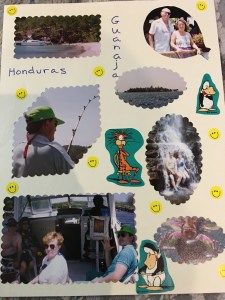
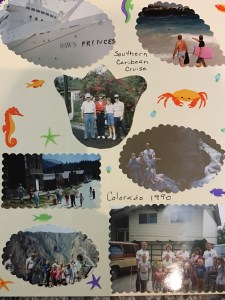

A couple years after returning from Virginia is when my mom’s balance began to be noticeable. Before this her balance was getting worse. For example, she couldn’t run, and she had to walk slower than usual. Still it was not that noticeable. I remember once when we were trying to catch the bus to go somewhere and we were late. My mom told us to run ahead to the bus stop to ensure it stopped. I tried to push my mom to start running with us, so we wouldn’t leave her behind. She resisted my urging, telling me she couldn’t run because of this disease. This was news to me. Her balance issues became more visible when she started to stagger and walked with her feet wider apart. An outside observer might have remarked that she appeared drunk. As my mom’s balance got worse, she began to fall at home when she was doing her work around the house. My dad did not like her falling, so he suggested she use a walker. They were able to find her a walker that helped her and made things easier for her. My mom was not against using a walker. What she mostly cared about was her freedom and ability to do things. A walker helped her with this, so she used it.
Where my mom struggled the most with worsening balance was on vacations. We often went boating at our Bear Lake cabin, and my mom loved to water ski there. One time she tried and tried to get up on a slalom ski (usually a simple act for her), but she could not. She came into the boat with tears in her eyes, defeated. Everyone else in the boat had tears too. It was hard for her to have the things she loved taken away. Eventually, snow skiing became too hard for her, and she had to give that up too. On all our trips my mom loved to be right there with all of us, experiencing everything we did. She did not like being left behind! I remember a particular river rafting vacation that we did. While I don’t recall where it was, I clearly remember preparing to raft. We had a couple rafts of our own, and a couple of my cousins’ families were with us. My dad and his brothers hiked along the river to scout out the rapids and plan our course. When they returned, they were concerned because the rapids were bigger than expected. My dad told our family that he was OK if all the kids went as we were older and pretty good swimmers. He then told my mom that he was uncomfortable with her going. He believed her lack of coordination and poor balance could potentially put her in a dangerous situation. Well, my mom did not agree, and she felt certain that she would be OK. When she told my dad this, he did not budge. For those who know my parents well, they know that my dad can be very firm and confident in his decisions. My mom was not afraid to stand up to him and tell him what she thought. She could be very feisty. After she told my dad what she thought, she was so upset that she left the party to go jump in the river. At this point in the disease, my mom was using a walker. I remember going down to the river to make sure she was OK. So many years later I can’t remember if she actually ended up going with us or not, but I do remember how much she really did not like the thought of being left behind. She longed to always be there with her family, enjoying life.
Vacations became harder and harder for her. There were times when a hard hike would come up, and my mom stayed behind in the car, waiting for all of us. I know she did not like having to stay behind, but she in the end she wanted us to have the experience more. It was one more way she sacrificed for our lives to be better. One such time, we parked the car on the side of the road in Southern Utah to hike the Black Hole. This is a long, deep canyon hike that is very technical, even requiring swimming through a very narrow slot canyon. The exit is a couple miles down the road from the starting point. The plan was to let my brothers make the 2 mile walk along the road back to the car, and then they would drive the car to pick up the rest of us at the trail’s end. Surprisingly, at the end of this long and tiring hike, my brothers were super-pleased to find the car already parked at the exit with my mom inside, waiting for us. This was surprising, even shocking, because my mom hadn’t driven for many years and her eyesight was limited. She told us that she drove slowly and followed the lines on the road that she could see. We all had a good laugh. My mom was determined to do all that she could do.
My dad worked to find places and things for us to do that my mom could enjoy too. One thing they discovered was scuba diving. This activity does not require balance and much of the seeing is up close, so my mom could see OK. They both loved the adventure of exploring new things and all the places it took them. Their diving log had 57 dives in California, Barbados, Virgin Islands, Bear Lake, Cozumel, Honduras, Florida, Grand Canyon, Costa Rica, Hawaii, Bahamas, and even the Red Sea. Even though this disease limited my mom’s abilities, she still got out and experienced much. My parents truly enjoyed their adventures together.


By the end of this 10 year period, she had used a walker for several years, and her eyesight was such that she could still see much. However, most details were “washed out” and bright light was altogether blinding. Despite these things, my mom really felt that her life was very good and blessed. She knew just how hard this disease could be from watching her dad and siblings suffer with it. Plus, her younger sister Carolyn was still living and much further progressed than my mom. That was a big reminder to my mom of how lucky she was to have the abilities that she did have. She was grateful for all the places she was able to go and the many experiences she could still enjoy. She was grateful for her family and all the time she was able to spend with them. She was also grateful for her faith and hope in Jesus Christ, which gave her a deep sense of peace and joy.
NEXT 5 YEARS (~1999 – 2004):
This next five year period is the time when things started to get particularly difficult. Depression slowly crept in. My mom had a fiery personality, and it seemed to be easier and easier to set her off. Aubree, her youngest, was now a teenager, so my mom had a house full of teenagers! This really didn’t help! We made many messes; we argued with her; we told her what we thought she was doing wrong. Teenagers are hard enough, and then with everything else she had to deal with physically, it just got too hard to control her emotions too. It seemed she yelled at us frequently and often was close to tears. My parents decided that it was time for her to try depression medication. The change in my mom was noticeable. She seemed calmer and happier. Our whole family felt that medicine was a wonderful blessing! It didn’t magically solve everything. It just made it so that things were more manageable. My mom still had to work at trying to stay up beat and happy. Mom often took time to count her blessings when she felt down or discouraged. When I was in high school, I once walked in on her singing the hymn, “Count Your Many Blessings” to herself. I know that was a day she was having a hard time. She counted her blessing and tried to see the good and positive in her life. She would often verbally list her blessings to me. Depression is something that my mom had to deal with for the rest of her life.
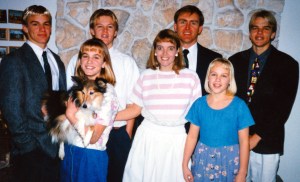
This is also the time when using a walker became more difficult. Around the house, she had fallen several times. The time had come for her to start using a wheelchair, but this is something she really didn’t want to do. Not just because of how people would perceive her, but mostly because it would limit her mobility. It was going to be harder for her to complete her daily tasks from a wheelchair, and it meant getting around the yard and garden would be much harder, something she LOVED. The flowers around our house looked amazing, and my mom had created a large raised garden bed in our backyard where she grew all kinds of fruits and vegetables. Her favorite place to shop was the greenhouse; she brought home many lovely plants. She spent a significant amount of time in the yard gardening. So even after switching from walker to wheelchair, she took her wheelchair outside, lowered herself out of it, and then scooted across the ground to care for her plants. My dad and Luke built ramps to all the doors to help out during this transition. This all happened when Aubree was in 8th grade, I a Sophmore, Luke a Senior, Dan on his mission, and Josh 21 years old (just returned from his mission). We saw the pain in Mom’s eyes as these abilities were taken away.
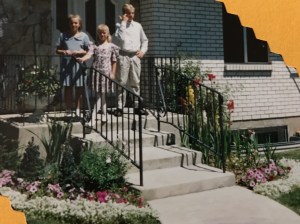
Soon after my mom started using a wheelchair, my mom and dad discovered an electric wheelchair called a “Jazzy” that could give my mom more mobility. It could drive around on the grass, so she could more easily get around to garden. This Jazzy was even covered by our medical insurance. My mom LOVED this new freedom, and she rode around her Jazzy with pride. We purchased a portable ramp, so she could ride it into the car and take her Jazzy to church and other places. One issue though was that my mom would accidentally drive into the walls around our house, and the foot rests would poke holes in the drywall. After she punched several of these holes in the walls, my dad found some foot high base boards that he and his brother put up throughout the house to cover up all the holes and stop more from being made. She sure loved this new found freedom!!!
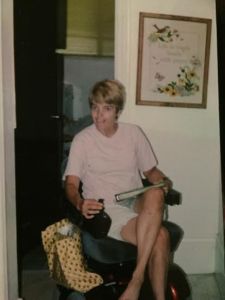
My mom began to loose other physical abilities, and it negatively affected her work as a homemaker. Worsening eyesight began to make a lot of things harder. My mom loved scrap-booking. She made scrapbooks for each family member, filled with life memories. She worked very hard to finish each person’s book. With limited vision, every once in a while she would put a picture upside down or crooked and her decorating stickers would be off. My sister, Aubree, and I would secretly check her work to fix it without her knowing. We knew it would hurt her feelings and cause her frustration, so we kept it to ourselves. Another thing that was affected on more than one occasion was her cooking. One time she made a macaroni dish, but she failed to notice that weevils had infested the box of noodles. That night when our family sat down for dinner, we saw cooked “maggots” in the food! My mom felt embarrassed about it, but we often later joked about “maggot-roni.” Another time we found a dish rag in a dinner casserole! These are examples of small things that we would notice as “mistakes” that my mom would make in her homemaking. Despite these imperfections, she was a hard worker and sacrificed daily for us. She would wake up with us before school to make breakfast for the family, then pack lunches, and have dinner ready in the evenings. It wasn’t uncommon to come home from school to find my mom mopping our large white linoleum kitchen floor on her hands and knees (she was unable to stand up and do it). We so appreciated everything she did for us, even if it was imperfect, and I was amazed then and still am today at how much she could do despite her disabilities.
In addition to her depression, being wheelchair bound, and suffering from eyesight loss, my mom also struggled with speech, writing and eating. The disease affects voluntary movement, including the tongue. It causes it to be less coordinated and slow. This results in slurred and slow speech. When this starting happening to my mom, she hired a speech therapist to teach her exercises to strengthen muscles and coordination. It did help some, but you could still hear the disease when she spoke. Her finger movements were affected in the same way, so writing became difficult. Writing by hand took her a while and became sloppier, even a simple signature. As mentioned, the coordination and movement of her tongue, and even that of the mouth and throat, were slowed and hampered, so eating became more difficult. This led to occasional choking. At the same time that eating and swallowing were harder, it became harder to cough, so when she would choke, she would at times have to hack loudly to clear her throat. I have many memories during family dinners when she would start to choke and then loudly hack to clear it up. At times she would even vomit due to the choking. Every once in a while she would need the Heimlich to dislodge food. There was an incident when my oldest brother Josh came home one day to pick up my mom and take her out. They ordered hamburgers while out and ate them in the car. My mom began to choke on her burger. Josh said that he knew it was bad because she couldn’t even breathe to cough. He quickly pulled the car over and ran to the passenger side to give her the Heimlich. He remembers having to work pretty hard to dislodge the food. It was a scary experience for both of them. This experience was the exception though. Most times my mom could clear her throat by coughing. With my mom’s speech, writing and eating issues (in addition to her other named disabilities), she not only looked handicapped, but she sadly now felt very handicapped too.
My mom began to hope for healing and freedom from the effects of the disease like she had never hoped before. She longed for the day when she would not have to deal with this disease. On Easters my parents regularly spoke of the resurrection of Jesus Christ, who opened the door so that all humankind will one day also be resurrected with perfect bodies, freed from disability. During such discussions I remember looking at my mom sitting in her wheelchair and imagining her without this disease. These were wonderful thoughts! I could even sense my mom’s hope and longing for this universal gift. Also, like other Christian faiths, we in our church believe that Jesus Christ will come again to this earth in great power and glory and establish His kingdom for 1,000 years. He will come with healing in His wings, ushering in the millennium during which time there will be no sickness or ailments. And we also believe that we now live in the last days and that His second coming and the start of the Millennium will be soon. My mom hoped so much that the Second Coming would happen in her lifetime, so that her suffering would cease and she would be healed now. She spoke of this often, hoping for it to come. She truly began to hope!
I will always remember an experience when I witnessed the strength of my mom’s hope in the Savior. My mom had scheduled a ministering appointment with women from her church congregation. As should could not go to their house, they came to ours. There were four or five other women present that day, and they all had known my mom for many years. They had seen the disease progress and cripple my mom; they knew how hard it was for her. I joined them since I was home and knew these women personally too. My mom had prepared a lesson. She wheeled into the room with her large tape player for the blind on her lap, and she told us that she wanted to share her favorite scripture story. She pressed play, and a voice began reading from the Book of Mormon in 3 Nephi. This is when Jesus Christ visited the Americas after His crucifixion and resurrection in Jerusalem. After teaching a large gathering a people in the Americas, He looked upon the people and was moved with compassion. He asked them to bring their sick and afflicted to Him, so He could heal them. He them healed them all, and the people were so happy and grateful that they bathed His feet with their tears. As we sat and listened to this story, I felt that we were all trying to imagine what it would be like to wheel my mom up to the Savior, watch Him heal her, and then see her walk again! By the time Mom pressed stop on the recorder, everyone in the room had tears in their eyes. She then testified that she knew that someday the Savior would heal her.
My mom greatly desired to be healed in her lifetime. My dad, siblings and I really hoped for this too. Like I said earlier, she hoped to be healed at the Second Coming. This did not happen. There were also times that she asked my dad for priesthood blessings of healing, but it was not God’s will for her to be miraculously healed. I often prayed to understand why God did not heal her. It hurt that she was not made whole in this life, but I acknowledge that there are things that God knew and understood that I did not. He did what was best for her, and I need(ed) to trust Him. The following concluding quote expresses this more perfectly:
“I offer you my apostolic promise that [your prayers] are heard and they are answered, though perhaps not at the time or in the way we wanted. But they are always answered at the time and in the way an omniscient and eternally compassionate parent should answer them. My beloved brothers and sisters, please understand that He who never sleeps nor slumbers cares for the happiness and ultimate exaltation of His children above all else that a divine being has to do. He is pure love, gloriously personified, and Merciful Father is His name.” – Elder Jeffery R Holland
-
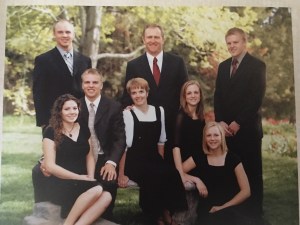
I have been looking forward to remembering, writing and sharing my mom’s story and her powerful example. My mom has been gone for six years now. She was and still is a great example to me. Facing this disease is scary, and my mom’s example helps me. There are so many stories and experiences from my mom’s life that teach things like gratitude, finding the good, enduring, self-worth and so much more. Ironically, my mom often felt that she was not a good person when compared to her other family members who had this disease. Although she lived a wonderful life full of good things, she really struggled with SCA7’s disabling effects. Again, I am very grateful for my mom and her example of enduring this disease, but even more so I look forward to a time without this disease! I miss her, but I don’t miss what the disease did to her at all. I ache for what could have been. My hope in the next life brings peace to imagine being with her again and having the relationship and moments with her that this disease took away from us and so much more.

At my mom’s funeral, all five of her children spoke, just like she wanted. It was moving to hear my siblings’ experiences with my mom and memories of lessons she taught them. When it was my turn, I chose to speak about what my mom taught me about faith. There wasn’t enough time, but I also wanted to speak about what she taught me about hope and charity. These three lessons are deep, significant, and life-changing. In pondering how to share my mom’s story, I realized that her life could naturally be separated into three parts: faith, hope and charity (in that order). The first part of her life’s story is a very powerful message of faith. I believe the Lord beautifully guided her in learning this most essential lesson. With that said, here is the first part of her story.
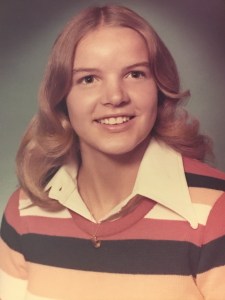
Growing up my mom was athletic and well liked. My grandma said that when my mom was young, she was always moving. For example, she did gymnastics, and she would do cartwheels wherever there was an open space. In High School she was on the gymnastics team, flag corps, volleyball team, diving team and cheer squad. My mom was also very outgoing and pretty. She always had a date to the many high school dances, and her Junior and Senior years she had a steady boyfriend who was a star football player (not my dad). They became very close and planned to get married when he returned from his two year church mission. They even started a bank account together! He was a year ahead of her in school, so it was during my mom’s Senior year of high school that he left on his mission to Canada.
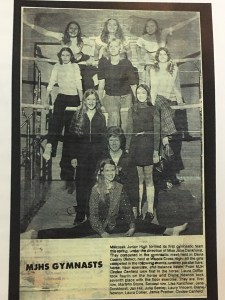
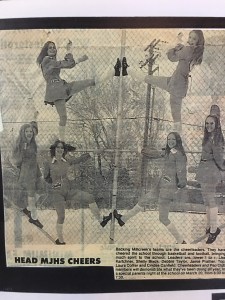
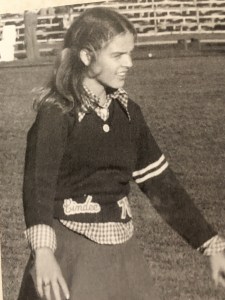
After high school my mom attended Brigham Young University for a couple semesters. She enjoyed her time there, but in an effort to save money, she moved back home and attended LDS Business College, studying medical records. During this time, she dated, but she never met anyone that impressed her. As her missionary was coming home in less than a year and she wasn’t enjoying dating, she decided to give up on it and strictly wait for her missionary. Things were not looking good for my dad!!!
Around this same time, my dad returned home from his mission, and he started asking many different girls out on dates trying to find the right girl for him. He went on at least one date and sometimes more every week. He wasn’t having much success though and felt frustrated. One day he looked through his younger brother’s year book. He spotted my mom, and he took a mental note of her. A month or so later there was a young adult dance. My dad went but only because he was one of the young adult leaders; he does not enjoy dancing. My mom also went but only because her friends convinced her to go. Unlike my dad, my mom actually loved dancing. From the sideline at the dance, my dad spotted my mom having a good time dancing, and he remembered her from the yearbook picture. He asked her to dance a couple times and enjoyed watching her dance. My mom didn’t think much of it, so she was surprised when a week later my dad called to ask her out on a date. He explained that they would be going water skiing. She probably would have said “no” because of her missionary, but she really loved water skiing! She said “yes!” My dad was hoping to impress my mom with his skills, but it turned out the other way around. My mom got out on the water and slalom skied on her first attempt – something not many girls can do! This really impressed my dad!!
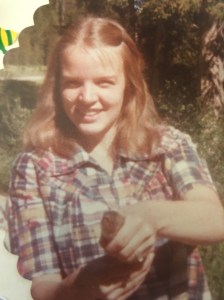
My dad said that he just felt so comfortable when he was with my mom. They both enjoyed their time together and began steady dating. My dad invited her on many outdoor activities like hiking and fishing, and my mom kept up with him. She even out-fished him once! One time while conducting a church meeting, my dad forgot to get someone to lead the music, so from the pulpit he asked her to do it and she didn’t miss a beat. He quickly fell in love with her. On the other hand, my mom was confused because she was also falling in love with my dad, but she still cared for her missionary. My dad eventually found out about the missionary, which only further encouraged him to win my mom over. One evening after dating for several months and while walking around Temple Square, my dad asked her if she would marry him. He hadn’t planned on doing it then, but it just felt right. My mom told him that she needed a couple days to think about it. That night neither of them slept, and by morning my mom had her answer. When my dad came to pick her up for school, my mom told him “yes!”
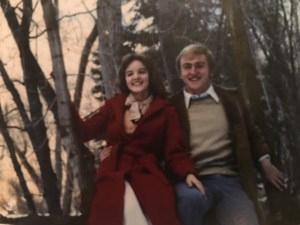
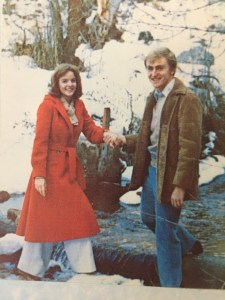
By this time my parents where fully aware that my grandpa’s SCA7 could be passed onto his children. It was known that it was SCA7 that took Chris’ and Don’s lives (two of my mom’s younger siblings), and it was SCA7 that was now causing Cathy (a third younger sibling) to lose her eyesight and balance. It was also known by this time that SCA7 was a dominant gene, meaning there is a 50% chance of passing it on from parent to child. Knowing all this, my mom and dad felt confident and certain that my mom would not inherit this disease. My mom and Caren where the two oldest children and hadn’t shown any signs of having SCA7. Half of their siblings already had the disease, so for them to have it too just seemed very unlikely. Plus, my mom was the most athletic of them all. While dating my mom, my dad remembers watching her do back-handsprings and flips all across her backyard. And so they went on with their life plans, not worrying about her having it.
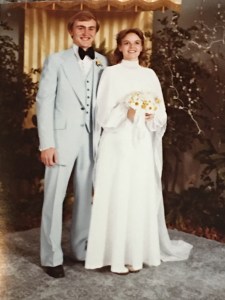
My mom and dad were married on St. Patrick’s day in the Salt Lake City temple for time and all eternity. After their honeymoon to Jackson Hole, Wyoming, they came home and finished their final semesters of schooling respectively. My mom completed her training in medical records, and my dad finished his degrees in Mathematics and Civil Engineering. After graduation, he told my mom that he wanted to obtain a PhD in Civil Engineering. This was new news to my my mom! Five months after getting married though, they were off to Berkeley, California for my dad to start his graduate studies. In the three and a half years there, they had three children, my brothers Josh, Dan and Luke. They came much quicker than expected. Josh came nine months after marriage, a honeymoon baby. Dan came just a little over a year after Josh, and Luke was born one and a half years after Dan. Aubree (my younger sister) and I would follow not too far behind. My mom loved being a mother and always wanted a big family. She was known to say that she hoped to have eight kids. While my mom and dad didn’t plan on having all of us so quickly, it ended up being a great blessing, considering what was to come.
In Berkeley, my parents lived on humble pie, but they would say that those were happy years. After my dad graduated there, he took his first and only job as a professor at Brigham Young University (BYU) in Provo, UT, so their family could be close to family. They and my three brothers moved into their first house in Orem, Utah (10-15 minutes north of Provo). Their futures were very bright and life was good.
Around this time I was born and shortly thereafter my mom began to show signs of SCA7. This now made 5 out of 6 children in the Canfield family that had this disease. A few years before, my Mom’s younger sister Carolyn had also started to show signs of SCA7 (right before she got married). She was the fourth to show signs, and it was so hard for everyone to know that that yet another member of the family had inherited the disease! When I was a year old, Carolyn had her first baby, Callie. My grandma Canfield, Aunt Caren and Mom all made a road trip to Arizona to visit Carolyn and see her new baby. At one of the rest stops along the way, my mom hopped out of the car and did some cartwheels on the open lawn. Yes, my mother was still known to do this even as an adult! My grandma Canfield, who was all too familiar with this disease, noticed slight signs of SCA7 in the way my mom moved while doing her gymnastics. This revelation struck dread and fear into her heart! She didn’t speak a word of this to anyone.
Around this time, my mom began to notice her eyesight was getting worse. This instantly caused great fear to come over her! This could not be happening! She did not want to envision her bright future with this disabling disease. She had seen its devastating effects with her dad and siblings, and it was too awful. Their was still a chance that she just needed glasses. Please! Please just need glasses! My mom went to the eye doctor to determine if glasses could correct her vision. If not, it would mean she had SCA7. It pained her heart when she learned that glasses could not help her. She broke the news to my dad, and he felt the same things as my mom. My parents, especially my mom, knew very well what the disease could do to her life and her family’s lives. They had been so confident that my mom didn’t inherit it. 5 out of 6 children in one family far exceeded more than the 50% odds. It was so unfair! Their bright hopes for their futures were being darkened. They were terrified.
They turned to God and began to pray fervently to Him. My dad gave my mom a priesthood blessing of healing by the laying on of hands. They only shared their news with their church bishop. They all three prayed and fasted. Oh how they needed God’s help! And He did help them. My parents received an overwhelming feeling of peace and comfort. They felt and knew that it was all going to be OK. Their bishop told them that as he prayed about it, he also received the same assurance that it was going to be OK.
At this time, my dad served as the Elders Quorum president in their church. He had two counselors, and one of his counselors had strong beliefs about being healed through faith. This counselor’s new, young wife had suffered with a terminal cancer. After giving her a priesthood blessing, she was miraculously healed. The counselor strongly felt that if a person had enough faith, miracles would follow. My dad had many conversations with him about this, since he and my mom had a miracle that they very much desired. They knew the scripture that asks, “Have miracles ceased?” No! The scriptures also say, “Ask and ye shall receive.” He and my mom began to interpret the good feelings they and their bishop had received as meaning that through their faith my mom could be healed.
My mom and dad decided to put this last scripture to the test, believing that whatever they asked for in faith they would receive. They knew that my mom being healed was a good thing, worthy of this promise. They prayed, fasted and my mom was given many more priesthood blessings. They sincerely promised the Lord that they would do anything He wanted them to do for my mom to be healed. To verify their prayers were being answered, my mom bought an eye chart, and every morning she would test her eyes to see if they were getting better. My mom had also wanted to have another child, so they went forward in faith, knowing that the disease could be passed on. They started to tell their parents and other family. It particularly devastated my mom’s family to have yet another member inherit SCA7. It already felt like too much. Now it was more than too much. My grandma had previously figured it out, but it still stung. Grandma and Grandpa Candfield told my parents that they had always thought Cindee wouldn’t get it because she was so athletic. It was such a shock! They all combined their faith with prayer and fasting. Surely, all this united faith would work. They just knew my mom would be healed.
As the months passed, the eye chart indicated that my mom’s eye sight was not getting better. They came to realize that the answer to their plea was, “No.” My youngest sister, Aubree, was born. My mom yearned to have more children, but they decided against it knowing that she could potentially pass the disease on. My dad said that on the car ride home from surgery to get her tubes tied that my mom just stared blankly out the window, defeated.
Why wasn’t she healed? Did they not have enough faith? What about that undeniable feeling? My parents did not understand why their prayers to be healed were not answered. It was at this time in their lives that I feel my parents showed their greatest faith. They were filled with big questions, doubts and despair, yet they still kept going to church, serving in their callings, praying, reading their scriptures and teaching their kids the gospel. For example, I remember when I was fairly young we acted out the Plan of Salvation while my mom filmed us with our giant camcorder. I also remember that each Sunday after we got home from church, the child who was the most reverent got a full-sized candy bar. These are just two small examples of my parents teaching us the gospel and nurturing our faith despite painful disappointments and seemingly unanswered prayers. Over time though the answers did come, slowly, and some so slowing that it took many years. But they did come. And these answers are some of the most precious truths and knowledge they and we have gained as a family. I am so so grateful for the faith of my mother. How richly I am blessed because of her.
The way my mom coped with this disease was by filling her life with things she loved. For instance, my mom loved being a mother. Growing up, I felt like she never wanted to be anywhere else but at home with us, her kids. I think this is where I developed a strong desire to be a mom. I would always answer the question, “What do you want to be when you grow up?” with “A mom.” I knew my mom loved it, so I would too. This doesn’t mean we didn’t drive her nuts! I had three older brothers very close in age, and they did the craziest things. Today we sit around and laugh at the things they did. Only my mom’s great love for us could endure their shenanigans. She was so good at making us feel loved. She made holidays fun. For example, on Valentines Day she baked giant heart shaped sugar cookies, and on Easter she put together awesome egg hunts with tons of candy and a golden egg filled with money. Birthdays were also special and well celebrated activities. They included lots of presents, decorations around the house, and our favorite meals. Then when we were sick, she would pamper us with Saltine crackers and 7up. And she also would stick up for us with other adults and always seemed to be on our side in any disagreement with other kids. If we left to go on an overnighter, such as sleepovers or camp outs, my mom would cry when saying goodbye. I always knew that my mom loved me so very much! Even though this disease took away many of the typical mothering abilities, like driving, cooking and cleaning, I always felt so spoiled by her love. I know my siblings feel the same way.
Another thing my mom loved and that helped her cope with the disease was vacationing. When my parents were dating, my dad noticed how much my mom enjoyed getting out and doing adventurous things, so from the beginning, they made going on vacations a priority. Once they learned that my mom had this disease, they decided to take it up a notch and experience as many things as possible while my mom still had her health. My dad became quite skilled at planning adventurous vacations, and my mom just loved it. It gave her something exciting to look forward to and perhaps to forget her scary future with this disease. Their vacations were almost always a family affair. Often times the trips included more than immediate family; their parents, siblings and our cousins were regularly invited. This provided many opportunities for us to grow closer together. This not only enriched my mom’s life but our whole family.
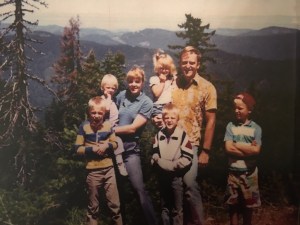
Vacations really were a huge part of our life growing up; we went on MANY vacations! It seemed like nearly every weekend with good weather, we packed up our van and headed somewhere. In the five years following my mom finding out she had the disease, we went to Dinosaur Land, Yellowstone, St. George, Green River, Oregon, and Disney Land. We also went to my grandparents cabin at Bear Lake countless times and to Lake Powell many times as well. We camped at southern Utah, Moab, Bryce Canyon, Goblin Valley, and Topaz Mountain. My parents went on a float trip down the Colorado River through the Grand Canyon and a Western Caribbean cruise. Hopefully you are getting the picture that we went on a lot of vacations, and I didn’t even name them all! During these five years my mom had good health. This disease progressed relatively slowly for her since she didn’t start showing symptoms until an older age. Her eyesight continued to get worse, but she was still able to drive during this time. Also, her balance had not really been affected much up to this point. My mom just lived her life the best she could. She was thankful for the good health she had enjoyed thus far.
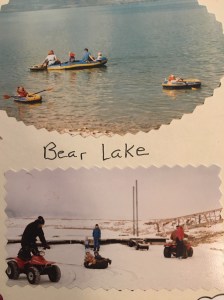
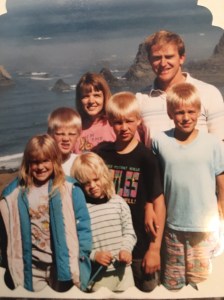
At the end of this five year period, we moved into a larger house not too far away, and then a couple years after that my mom’s sister Cathy reached the final stages of this disease. I remember my mom leaving and staying with her parents and Cathy for a time, so she could be with her sister at the very end of her life and assist my grandparents in planning the funeral. This was a difficult time for my mom, and she struggled seeing her sister suffer and die from this disease.
Around this same time, my mom’s dad also entered the final stage of this disease. He required constant care which demanded much if not all of my grandma’s time and energy. He not only needed physical care, but his mental health had deteriorated and at times required hospitalization. This aspect made caring for him especially heavy and challenging. Life became very difficult for him and my grandma, his sole caregiver. Years later my mom related an experience to me that she had during this time. She was alone in our hot tub in the backyard, and she had just gotten off the phone with her mom. Grandma Canfield told my mom that she was having a terrible time caring for my grandpa. He was not sleeping at night which meant neither was she. She felt utterly exhausted and unsure how much longer she could endure. My mom ached for her and felt they had been abandoned by God. Her sister had just passed away, and there was no break! She almost shook her fist toward heaven while exclaiming, “Where are you!? Are you even there, and do you love me and my family?” She retired to bed that night feeling forsaken.
The next day my mom had to go to BYU to take a final exam as part of finishing her associates degree. It was the end of the semester, and she had two finals to take that week. After all five of us kids left for school, she walked to the bus stop to catch a ride to campus (she now couldn’t drive due to blindness). She planned to take just one of her two finals that day, as she had not yet prepared for the other, a math class. After making the long bus trip to campus and walk to the testing center, she completed her test. Then, before leaving, she on a whim decided to go ahead and take her math final even though she had not studied at all. She reasoned that if she answered roughly half the questions correctly, then she could get a D on the test which would in turn lead to an overall grade “C” in the class, enough to pass. She figured this risk was worth avoiding the effort and hassle of coming again later that week. Besides, she was beginning to not even care anymore with all the hard things that were going on with her family. She sat to take the second test and had to guess on nearly every question. It was worse than what she had hoped. For better or worse, this happened to be one of those tests that was corrected immediately afterwards, so she quickly grabbed the test but didn’t dare to look at the score. She started the long walk back to the bus stop, feeling frustrated. Eventually she calmed down some and mustered the courage to look – 100%, a perfect score! That was impossible… It was a miracle! She stopped in her tracks and could almost feel the Lord say, “Cindee, I am here! And I am helping you, and I do love you.”
I love this story because it was a way for God to get my mom’s attention to tell her that He loved her.
One of the reasons I believe that my mom felt abandoned was because it appeared that God wasn’t helping her parents. However, He was there helping them during this very difficult time. I once interviewed my grandma about her story as a wife, mother and grandmother of those with this disease, and as she described this particular time of her life (when Cathy died and grandpa was so ill), I felt that one person should not have to endure so many hardships all at once. She then surprisingly said that she missed the divinity she felt during those days. She spoke of the hymn, “I Need Thee Every Hour.” She said that this was the song of her heart during this period because she so needed His help every single hour of every day! And she testified He was there all the time helping her, and she missed that closeness.
This is such an important part of faith – to know that God is a loving and caring Father and there helping us. It is very hard to trust in God if we don’t know these things for ourselves. My mom was a great example to me because she understood and exercised faith in these truths. For example, when I was in fourth grade, my dad took a year long sabbatical in Virginia (and we accompanied him). At this time my mom could no longer drive because of her poor eyesight, and she was also beginning to have balance problems. A member of our church ward in Virginia learned about my mom’s disease, so he proposed a faith-inspired idea to my mom. He suggested that the members of our congregation combine their faith in a ward fast for a healing miracle. After years of wrestling with God in prayer and fasting, my mom confidently responded that she had already received her miracle in that she had been given the strength to be OK with not being healed. She had come to understand that it was not the Lord’s will for her to be healed, but that the Lord was going to be there helping her all along the way. It was all going to be OK.
My mom’s example of faith is very special to me. I have reflected on her life and words many times in trying to understand the purpose and meaning of this disease, life and everything else. She once perfectly captured in words what it means to have faith in a talk she was asked to give at a BYU Women’s Conference, several years after we returned home from Virginia. She was asked to speak about her disease and the lessons learned from it. Around 1,000 women were present and listening. I would like to end this post with some of her words on faith from that talk.
“Some of the things that I have learned through all this is that no matter how righteous, smart or capable we think we are, we are not in charge. The Lord is. And we have to have great faith that Christ loves and cares about us. And that he will always do the right thing. Before I always thought faith was just believing hard enough that something could happen. But now I believe that faith is having complete trust in our Savior Jesus Christ.” She went on to say, “In Job 38:7 it says that we shouted for joy {in the pre-existence} because we knew we were coming to earth. I’m sure that we knew that this earth life could be filled with hardships and trials but we shouted for joy anyway because we knew it was worth it. I hope and pray that we each can have enough faith in Christ so that we will be able to handle anything put in our paths and when our earth lives are over we will shout for joy again because we made it.”
-
I start with this video because you can get an understanding of what this disease does to a person, and what it did to Callie in particular. A little over a year after this video was made, SCA 7 took her life. This disease is devastating, and really, only those who experience it know just how frustratingly hard it is. For me, it broke my heart to see Callie struggle through it. I know it was hard for her. I used to imagine her life without it. She would have been highly sought after by the boys, gotten married, had a bunch of kids, and had a fun time all along the way. Unfortunately, having this disease took those experiences away from her. Why did it have to be this way? Looking at Callie’s life though, she was happy, truly happy. She really was! All who knew her would assure you of this. Surprisingly, it took a lot longer than expected for her to pass away, and her family believed and said that she just loved life so much that she didn’t want to let go. How could this be!? You saw her in the video. She was blind, wheelchair bound, and had lost most of her independence. Life had dealt her a difficult and less desirable hand, yet there is much from Callie’s life and example that we can learn about finding enduring joy. In what follows I have separated her final years’ story into three parts: family, God, and people. These are the three ways that I feel Callie’s example shows us how to have a happy and full life.
 Callie had a big decision to make upon returning home from her junior year of college. It was whether to return to BYU the next year or stay home. She really enjoyed the college life, and she wasn’t sure if she was ready to give it up. In the end, she chose to stay home. There was much going on at home, and she wanted to be around for it. Plus, her declining health made schooling harder. After she made this hard decision, she never looked back. She would live seven more years. She went on to fill this time with meaningful connections with her family, God and many others.
Callie’s family was very important to her and she deeply loved them. Her family was not perfect, no one’s family is. Her mom had passed away and her brother would soon follow. Her dad had remarried and Callie would later help to welcome two new sisters into her family. She invested much of her love and attention in them. Her time and relationships with family are things she highly valued. She found much happiness in her efforts.
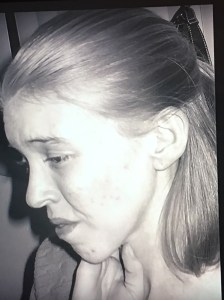
It was April 2006 when Callie returned home, and at that time, her brother Lance’s health was very poor. He had lost a lot of strength and was unable to eat much. Within weeks hospice came to their home to assist the family in providing care for Lance. Callie was very concerned about him. She wanted him to be comfortable and happy, and he was. To the end he remained positive and vibrant, even telling jokes to visitors during this time. Not long after the arrival of hospice though, he passed away. It was very hard for Callie to say good-bye; she was close to her brother and loved him very much.
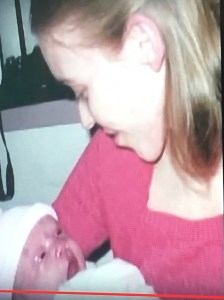 At the time of Lance’s passing, Sara learned she was expecting. This was a miracle and tender mercy! This ended two years of infertility. Plus, this news brought the hope and promise of a new life at the very time of another beloved life departing. Callie was so excited to have a little sister! This picture captures it well. It was taken at the hospital just after Rayni was born. You can see pure love in Callie’s face. It was a wonderful time.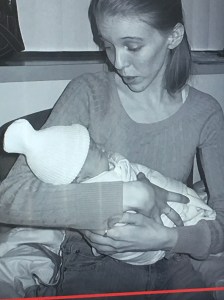
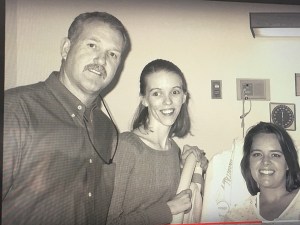
Callie gave much of her time and affection to Rayni, and there is nothing Callie would have rather done with her time. Due in part to their time together and Callie’s attention, Rayni learned to talk at a young age. Callie spent many hours teaching Rayni numbers and how to count, the names of all her cousins (she had a lot of them!), and her letters and how to read. It was such blessing for Rayni to have constant adult attention, and it was a great blessing for Callie to have someone with whom to share her time. In addition to learning-time, the two girls also shared a love of candy. Callie maintained a large candy stash under her bed. As typical of children, Rayni often got into her candy. Callie would get onto Rayni for taking her candy as though she were upset, but I think she actually enjoyed sharing it.
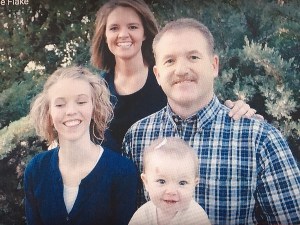
About 3 and a half years after Rayni’s birth, an unexpected opportunity came up for Scott and Sara to adopt a beautiful baby girl, Ella. They had been unable to have anther baby, so this was a longed for opportunity. Sara was able to be there when Ella was born. Both Rayni and Callie were elated to have a new baby sister. At this point Callie was fairly advanced with the disease, so she was not able to do as much for Ella as she did for Rayni. However, her love was no less; Callie adored these two little girls. These younger sisters had a lot of fun together, and now Rayni had a partner in crime when it came to Callie’s candy stash! Scott and Sara always got a good laugh hearing Callie get onto those two for taking her candy. In the end Callie thoroughly enjoyed watching them grow. She would give updates on them to almost everyone with whom she spoke. Her little sisters were a large blessing in her life. Think about it. She was confined or unable to get out and about due to the disease. She was also unmarried and without children. Yet in her home there was new life, energy and abounding activity and an even the opportunity to help mother these sweet little girls.
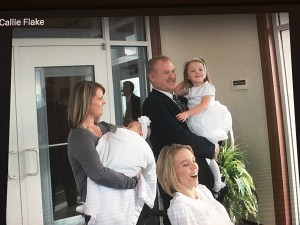

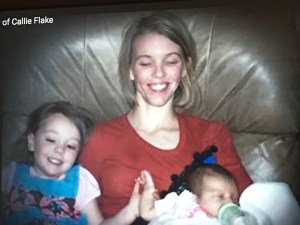
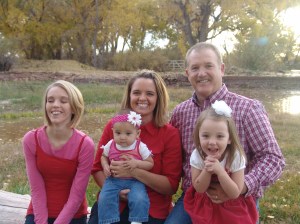
Another thing to which Callie dedicated much of her time was sports – local and collegiate. She loved attending all the high school sporting events with family and friends.She would get so excited about the Snow Flake Lobos. She even wanted to go to their away games. She loved planning trips to these games. It was a common sight to see Callie on Scott’s back as he climbed the bleachers and then set her on a pillow. He would then be heard giving Callie play by play descriptions as he was her eyes. This time together and service bonded whomever helped her at the many games she attended. Callie also enjoyed college basketball and it’s March Madness Tournament. A huge bracket had to be taped on the living room wall each Spring with bracket guesses. Then she would host game nights at her house. Callie found a great satisfaction in being involved with sports and the connection it created with family and friends. And I think it was a way for her to continue to feel connected to Lance, even though he was gone.
Callie had a close relationship with her dad. They went through a lot together in losing both Carolyn and Lance to this disease. Also, Scott greatly depended on Callie while growing up since Carolyn was handicapped from SCA7. Now Callie greatly depended on him. This service just increased their bonds and love for each other. Callie once told me, “My family is very loving and fun. It is hard to not love people that go through so much and people you serve all the time. I think that is why our families are so close because we serve each other so much.” Callie loved her family. Her example shows us that as we value our family relationships and strive to grow closer to each other, we will find much happiness and contentment.
Callie loved God, both her Heavenly Father and His Son Jesus Christ. Like Callie’s step-mom Sara said in the opening video, Callie’s greatest quality is that she had such a strong desire to do what is right. Being Callie’s roommate and living with her on a daily basis, I definitely saw this quality in her. I would often find her praying and reading/listening to her scriptures, and living God’s commandments was very important to her. She loved to have fun and was a bit mischievous in her pranks, but when it came to God’s commandments, she strove with her might to keep them. She knew God loved her very much, and she loved Him too.
Service in the temple was another way that Callie spent her time after returning from BYU, and many came to know her through the selfless service she rendered there. Prior to leaving BYU, Callie’s Bishop, Bishop Freestone, had encouraged and authorized her to get her temple endowment. Then for five of the last seven years of her life, she attended the temple almost weekly. The last two years of her life it became physically too difficult to go. Usually Callie’s Grandma Flake took her since she worked in the temple, but fellow church members would help out when needed. All the temple workers and those that attended grew to know her very well. The workers developed a routine to help accommodate her blindness and inability to walk in order for her to serve there. Over time it seemed that wherever Callie went people were always coming up to and greeting her because they recognized her from the temple. This was even true outside of Snowflake since the Snow Flake temple served the surrounding areas as well. These people were very touched by her sweet example. I know this is true because my family went to the Snowflake temple the morning before Callie’s funeral. Several people came up to us because my mom was in a wheelchair and shared the same disease as Callie. They recognized this and shared their experiences with and memories of Callie. You could see how much she meant to all of them.
Callie was asked to speak quite a bit and she was very good at it. She spoke several times in her home ward, at firesides, and at different events and places. She had to memorize her talks since she couldn’t see to read notes. People wanted to hear about her life and convictions. They could see that she had some very large physical limitations but was happy and loved her life. People wanted to understand how this could be. When she spoke, people listened attentively. Three years before she passed, there was a large Christmas devotional for the temple workers from all the surrounding areas in Snowflake. It was a large group of people. They asked Callie to speak . She talked about how she loved doing temple work for those who could not do it for themselves. She spoke of how so many people had to help her to do things that she could not do for herself. Temple work was something she could do for others…something very valuable and eternal. She spoke of how much this meant for her, to give back in a way. It was a powerful message coming from a young woman in a wheelchair and blind, and you could hear in her voice that it was getting hard to speak. They were able to understand her message clearly.
Callie was provided other opportunities to serve in her church; she was invited to team teach a youth Sunday School class with her dad. Together they taught the 11 and 12 year olds for many years. Her dad enjoyed teaching with her because she helped the lessons to be more meaningful and powerful. Callie would come up with stories to go along with the lessons, and when she talked, those rambunctious 11 and 12 year olds were silent. Her speech was a little slurred due to the disease, so you would have to really listen to understand what she was saying. She spoke from her heart, and it was awesome. This really impacted those young kids, and as a result Scott and Callie made many connections with a lot of youth.
Callie was also provided another opportunity to serve in her church through a program previously called Visiting Teaching, now known as Ministering. She, like every member, was given a list of people to visit and watch over. Callie was faithful in her assignments, and regularly visited those on her list. Sometimes Callie was given people who were harder to visit, and she was successful in visiting them when others may not have been. It would be difficult to turn away someone in a wheelchair, knowing the effort it would have taken to visit them. She was blessed with wonderful companions that would help Callie get to these homes, in and out of her wheel chair and with any other limitations she had. On the other hand, great people were assigned to visit and minister to Callie. They were faithful in coming and spending time with her. Many meaningful connections came into Callie’s life and those around her through this service.
These are Callie’s words. “I am so thankful that we have, in the gospel, the plan of Salvation and the knowledge that we can get married and have kids after this life and live eternally. I don’t know what I would do without that knowledge. I have always had a strong testimony of the gospel. I am thankful for this with this disease.” Callie’s testimony of God was strong and so was her love for Him. Her sincere service to others was a manifestation of her deep love of God. Callie’s diligent example teaches us that we can find great happiness and peace as we love God, our Heavenly Father and His son Jesus Christ.
In addition to her time spent at home with family and in service to others at church, Callie filled her days doing things she loved with people she loved, both extended family and friends. One tool that enabled Callie to do this was a cell phone. Having a cell phone gave Callie a sense of independence. Even though she could not see, she learned how to navigate her flip phone. Through this means she stayed connected with people: family, friends, and many others. She would call these people regularly, and many of them would call her regularly. Scores of people have memories of their phone calls with Callie. For instance, she religiously called our Grandma Candfield every week, and it meant so much to her. On these calls, Callie loved to tell others all the latest news and information that interested them. Another thing having a phone allowed her to do was to plan activities. She loved planning parties and get togethers, birthday surprises, holiday celebrations and sporting outings. Callie used these opportunities to nurture lots of connections with people. She filled her life with keeping these connections, planning ways to make them stronger and even to make new ones. I think this is one reason why she loved life so much.
Two notable things Callie loved were shopping and eating ice cream. For several years, her Aunt Paula would take her shopping every week. Their shopping trips usually included a lunch out. Callie really enjoyed these trips and the time together with Paula. She was a lot of fun and kept Callie up to date on everything going on in the large Flake family and their small town, something Callie really enjoyed! As mentioned, another one of Callie’s loves was ice cream. Even when eating became more difficult due to the loss of coordination that accompanies this disease it did not stop her from eating ice cream. A Sister Bailey from her church congregation would take her for ice cream every Thursday. These two were Dairy Queen regulars! They would eat their ice cream while they talked and talked. Sometimes they would park in Callie’s driveway and talk for an hour or more. Callie really appreciated these weekly trips shopping and eating ice cream, and as much or more than the activities, she enjoyed spending time with these great women.
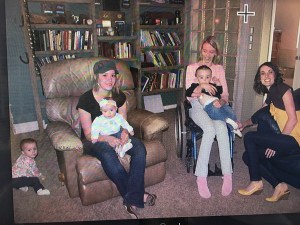
Another group of people Callie really enjoyed spending time with were her friends from High School. She had an awesome group of friends. Through the college years and even after, they continued to nurture their friendship. Most of her friends had married and were starting to have children, something Callie longed for but did not have. Regardless of their different circumstances, her friends were great at including her. Often they would pick her up to go eat lunch at a park, go to a celebration, or do some planned activity. It meant a lot to Callie to still be included and feel close to her high school friends to the end of her life.
There are many others who I have not mentioned that were part of Callie’s life. Many extended family, friends and neighbors often reached out to her. Callie was important to them, and they were important to her. Like my sister Aubree, she kept in regular contact with Callie and came to Snowflake to visit her. I also did this along with many others. The connections that Callie was able to make with so many, greatly enriched her life. Callie’s example shows us that as we value others and strive to have meaningful connections with them, we can find happiness and fulfillment.
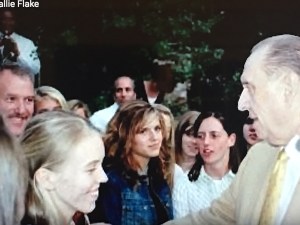
Doing the things Callie loved over time became harder and harder as the effects of the disease became worse and worse. She began to tire easily and needed to rest or sleep more. Outings became harder. She did not want to give them up, but she was often too weak and tired to go. She would not admit that she did not have the energy to do outings, so more trips were planned than she could do. At a certain point, Callie was unable to continue serving in the temple, and then she could no longer do the shopping trips and away games for sports. On the shorter outings, she could still do them, but someone would have to carry and assist her. She did home high school football and basketball games until close to the end of her life. Many helped pack Callie around. She appreciated their help to get out, and she held on to these opportunities to get out until she could not do it anymore. To the end she remained very optimistic. Even when she had to miss out she always felt that next week she would have the strength to go.

Scott was very impressed by Callie’s optimism and enthusiasm. He said that she had this quote hanging on her wall:
 “Be optimistic. Don’t be grumpy, when the road gets bumpy… Just smile.” This is what she truly lived. Of her enthusiasm he said, “She never ran out of enthusiasm. She ran out of energy and she ran out of life. But she never ran out of enthusiasm for it. This is why she was so easy to be around…why she was so delightful to be around. She just was fun.”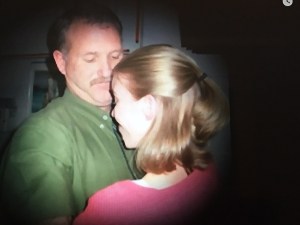
As time progressed, Callie started to run out of life, but everyone was amazed at how long she held on for. Knowing she loved life, they said she didn’t want to let go of it. When it became too hard for Callie to leave the house, many visitors started to come to her. People became comfortable enough that they would knock on the door as they walked in and head back to her room. Domini, her best friend, came to visit a lot. She remained a faithful and loyal friend throughout her life. In fact Callie requested that Domini speak at her funeral.
Callie’s heath finally declined to a point that her family thought she would pass away very soon. Eating had become so difficult that she consumed very little, if anything at all. Doctors prescribed morphine to make her more comfortable. Surprisingly, she continued to hold on and live longer than expected. There were ups and downs. She would stop eating and only drink water. Again, the family would think she was about to pass, then she would rally back and eat something. This process went on for a couple of months. Callie was already of a very slender build physically, but during this time she became so thin that it was hard to recognize her. Scott said that she had such a big healthy heart that it took a lot for it to stop beating. Everyone was amazed at how long she held on. They kept saying that she loved life so much that she just didn’t want to let go.
At the end of Callie’s life, her good friend Domini was living in Texas where her husband (Callie’s cousin) was going to school. It turned out that they happened to be home in Snowflake during their summer break, right at the point when Callie’s heath had declined so much and was nearing the end. Domini knew that Callie wanted her to speak at her funeral, but Domini didn’t know how it would all work out since they had to go back to Texas for the next year of school. They were poor students, and Domini had all her young children to watch while her husband attended classes. She just didn’t know how it would all work out. They returned to school, and Domini stay tuned to Callie’s status with phone calls. After a couple weeks she got a phone call that Callie was probably going to pass soon. The next week Domini’s dad suddenly and unexpectedly passed away. With this devastating news, Domini’s family flew home to be with her family. Domini arrived home in the evening, and she made time to go over to see Callie too because she knew that Callie didn’t have much time. Callie hadn’t eaten for two weeks and had very little life left in her. It was a miracle that she was still alive.
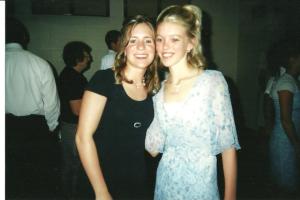
Here are Domini’s words. “She was so thin. I had never seen her that way. It didn’t even look like her. I don’t even know how to describe how she looked. She just hadn’t eaten in forever. And she was barely breathing. She would take a breath in what seemed like every minute. And I was able to just talk with her and tell her things I wanted her to tell my dad. I felt like she was hanging on for me because I kind of needed that. It was such a blessing for me at that time to have her be there. She passed away just a few hours later, early Monday morning. I barely made it in time to talk to her. And I was able to talk at her funeral the same day that I talked at my dad’s funeral. She was such a true friend!”
When Callie let go of her life, she was surrounded by her family. She had completed her most beautiful mortal life. Callie’s example is what will always stand strong. She touched and influenced so many lives for good. Her funeral was very sweet. She did not have an open casket, so the night before, instead of a viewing, a large gathering of family and friends shared stories and precious memories of Callie. It was so much fun hearing all these stories. Domini’s talk the next day at the funeral was excellent. Here is a song she shared called “The Test”:
“Tell me friend, why are you blind?
Why doesn’t he who worked the miracles, send light into your eyes.
Tell me friend if you understand.
Why doesn’t he with power to raise the dead just make you whole again?
It would be so easy for him.I watch you and in sorrow question why.
Then you my friend in perfect faith reply.
Didn’t he say he sent us to be tested?
Didn’t he say the way would not be sure?
But didn’t he say that we could live with him Forever more, well and whole,
If we but patiently endure?
After the trial we would be blessed
But this life is the test.”
Callie’s Aunt, Lorraine, also spoke and gave an excellent talk at the funeral.
The attendance and circumstances surrounding it paid a beautiful tribute to Callie and the life she lived. It was inspiring to see all the people there. In that small town the large chapel and over flow were full. And this didn’t even represent all those whom Callie touched. The day was warm and sunny, but at the burial, the weather changed and it started to pour rain very hard. So much so that people hesitated to get out of their cars. After a bit we all just braved it. It even hailed a bit during it all. People joked that the rain was Callie’s idea, but the hail was her brother Lance’s. It was sweet to think of them together again pulling pranks. As we stood around Callie’s casket, it hit me hard, and my tears began to fall as hard as the rain. I loved Callie, and I ached for what could have been without this disease. I also hated to think of her struggle. She bore it very well though, even though it was so very heavy! Despite it all she lived such a good life! I was having a hard time letting go. I began to understand how God’s way is always the best way if we look beyond this life. Really, the life I imagined for her without this disease greatly paled in comparison to the beautiful life she did live. I am confident that this life was Callie’s choice because of all the lives she touched for good and the awe inspiring example she left.
The morning I got the phone call that Callie had passed away, I was alone in my living room. I fell to my knees and just sobbed. I have always desperately held onto a hope that someday Callie, as well as my mom, sister and myself, would be healed of this horrible disease. So when she passed it hurt real bad. As I laid on the couch, with a tear stained face and thinking of Callie, I knew that she was there in the room with me. I could feel her there! As I looked to where I felt she was standing, it was like she was telling me that it was OK. It was all going to be OK! I wondered why she came to me, with everyone she could visit, why me? It was so comforting and just what I needed. She was so good like that!
 SCA7 Through My Eyes